The African Energy Chamber (AEC) has urged African governments and global industry players to adopt pragmatic, common-sense strategies to unlock the continent’s significant oil and gas potential.
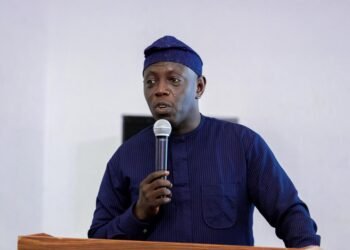
Speaking at the Wider African Energy Summit in Aberdeen on Wednesday, Executive Chairman NJ Ayuk outlined a vision for Africa’s energy future anchored in investment attraction, regulatory clarity, and a balanced response to climate and development challenges.
Ayuk anchored his remarks on Africa’s urgent need to reduce energy poverty. Millions across the continent still lack access to reliable electricity, a condition he argued restricts economic progress and limits human potential. “We believe in affordable and abundant energy,” he said.

“There are so many people in Africa that don’t have economic opportunities.
“Our job is to change that and to bring pragmatic, common-sense approaches to how we address the twin demons of climate change and energy poverty. They are two sides of the same coin.”
Executive Chairman of AEC, NJ Ayuk
Addressing international operators, especially those from the United Kingdom, Ayuk emphasised that Africa offers immense opportunities across its expanding hydrocarbon supply chain but stressed that these opportunities will remain underutilised without deliberate policy reforms and investor-friendly frameworks.
His comments reflect a growing sentiment across Africa that while the global energy transition is necessary, it must be implemented in a way that does not undermine development in countries that have contributed least to global emissions but suffer most from underdevelopment.
Africa’s Long-Term Hydrocarbon Growth Potential



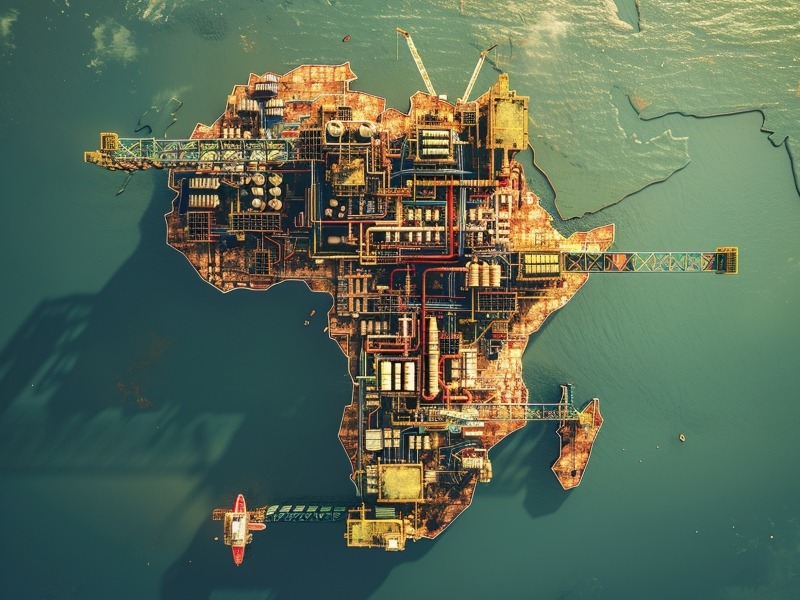
With an estimated 125 billion barrels of proven oil and 620 trillion cubic feet of natural gas, Africa holds some of the world’s largest untapped hydrocarbon resources.
Ayuk told delegates that efforts by African governments to monetise these reserves are gaining momentum, although many projects remain stalled due to investment gaps, administrative delays, and inconsistent regulatory environments.
He highlighted that “the African advantage comes down to our population and an industry with a hunger for technology.”
According to him, emerging basins such as Senegal and Mauritania’s MSGBC basin, as well as promising discoveries in Mozambique, Namibia and South Africa, present fresh frontiers for global investors.
He acknowledged the significant presence of UK companies, praising them for “shooting seismic and opening doors,” but urged them to deepen their engagement with the continent.
Ayuk underscored that Africa’s competitiveness depends heavily on its ability to tackle its above-ground risks policy uncertainty, complex regulations, and unattractive fiscal terms.
He argued that many African countries are beginning to realise that reforms are essential to lure global capital at a time when investment in oil and gas is more selective.
“Most African countries have started to realize that the more we address above-ground issues, the most investable we become.
“We are not competing for capital between Mozambique and Zimbabwe, we are competing with Guyana and Suriname.”
Executive Chairman of AEC, NJ Ayuk
He cited Angola as a success story, noting that improvements in its fiscal regime have encouraged major players such as Shell to reinvest in the market.
Ayuk’s message was clear: Africa’s resource-rich nations must approach energy policy not with nationalism but with strategic flexibility, enabling international companies to view the continent as a stable and rewarding destination.
Infrastructure Deficit Presents Opportunity for UK Service Firms

Ayuk also turned his attention to Africa’s midstream infrastructure gap, describing it as a critical barrier to unlocking the full value of the continent’s oil and gas reserves.
He pointed to Nigeria as a prime example of a country unable to leverage its abundant natural gas reserves to power the region due to transportation limitations.
“Our infrastructure deficit is a big problem.
“Nigeria, for example, has not been able to power the region with gas and this is not because of lack of resources. How can we move resources across the continent?”
Executive Chairman of AEC, NJ Ayuk
He stressed the need for African states to invest in baseload energy, natural gas pipelines, and LNG receiving terminals, sectors where UK service and technology companies with North Sea experience could play a transformative role.
Building such infrastructure, he said, would create a more affordable, diverse and interconnected energy market across the continent.
AEC Encourages Companies to “Choose Africa”

Closing his address, Ayuk urged international investors to look beyond perceived risks and recognise Africa’s vast value proposition.
“Choose Africa. Whatever you do in Africa, it will be worth it both in a financial sense and in the ability to change lives.”
Executive Chairman of AEC, NJ Ayuk
Ayuk’s call reflects a broader push by the African Energy Chamber to reshape global perceptions of Africa’s oil and gas sector promoting it as a destination where investment not only yields high returns but also contributes to meaningful development.
With rapid population growth, rising energy demand, and emerging hydrocarbon frontiers, the continent remains one of the world’s most promising energy investment landscapes.
READ ALSO: GRA Increases VAT Threshold to GHȻ 750k to Support Small and Micro Enterprises