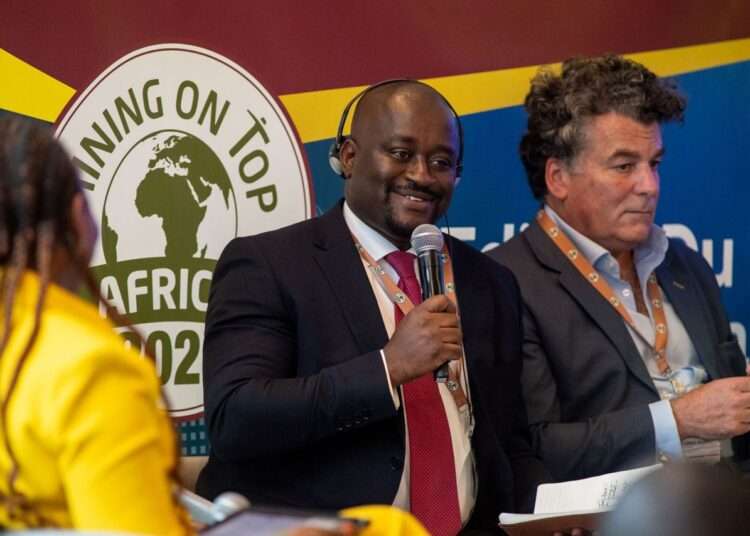
Petroleum Economist and Political Risk Analyst, Dr Theo Acheampong, has cautioned the government against rushing into a takeover of Springfield Exploration & Production’s (SEP) interest in the West Cape Three Points Block 2 (WCTP2), warning that unresolved technical uncertainties and weak commercial justification make the proposal risky.
Speaking at a forum on the theme “WCTP2 Under Review: Technical Truths, Political Pressures & The Future of Ghana’s Oil Governance,” Dr Acheampong stressed that the Afina discovery remains clouded by inadequate and questionable data.
“This industry thrives on data. If it’s garbage in, it’s garbage out.
“And from all the information around, there are challenges with the data Springfield has presented.”
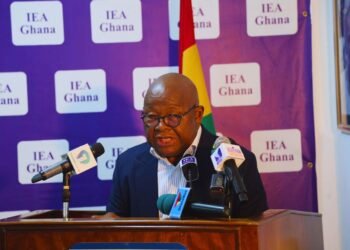
Dr Theo Acheampong, Petroleum Economist and Political Risk Analyst
He revealed that assessments by Ghana’s Petroleum Commission and international datasets contradict Springfield’s claims, including discrepancies in well flow rates.
Whereas Springfield reports flows of up to 5,000 barrels per day, regulator estimates suggest significantly lower rates, a gap he described as a “major red flag.”
Technical Evaluation Still Incomplete

According to Dr Acheampong, the Afina discovery has not undergone a complete technical and commercial evaluation, making any state-led acquisition premature.
“The processes for technical and commercial evaluation have not been fully completed.
“Major differences must be ironed out and addressed.”
Dr Theo Acheampong, Petroleum Economist and Political Risk Analyst
He added that acquisition decisions in the upstream sector must be grounded in robust and verifiable geological data.
Without this, Ghana risks committing public resources to uncertain assets with unclear value and questionable commercial prospects.
Beyond technical issues, Dr Acheampong said the government must address a bigger policy question: why should the state use public funds to acquire an asset that private capital has found unattractive?
“If the field were as profitable as claimed, why don’t we have other big players interested in farming in or even buying the asset? Why should the state be leading that?”
Dr Theo Acheampong, Petroleum Economist and Political Risk Analyst
He warned that using taxpayer funds to bail out a private company sets a dangerous precedent, noting that commercial risks in the oil industry should be borne by firms with the required technical strength and financial muscle not the state.
Lessons From the Aker Energy Controversy

Dr Acheampong drew a parallel with Ghana’s unresolved Aker Energy experience, where early warnings from civil society were ignored only for the asset to be returned to the state.
“With the history we’ve seen in this space over the last 10 years, we need to pause and reflect on what exactly we want to do.”
Dr Theo Acheampong, Petroleum Economist and Political Risk Analyst
He noted that data gaps in the Afina field are “not inconsequential” and directly affect valuation, project financing, and long-term viability.
According to the analyst, Springfield’s current dilemma is the result of its own commercial decisions, including debts accumulated during exploration.
He questioned why the state should treat the company differently from other indigenous operators who also face financial and operational challenges.
Rather than acquiring the asset, he suggested a more prudent approach: helping Springfield secure partnerships with experienced international operators capable of deploying capital, drilling new wells, and managing the high risks of offshore development.
Financing Requires Independent and Credible Verification
Even if Springfield were to pursue financing on its own, Dr Acheampong said lenders would demand independent technical verification, unbiased commercial analysis, and reliable projections of recoverable reserves before committing funds.
“The bottom line is whether the project is commercially viable on its own.”
Dr Theo Acheampong, Petroleum Economist and Political Risk Analyst
He noted that credible financiers will not rely on contested or incomplete datasets when making decisions in a sector defined by high capital requirements and deep technical risks.
While acknowledging government’s desire to resolve the long-standing WCTP2 impasse, Dr Acheampong insisted that any intervention must be grounded in transparency and technical accuracy.
“This industry is highly technical and extremely risky. Due process has to be followed.”
Dr Theo Acheampong, Petroleum Economist and Political Risk Analyst
He warned that failure to adhere to established processes could expose Ghana to financial losses, reputational damage, and governance setbacks in its upstream sector.
READ ALSO: Lagos Shatters Records with Sub-Saharan Africa’s Biggest Ever N244bn Dual Bond Breakthrough