
The Africa Sustainable Energy Center (ASEC) has issued a stark warning over Ghana’s rapidly declining crude oil production, cautioning that the country faces a deepening fiscal and energy security crisis unless urgent, targeted interventions are taken.
In a statement, the Center said Ghana’s petroleum revenues fell by 56% in the first half of 2025, creating a “fiscal shock that threatens essential public expenditure and macroeconomic stability.”
According to ASEC, the scale of the downturn means “the country cannot delay interventions.” The think-tank stressed that stabilising national revenue streams must now be the government’s top priority, especially as mature fields continue to experience steep natural decline.
“Decisive action is required to protect national income, safeguard energy security, and restore investor confidence.”
The Africa Sustainable Energy Center (ASEC)
WCTP2 Described as Ghana’s Only Near-Term Lifeline

ASEC identified the West Cape Three Points Block 2 (WCTP2), home to the disputed Afina discovery as the most strategic asset capable of reversing the country’s production decline in the short to medium term.
Calling WCTP2 “the most commercially viable asset in Ghana’s petroleum portfolio,” the Center said the block is estimated to hold 1.5 billion barrels of recoverable resources, making it the only realistic opportunity to inject substantial production volumes between 2028 and 2032.
“WCTP2 is the ONLY viable mechanism capable of reversing Ghana’s production decline and stabilizing revenues between 2028 and 2032.”
The Africa Sustainable Energy Center (ASEC)
ASEC argued that no existing or undiscovered field is at a comparable stage of readiness.
The think-tank urged Government to accelerate all appraisal and development activities on the block, warning that any delays will deepen the fiscal strain already facing the state.
While acknowledging the long-term promise of the Voltaian Basin, ASEC warned strongly against portraying it as a near-term fix for the country’s revenue challenges.
“Commercial production from the Voltaian Basin is not feasible before 2033–2036,” the statement said, noting that it remains a “strategic anchor for the future” rather than a solution to today’s fiscal pressures.
ASEC urged government to treat the Voltaian Basin as a long-term diversification project rather than a replacement for the urgent revenue potential in WCTP2.
GNPC Accused of Breaches and Lack of Accountability
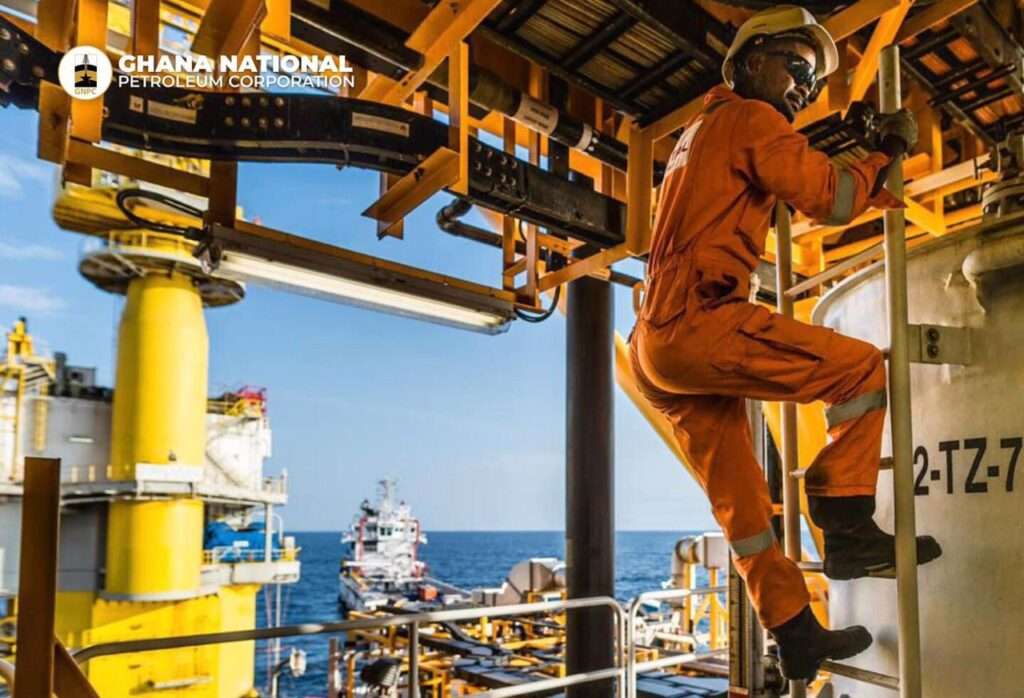
In one of its most forceful points, ASEC criticised the Ghana National Petroleum Corporation (GNPC) for failing to remit $488.8 million in lifting proceeds from its subsidiary Explorco to the Petroleum Holding Fund (PHF).
The Center said, “This represents a breach of transparency and statutory obligations,” adding that such actions undermine trust at a time when GNPC is expected to play a central role in reversing the national decline in oil production.
ASEC also referenced what it called “unacceptable diversions” of petroleum funds, including the widely publicised GH¢4.9 million expenditure on a golf clubhouse, insisting these infractions must be subjected to formal review.
“These matters must be under formal review, and the government should enforce full accountability to protect national resources before handing over oil fields to its subsidiary Explorco.”
The Africa Sustainable Energy Center (ASEC)
ASEC cautioned that the recently announced $3.5 billion upstream investment package should not be misinterpreted as a sign of a new oil boom.
“This capital can be used mainly to slow the decline in existing mature fields, not to produce a major new boom.”
The Africa Sustainable Energy Center (ASEC)
It said that without high-impact new assets such as WCTP2, Ghana risks entering an irreversible phase of production decline, jeopardizing fiscal stability, investor confidence, and energy security.
Given the stalled progress of WCTP2 and long-standing disputes with Springfield Exploration & Production (SEP), ASEC recommended a clear path forward: acquire Springfield’s interest outright.
“To ensure the timely development of WCTP2, Explorco must be empowered to take the operational lead.
“However, to avoid potential international arbitration… the government should pursue a full acquisition of Springfield E&P’s stake.”
The Africa Sustainable Energy Center (ASEC)
ASEC warned that attempts to reclaim the asset could trigger lengthy arbitration processes that delay production for years at a time when Ghana cannot afford such setbacks.
Transparency Must Guide All Decisions on WCTP2
The Center welcomed government’s decision to procure an independent technical consultant and transactional advisor for the WCTP2 assessment, but insisted the process must be “fully transparent,” with all technical data released to avoid bias or manipulation.
“There must be no hoarding, limiting, or gatekeeping of critical data.
“Transparency is a non-negotiable requirement.”
The Africa Sustainable Energy Center (ASEC)
The Center emphasised that evidence-based decision-making free from political agendas—is the only path to restoring stability in the sector.
ASEC warned that Ghana is confronting a defining moment in its oil and gas industry:
“The decline in crude oil production is no longer a distant concern. It is a present fiscal and economic threat.”
The Africa Sustainable Energy Center (ASEC)
The think-tank called for decisive action centred on accelerating WCTP2, enforcing accountability at GNPC, embracing transparency, and making long-term investments in the Voltaian Basin.
READ ALSO: Agric Minister Sets One-Year Completion Timeline for Bechem Poultry Processing Plant