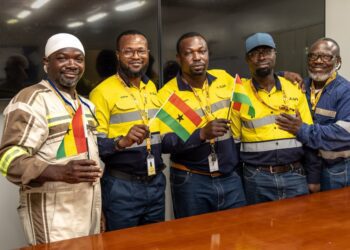
Ghana Gold Board (GoldBod) has catalyzed a transformative shift in the nation’s mineral governance by initiating high-level strategic discussions with the World Gold Council (WGC) to formalize the artisanal and small-scale mining (ASM) sector.
This burgeoning partnership is designed to weave Ghana’s domestic gold production into the fabric of the global “Gold247” initiative, ensuring that every ounce of gold is not only ethically sourced but also verifiable through cutting-edge digital footprints.
By aligning GoldBod’s internal regulatory mechanisms with the WGC’s international frameworks, the engagement seeks to elevate Ghana from a regional producer to a global benchmark for mineral integrity and supply chain transparency.
“By offering competitive prices and intensifying the fight against smuggling, we have seen ASM gold volumes increase significantly from about 64 tonnes in 2024 to approximately 103 tonnes last year. We are ready to partner on traceability, processing and formalisation initiatives. This will ensure that the state is able to efficiently mop up gold once it is processed.”
GoldBod CEO, Sammy Gyamfi
At the heart of this collaboration is the integration of distributed ledger technology (DLT) and blockchain systems, which act as a digital “passport” for gold from the point of extraction to the final refinery.
The meeting, held in Accra, underscored a mutual commitment to deploying modern traceability technology that mitigates the risks of gold being used to fund illicit activities or being lost to the shadows of the “galamsey” economy.
This technological leap is complemented by a vision for sustainable processing plants that replace toxic chemical usage with environmentally friendly recovery methods, effectively de-risking the sector for international investors and ensuring that Ghana’s gold reserves contribute directly to national macroeconomic stability.
Harnessing International Standards to Curb Illicit Flows

The WGC’s involvement provides Ghana with a gateway to the “Gold Bar Integrity” (GBI) programme, a move that is expected to significantly dampen the incentives for smuggling and money laundering.
For decades, the lack of a robust traceability framework allowed gold produced in informal settings to seep into the global market through illicit channels, draining billions in potential tax revenue and foreign exchange.
By adopting the WGC’s global standards, GoldBod is positioning itself to implement a “closed–loop” ecosystem where only gold from licensed, audited, and compliant mines can enter the formal trade.
This “ring-fencing” of the supply chain makes it increasingly difficult for illegal operators to “wash” gold from environmentally degraded sites into the legal market, thereby strangling the financial oxygen of galamsey operations.
Beyond simple tracking, the engagement aims to sanitize the financial plumbing of the industry. GoldBod’s current model already subjects trade to rigorous Anti-Money Laundering (AML) and Counter-Terrorism Financing (CTF) controls.
However, the technical expertise of the WGC will help refine these protocols, ensuring they meet the stringent “Responsible Gold Mining Principles” (RGMPs).
As the CEO of the World Gold Council, David Tait, noted, understanding the “degree of commitment” from both institutions and the government is vital for the deployment of resources that will eventually integrate Ghanaian ASM gold into the wholesale digital gold market, where it can be traded with the same level of confidence as gold from large-scale, institutional mines.
Environmental Stewardship and Value Addition

A critical pillar of the discussed partnership is the establishment of “compliant processing plants” that serve as centralized hubs for small-scale miners.
These facilities are designed to address the “missing middle” in the extractive value chain the gap between raw extraction and refined purity.
Currently, many informal miners rely on mercury-heavy processes that yield low recovery rates and devastating ecological consequences.
The introduction of WGC-endorsed, sustainable processing technologies will not only optimize gold recovery but also provide a physical anchor for formalization.
Miners who utilize these hubs will gain access to fair market pricing and official certification, creating a powerful economic incentive to abandon illegal practices in favor of regulated, environmentally conscious mining.
Furthermore, the strategic focus on value addition aligns with the Governing Board’s vision of inclusivity.
By refining gold locally to international standards, Ghana can capture a greater share of the value chain, shifting from a raw material exporter to a hub for refined precious metals. This transition is essential for ensuring that the benefits of the gold trade permeate down to the mining communities themselves.
As the sector moves toward full operational independence in 2026, the synergy between GoldBod’s statutory mandate and the World Gold Council’s global reach promises to transform Ghana’s “red gold” into a green, transparent, and sustainable national asset.
READ ALSO: Ghana Opens High-Level Talks With Saderea Bondholders in Major Debt Restructuring Push