
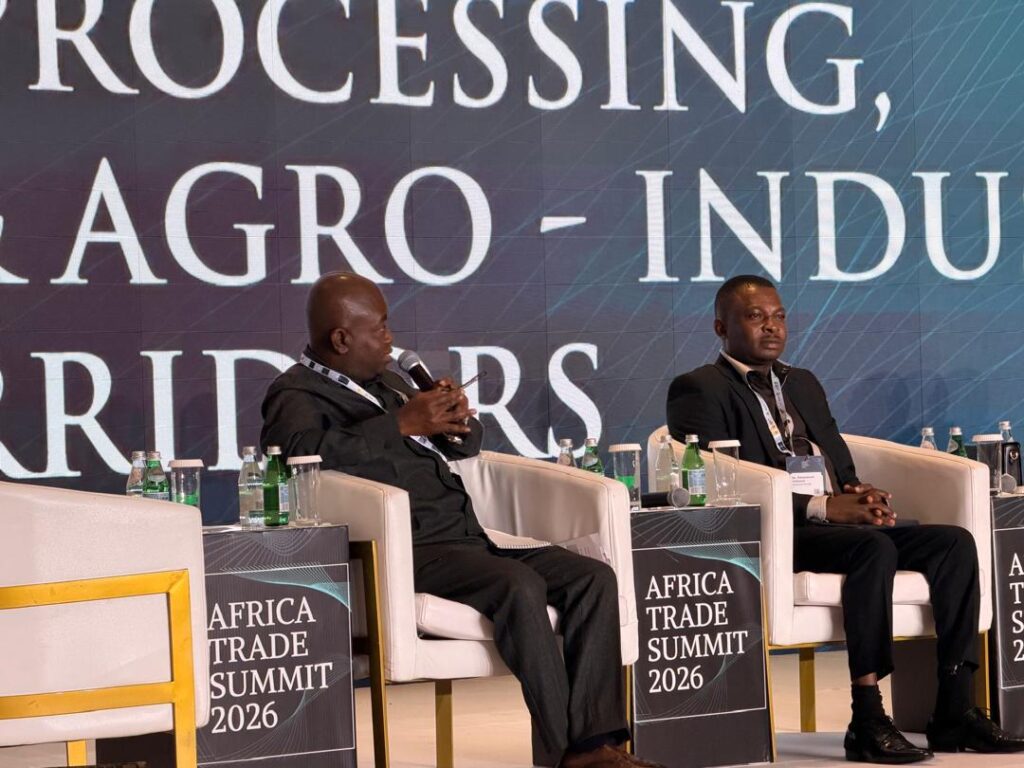
The Deputy Minister for Trade, Agribusiness and Industry, Hon. Sampson Ahi, has urged African nations to transition toward an integrated, value-chain-driven approach to infrastructure during an address at the 2026 Africa Trade Summit in Accra.
Speaking at the summit which brought together high-level leaders, including H.E. President John Dramani Mahama and the President of São Tomé and Príncipe, Carlos Vila Nova, to deliberate on Africa’s economic future, the Deputy Trade Minister argued that the continent’s industrial transformation depends on shifting from “isolated projects,” to “integrated systems.”
“Infrastructure must be viewed beyond highways and ports to include logistics platforms, aggregation centers, standards and testing laboratories, and efficient trade facilitation systems. When infrastructure is planned with value chains in mind, production, processing and trade are able to function as a single, efficient system”
Hon. Sampson Ahi, Deputy Minister for Trade, Agribusiness and Industry
According to Hon. Ahi, Africa’s reliance on processed food imports is a major barrier to economic independence. He revealed that the continent spends between $60 billion and $70 billion annually on these imports, with West Africa alone spending over $10 billion on rice each year.

These figures, he noted, represent a direct loss of wealth and jobs that could otherwise be retained on the continent if infrastructure gaps – such as poor road connectivity, unreliable power, and weak cold-chain systems – were addressed through strategic planning.
Hon. Ahi disclosed that the government is currently developing a new Special Economic Zones (SEZ) policy to facilitate industrial clustering and regional value-chain development. This policy seeks to move beyond traditional manufacturing enclaves toward integrated hubs that support both local SMEs and large-scale exporters.
Key initiatives like the 24-Hour Economy and the Feed the Industry program are being synchronized to ensure that raw materials move seamlessly from farms to processing centers across all 16 regions.
He noted that special attention is being paid to the Volta corridor and the Volta Lake enclave, which are “emerging as critical zones for agro-industrial growth.” By establishing these industrial parks, the government intends to enhance the competitiveness of Ghanaian firms as they navigate the African Continental Free Trade Area (AfCFTA).
Connecting Farms to Global Markets
The Deputy Minister emphasized that the future of African industrialization lies in “infrastructure diplomacy,” – which involves harmonizing standards across borders to ensure that “Made in Africa,” products meet international quality requirements while moving freely through regional markets.
“Africa’s agro-industrial future will depend on how effectively the continent connects farms to factories, factories to markets and markets across borders. Strong and integrated infrastructure systems will be key to deepening value chains and driving sustainable industrialization”
Hon. Sampson Ahi, Deputy Minister for Trade, Agribusiness and Industry
Hon. Ahi added that the Accelerated Export Development Program and the Made in Ghana initiative are currently being scaled to strengthen these production-to-processing linkages. He insisted that by connecting farms to factories and factories to markets, African nations can reduce post-harvest losses and stabilize food prices.
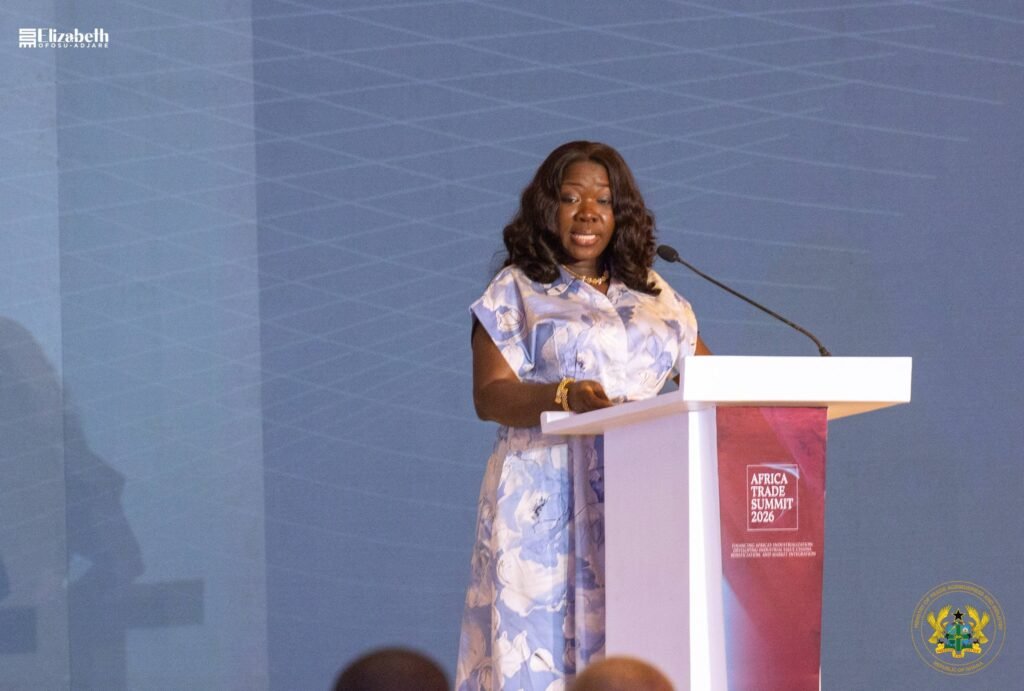
The Deputy Trade Minister concluded that a unified infrastructure backbone is the only way to deepen value chains and ensure sustainable industrialization for the continent.
READ ALSO: Rafah Crossing To Be Reopened On Sunday