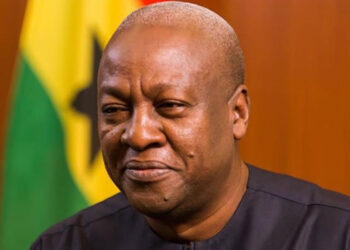
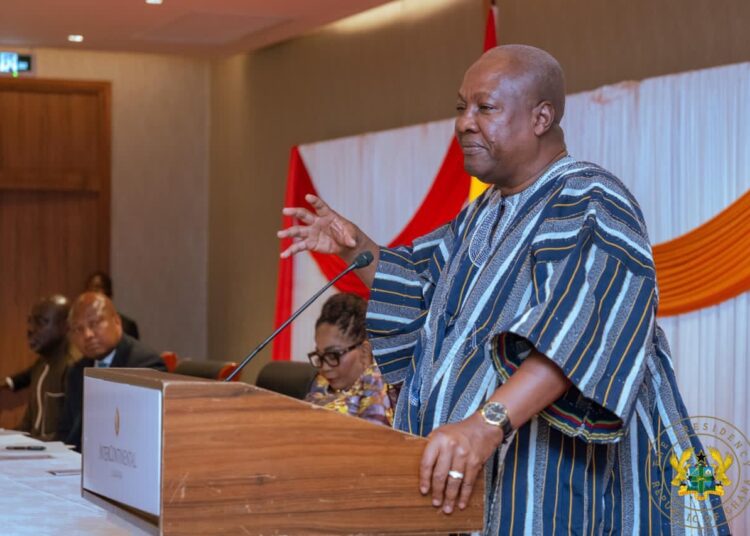
President John Dramani Mahama has explained that a substantial share of funding under his government’s Big Push initiative is being directed toward road infrastructure as a deliberate strategy to accelerate national transformation.
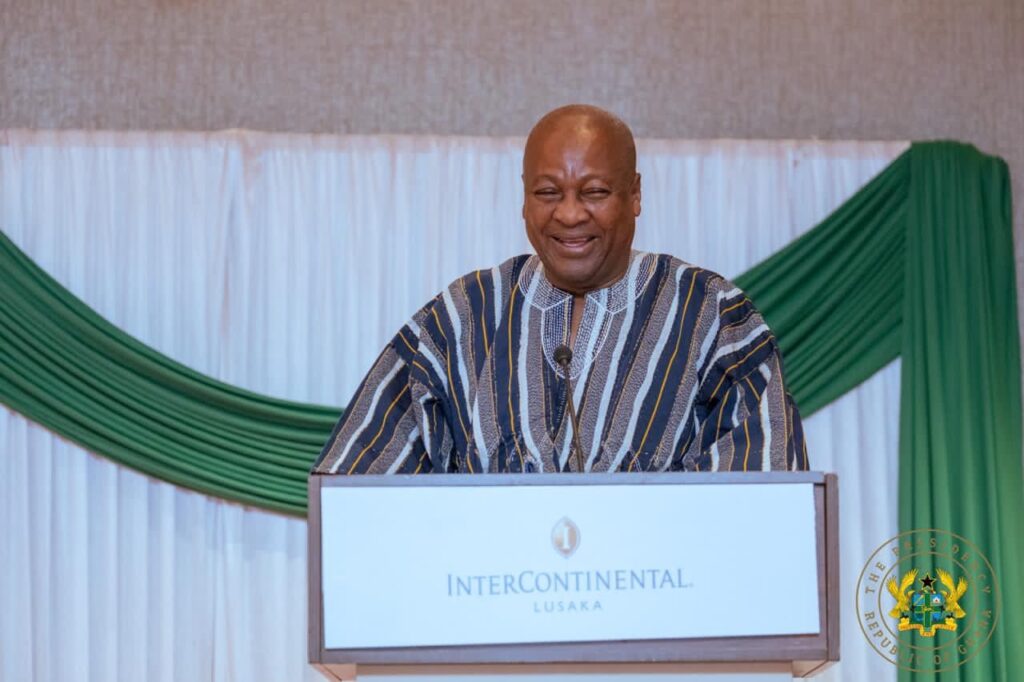
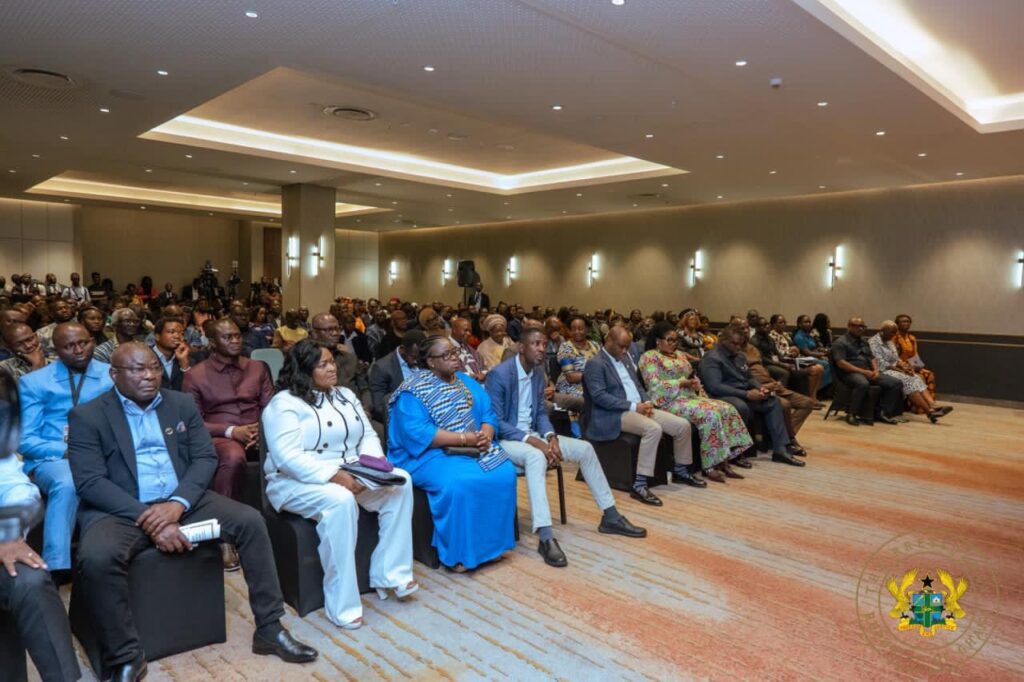
He made the remarks while engaging Ghanaian nationals in Zambia during his three day state visit, using the interaction to outline how the reset agenda is being translated into concrete development priorities.
Speaking to members of the Ghanaian community, President Mahama described the Big Push as a central pillar of the broader reset agenda, which is aimed at restoring economic stability and rebuilding critical systems across the country.
“The majority of the money for the big push is going into the road network because the road network has deteriorated so badly and something needed to be done about it.”
HE John Dramani Mahama, President of Ghana
The President said Ghana’s road network had declined significantly over the years, creating serious constraints for trade, mobility, and productivity. In his view, no country can achieve meaningful progress without reliable roads that allow people and goods to move quickly and efficiently.
He explained that strong transport links are essential to connecting markets, reducing business costs, and supporting investment in both urban and rural communities. President Mahama emphasized that directing a large portion of the Big Push funds into roads was unavoidable given the scale of the challenge.
He said the condition of highways and feeder roads across the country demanded urgent attention, making road rehabilitation and expansion a priority within the infrastructure programme.
Big Push Target Multiple Sectors
At the same time, he noted that the Big Push is designed to support multiple sectors rather than focus narrowly on transport alone. According to him, funding under the initiative is also being channeled into education and agriculture as part of a balanced approach to development.
In agriculture, President Mahama announced plans to establish the first eleven farmer service centers in major food producing areas. He said these centers will be equipped with a range of modern machinery, including tractors, combine harvesters, ploughs, harrows, trailers, and other essential equipment to support farmers.
The president explained that the farmer service centers are intended to remove barriers that have limited agricultural productivity for decades. Many farmers, he said, lack access to mechanized tools and are forced to rely on manual labor, which restricts scale and efficiency.
By making equipment available in strategic locations, the government aims to help farmers expand cultivation, improve yields, and modernize farming practices. President Mahama linked these interventions to signs of improving economic activity across the country.
He said one visible indicator of renewed momentum is increased travel and congestion on major roads. According to him, business activity has begun to pick up, prompting more people to move around in search of opportunities and to engage in commerce.
He recalled a recent period when high fuel prices discouraged travel, leading many people to limit vehicle use to essential journeys. With fuel now more affordable, he said, people are driving more frequently and visiting places they previously avoided. This increased mobility, he explained, reflects growing confidence and participation in economic life.
However, President Mahama cautioned that rising congestion also exposes the limitations of existing infrastructure. As more vehicles use the roads and economic activity intensifies, bottlenecks become more apparent.
Creating Alternative Routes to Ease Congestion
For that reason, he said the government must not only repair deteriorated roads but also expand the network and develop alternative routes to ease congestion and sustain growth. The President stressed that the Big Push is designed to be forward-looking rather than reactive.
He said investing in infrastructure ahead of demand is essential to preventing delays that can slow economic progress. In his view, well planned road expansion today will support industrial growth, regional integration, and job creation for years to come.
Addressing Ghanaians living in Zambia, President Mahama underscored the importance of engaging the diaspora in national development conversations. He said such meetings provide an opportunity to explain policy choices directly and to understand the concerns of citizens abroad.
He encouraged the Ghanaian community to remain connected to developments at home and to contribute ideas and expertise where possible. President Mahama concluded by reaffirming his administration’s commitment to implementing the Big Push as a cornerstone of the reset agenda.

He said that while the scale of investment in roads is significant, it is justified by the long-term benefits to the economy and society. According to him, improved road infrastructure will enhance productivity, support agriculture and industry, and ultimately spur the transformation needed to place Ghana on a sustainable path of growth.
READ ALSO: Energy Sector Recovery Driving Economic Stability – President Mahama