
Global oil prices held largely steady on Friday as investors turned their attention to high-level diplomatic talks between the United States and Iran taking place in Oman.
The discussions, viewed as potentially pivotal for regional stability, come amid lingering fears that renewed tensions in the Middle East could disrupt oil supplies and send prices sharply higher.
Brent crude futures slipped marginally by 0.1% to trade at $67.50 a barrel by early afternoon GMT, while U.S. West Texas Intermediate (WTI) crude fell 0.2% to $63.18 a barrel. Despite the relatively calm trading session, both benchmarks were on track to record weekly losses, reflecting broader market caution.
Brent crude was set to end the week down by 4.6%, while WTI was heading for a weekly decline of 3.2%, as concerns over demand growth and geopolitical uncertainty weighed on sentiment.
Investors Focus on U.S.-Iran Talks
Market analysts say the overriding factor shaping oil prices is investor anticipation of the outcome of talks between Washington and Tehran.
The negotiations, mediated by Oman and held in Muscat, are seen as an early step in what could become a prolonged diplomatic process.
“Investors are watching the U.S.-Iran talks, and their sentiment is shaped by the outcome,” said Tamas Varga, an oil analyst at brokerage PVM. According to him, the current price stability reflects uncertainty rather than confidence, as traders await clearer signals from the discussions.
Investors and speculators appear to believe that the initial round of talks will focus more on setting a framework for future negotiations rather than delivering immediate breakthroughs.
This interpretation has tempered expectations of any near-term easing of sanctions or sudden shifts in oil supply.
Iran Signals Cautious Engagement
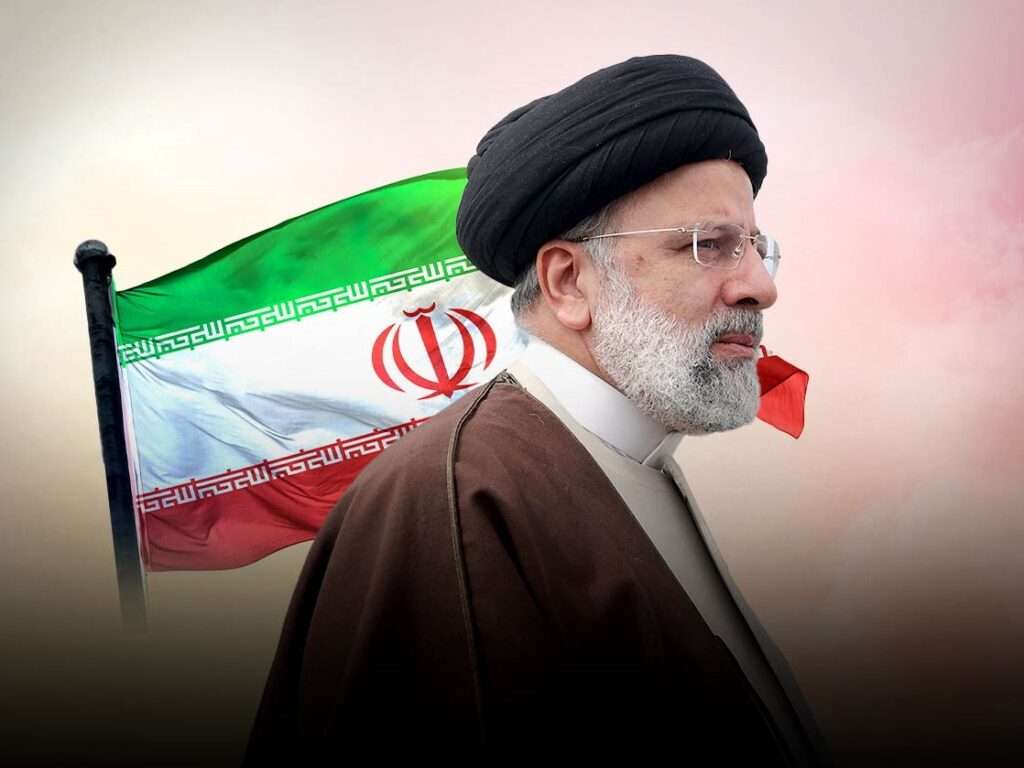
Iranian officials have signaled a measured approach to the talks, balancing openness to diplomacy with firm assertions of national interests.
Iran’s Foreign Minister, Abbas Araghchi, who arrived in Oman ahead of the discussions, struck a cautious tone in a post on social media platform X early on Friday.
“Iran enters diplomacy with open eyes and a steady memory of the past year,” he wrote, adding that Tehran would engage constructively but without compromising its position. “We engage in good faith and stand firm on our rights,” the Iranian official said.
Araghchi, who will represent Iran in the Oman-mediated talks, emphasized that any durable agreement must be built on mutual respect.
“Commitments need to be honored. Equal standing, mutual respect and mutual interest are not rhetoric, they are a must and the pillars of a durable agreement.”
According to Iran’s state-run Islamic Republic News Agency (IRNA), one of Tehran’s main objectives in the current round of talks is to assess the intentions of the U.S. delegation.
The discussions are expected to test “the other side’s goodwill and seriousness,” as both countries explore whether common ground exists after years of strained relations.
On the U.S. side, the delegation is being led by Steve Witkoff, special envoy for President Donald Trump. While details of the U.S. negotiating position have not been publicly outlined, market participants remain wary given the history of abrupt policy shifts in U.S.-Iran relations.
Geopolitical Risks Still Loom
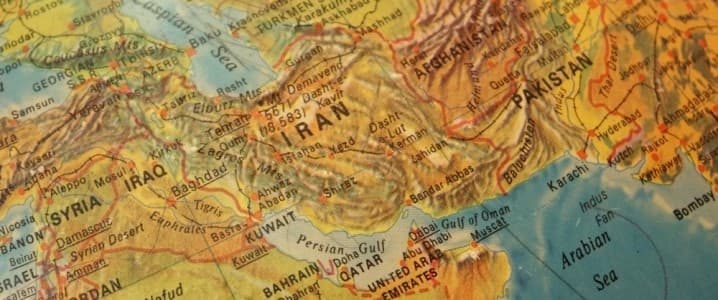
Despite the start of dialogue, analysts caution that the talks do little to immediately ease fears of further escalation. The negotiation process is widely expected to be lengthy, and any breakdown could quickly reignite tensions, particularly if Washington grows frustrated with a lack of progress.
There are concerns that President Trump could lose patience in the event of a stalemate, as has occurred in past U.S.-Iran nuclear negotiations.
Such a scenario could lead to renewed sanctions pressure or heightened military posturing, both of which would have significant implications for oil markets.
Adding to the sense of unease, the U.S. Virtual Embassy in Tehran issued a security alert ahead of the talks, urging American citizens to leave Iran immediately.
The advisory called on U.S. nationals to “have a plan for departing Iran that does not rely on U.S. government help,” underscoring the fragile security environment.
While the warning was not directly linked to the negotiations, it highlighted the broader geopolitical risks that continue to hover over the region, reinforcing investor caution.
For now, oil markets remain in a holding pattern, balancing near-term demand concerns against longer-term supply risks tied to Middle East geopolitics.
Until then, oil prices are likely to remain sensitive to headlines, with stability masking underlying volatility. As diplomacy unfolds in Oman, the outcome of the U.S.-Iran talks is set to remain a key driver of global oil market sentiment in the days ahead.