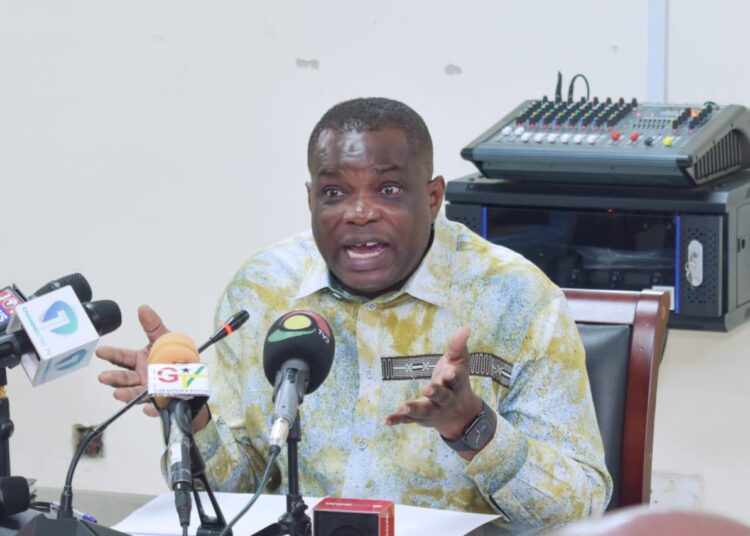
The Minister of Roads and Highways, Hon. Kwame Agbodza, has defended the decision to modify the Suame Interchange project from an originally planned four-tier structure to a three-tier design, describing the move as a prudent intervention that ensures value for money while offering a more effective response to traffic congestion in the Greater Kumasi Metropolis.
He explained that the redesign, combined with the construction of the proposed Kumasi Outer Ring Road, presents a comprehensive and financially responsible solution to the city’s growing transport challenges.
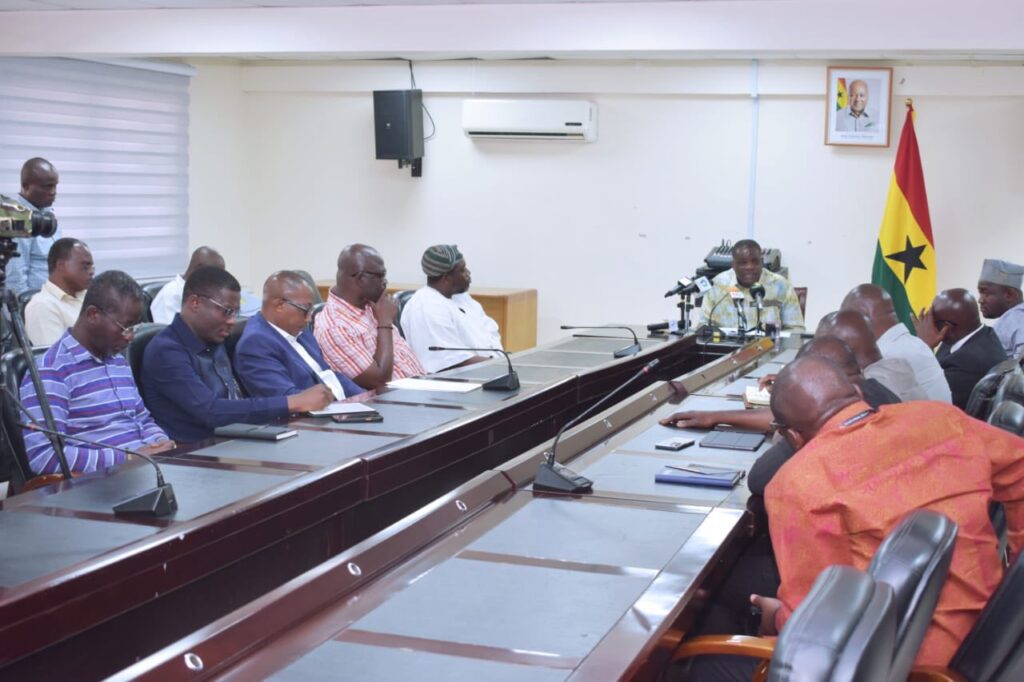
Addressing journalists at a press conference in Accra, the Minister said the revised approach was informed by changing traffic patterns, funding constraints, and the need to avoid excessive compensation costs that were not captured in the original project estimates.
The briefing followed public criticism by the Member of Parliament for Bantama, Francis Asenso Boakye, who had described the modification as a disservice to Kumasi and the country. Hon. Agbodza rejected that assertion, insisting that the decision was guided by technical assessments and the broader public interest.
Kumasi Outer Ring Road
According to the Minister, a major component of the new strategy is the Kumasi Outer Ring Road, which is designed to divert through traffic away from the city centre.
He explained that the proposed road will start at Atia Junction near Boankra, pass through Juaben, Kasaam, Tano Odumasi and Ahodwo, before terminating at Akom on the N10 highway.
This alignment, he said, offers a more efficient connection between the N10 at Akom and the N6 at Boankra, significantly reducing travel time for vehicles moving between the northern and southern parts of the country.
Hon. Agbodza noted that once the outer ring road becomes operational, a substantial volume of northbound and southbound traffic will bypass central Kumasi altogether. This, he explained, reduces the traffic demand initially projected for the Suame Interchange and makes the original four-tier design unnecessary.
Project Financial and Logistical Challenges
In his words, when traffic volumes are redistributed in this manner, “the Suame area will require less capacity than was initially projected.” The Minister further explained that the four tier option posed serious financial and logistical challenges.
He disclosed that the original design did not adequately account for compensation payments for properties along the corridor. Among the structures that would have been affected were two storey commercial buildings along the Suame Road, the Suame Police Station, and a portion of the Kumasi Mall.
He stressed that compensating owners of such high-value properties would have placed a heavy burden on the project budget. Beyond compensation, Hon. Agbodza highlighted the difficulty of relocating critical public utilities along the proposed fourth-tier alignment.
He pointed to major water and electricity lines at the Krofrom and Abrepo intersections that would have required relocation before construction could proceed.
Based on conservative estimates, he said the cost of compensation and utility relocation alone would have exceeded half of the total construction cost of the original four-tier design. Such an outcome, he argued, would not represent responsible use of public funds.
The Roads Minister also placed the project within the wider economic context facing the country. He explained that following Ghana’s debt default and subsequent engagement with the International Monetary Fund, funding for several major infrastructure projects became constrained.
Suame Interchange under Big Push
In light of these realities, the government had to reassess priorities and adopt designs that deliver maximum impact within available resources. To ensure the completion of the Suame Interchange despite these challenges, President John Dramani Mahama has approved its inclusion under the government’s Big Push Programme.
Hon. Agbodza said this decision reflects the administration’s recognition of Kumasi’s strategic importance as Ghana’s second-largest city and a major commercial hub. He assured residents that the government remains committed to delivering high-quality infrastructure that supports economic growth and improves daily living conditions.
He added that the Suame Interchange is only one part of a broader road development agenda for the Kumasi metropolis. Ongoing projects include the completion of the Inner Ring Road linking Asokwa to Sofoline, as well as works on the Ahodwo Roundabout to Daban stretch of the Melcom road.
Together, these interventions are expected to significantly improve traffic flow and connectivity across the city. Hon Agbodza urged the public to view the redesign not as a downgrade, but as a strategic adjustment informed by data, fiscal discipline, and long-term planning.
He maintained that infrastructure development must balance ambition with realism, particularly in a period of economic recovery. By aligning the scale of the Suame Interchange with the broader traffic management plan for Kumasi, he said the government is delivering a solution that is both practical and sustainable.
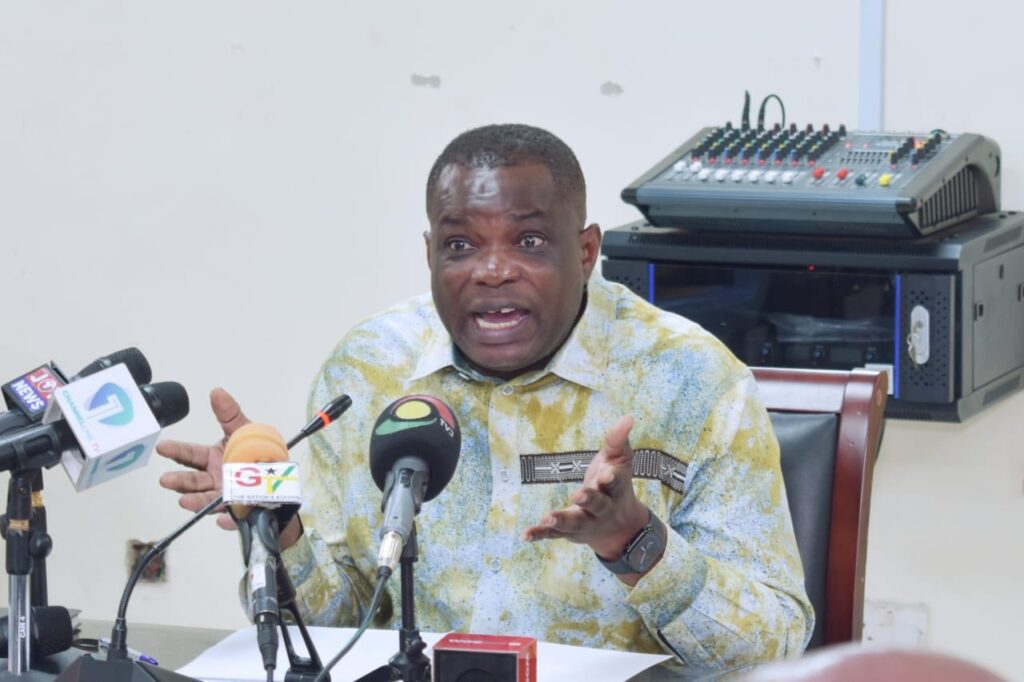
As debate continues over major infrastructure choices, the Minister reiterated that the ultimate objective remains the same: to provide safe, efficient and affordable road networks that serve the needs of citizens and support national development.
In the Minister of Roads and Highways, Hon. Kwame Agbodza’s view, the modified Suame Interchange, supported by the Kumasi Outer Ring Road, represents a decisive step toward achieving that goal.
READ ALSO: ECG Reaffirms Commitment to Cash Waterfall Mechanism