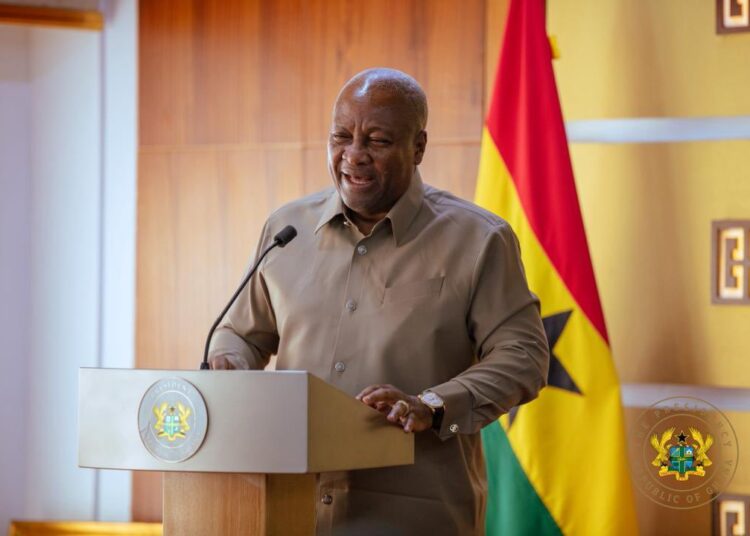
The Pwalugu Multipurpose Dam, a cornerstone of Ghana’s northern development agenda, is set for a strategic re-engineering. Speaking during a high-level visit by the Upper East Regional House of Chiefs, President John Dramani Mahama detailed a new two-phase implementation plan for the nearly $1 billion infrastructure project.
According to the President, the decision to split the project into distinct power and irrigation components is designed to ensure technical feasibility and financial sustainability for what remains the most significant investment in the region’s history.
“Estimated at approximately $993 million, the Pwalugu project is no longer being viewed as a single, monolithic task. Instead, the administration is prioritizing the energy component to establish an immediate economic anchor before expanding into large-scale commercial irrigation”
President John Dramani Mahama
The president noted that phase One of the project will focus on the construction of the hydro-power dam and an integrated solar farm, emphasizing that for the project to be “economically viable,” the energy output must surpass the 100-megawatt threshold.
He noted that this is being achieved through a Hybrid Energy Strategy that combines traditional hydroelectricity with floating or land-based solar arrays. This dual-source energy model ensures that the dam remains a productive asset even during the dry season when water levels in the catchment area might fluctuate.
By securing the power component first, he explained, the state will create a revenue stream that can help support the maintenance and expansion of the subsequent agricultural infrastructure.
Transforming Agriculture Through Irrigation
President Mahama added that once the dam structure is operational, Phase Two will trigger a massive expansion of the Upper East’s agricultural capacity. This phase will involve the construction of extensive canals and pump stations designed to transform the arid landscape into a year-round production hub.
The President noted that the project is expected to bring at least 10,000 hectares of land under permanent irrigation, providing the foundation for a sustainable agribusiness economy.

Beyond power and farming, the Pwalugu Dam serves a critical humanitarian and disaster-management function.
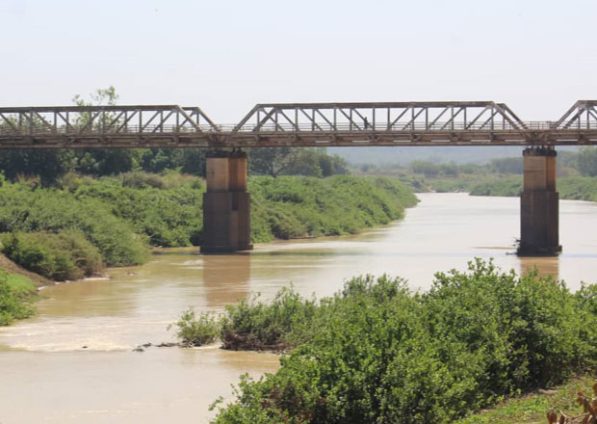
For years, the annual spillage of the Bagre Dam in Burkina Faso has caused catastrophic flooding in northern Ghana, destroying homes and washing away livelihoods. The Pwalugu Dam is being engineered as a “weir” or buffer to manage these seasonal surges.
“Any time it’s a raining season before the Bagre Dam is opened, we will spill out some of the water in the Pwulugu Dam, so that when the water comes from Bagre, it will retain a lot of it without overstretching and destroying people’s farms”
President John Dramani Mahama
This proactive water-management strategy marks a shift from disaster response to disaster prevention. By utilizing the Pwalugu reservoir to absorb the Bagre surge, the government aims to protect the very farms the irrigation component seeks to create.

The President’s address echoed earlier updates by the Minister for Food and Agriculture, Hon. Eric Opoku, reaffirming that while the $1 billion price tag is substantial, the phased approach offers a clear path toward completing a project that could fundamentally redefine the economic trajectory of Northern Ghana.
READ ALSO: Africa Must Define Its Own Energy Transition Pathway — Dr Oppong