
The Fisheries Commission (FC) and the National Premix Fuel Secretariat have launched a landmark field assessment of Liquefied Petroleum Gas (LPG) powered outboard motors, signaling a potential energy revolution for Ghana’s artisanal fishing sector.
Conducted at Akateng in the Eastern Region, the exercise brought together technical experts from Henos Energy and Milton System Limited to evaluate the viability of LPG as a cleaner, more reliable alternative to traditional liquid premix fuel.
“As the inland fisheries sector grapples with supply chain inconsistencies and environmental concerns, this pilot represents a critical step toward modernizing the ‘blue economy’ and ensuring the long-term sustainability of lake-based livelihoods”
Fisheries Commission
The Commission noted that the initiative is part of a broader government mandate to diversify energy sources for the fisheries workforce, particularly in remote inland communities where fuel accessibility remains a significant hurdle.
Recognizing that the success of any technological shift depends on grassroots acceptance, the delegation began the mission with high-level stakeholder consultations. Led by the Fisheries Commission, the team paid a courtesy call on the District Assembly to brief the District Coordinating Director, Mrs. Eunice Naileer, on the operational dynamics of the LPG technology.
“These discussions emphasized the need for a collaborative framework between local government and traditional authorities to ensure the infrastructure for LPG distribution is both secure and accessible and sought support”
Fisheries Commission
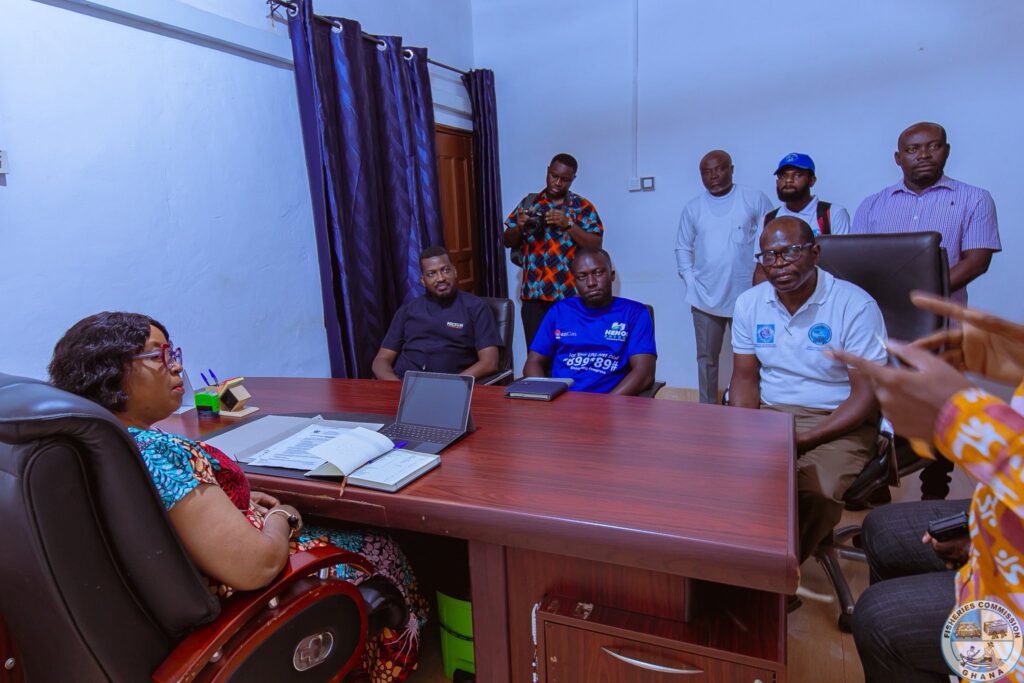
By securing the endorsement of Akateng’s traditional leadership, the Commission cleared the path for a smoother transition, addressing potential cultural or operational skepticism before the full-scale rollout begins.
Assessing Operational Suitability
According to the Fisheries Commission, the core of the exercise involved a “rigorous practical demonstration,” of the LPG outboard motors under local conditions. Unlike coastal marine fishing, inland operations at Akateng require motors that can handle the unique navigational challenges of the Volta Lake.
Fishers and representatives from the National Inland Canoe Fishermen Council (NICFC) participated in focus group discussions to provide real-time feedback on the motor’s performance, fuel efficiency, and ease of maintenance compared to standard petrol engines.
“The exercise formed part of preliminary engagements ahead of piloting the technology among selected fishing communities, with the aim of assessing its operational suitability and acceptance among fishers”
Fisheries Commission
The technical support from Milton System Limited ensured that the assessment covered critical metrics such as torque, fuel consumption rates, and the durability of the LPG conversion kits in high-humidity environments.
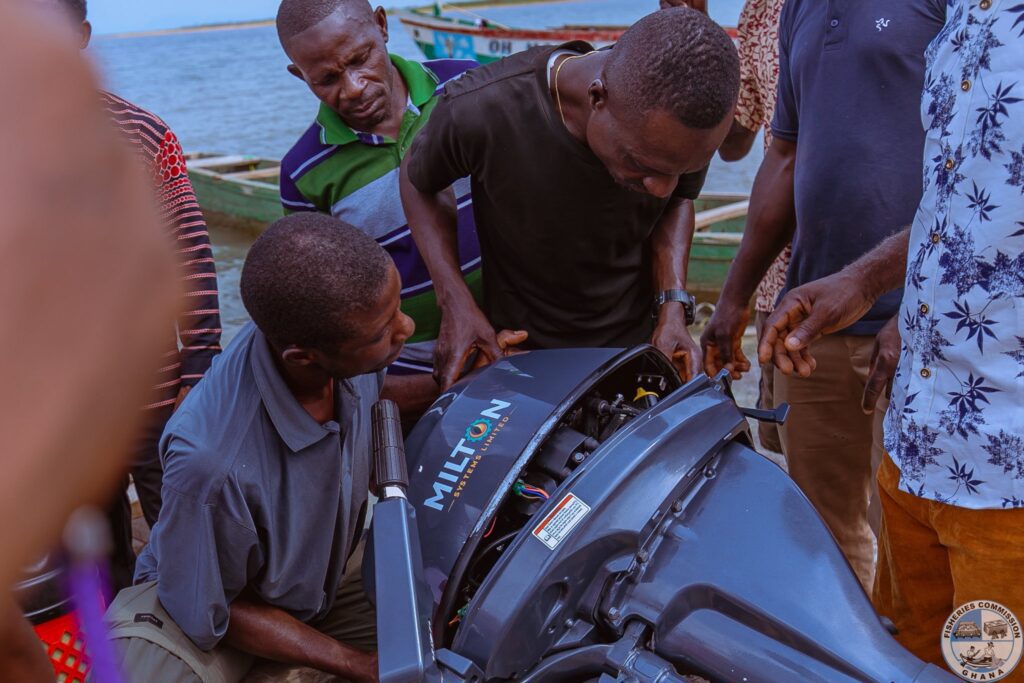
The Commission revealed that initial feedback from the fishers highlighted the potential for significant cost savings, as LPG often offers a more stable price point than the frequently subsidized and volatile premix fuel market.
A Cleaner Path
Beyond economic efficiency, the shift to LPG aligns with the Ministry of Fisheries and Aquaculture’s 2026 sustainability goals.
LPG burns significantly cleaner than traditional two-stroke premix engines, reducing the discharge of oil and unburnt fuel into the inland water bodies that serve as vital sources of drinking water and biodiversity.
The National Premix Fuel Secretariat positioned this technology as a way to alleviate the pressure on the national premix distribution system. By introducing a “dual-fuel” or “alternative-fuel” ecosystem, the government can better manage subsidies while providing fishers with the autonomy to choose the most reliable energy source for their daily operations.
The Akateng assessment is the precursor to a multi-community pilot phase scheduled for late 2026. Data gathered during this field test will be used to refine the technology and develop training modules for local mechanics, ensuring that a support ecosystem exists before the motors are distributed nationwide.
As the Fisheries Commission moves from testing to implementation, the focus remains on ensuring that the technology is not just innovative, but “fisher-friendly.”
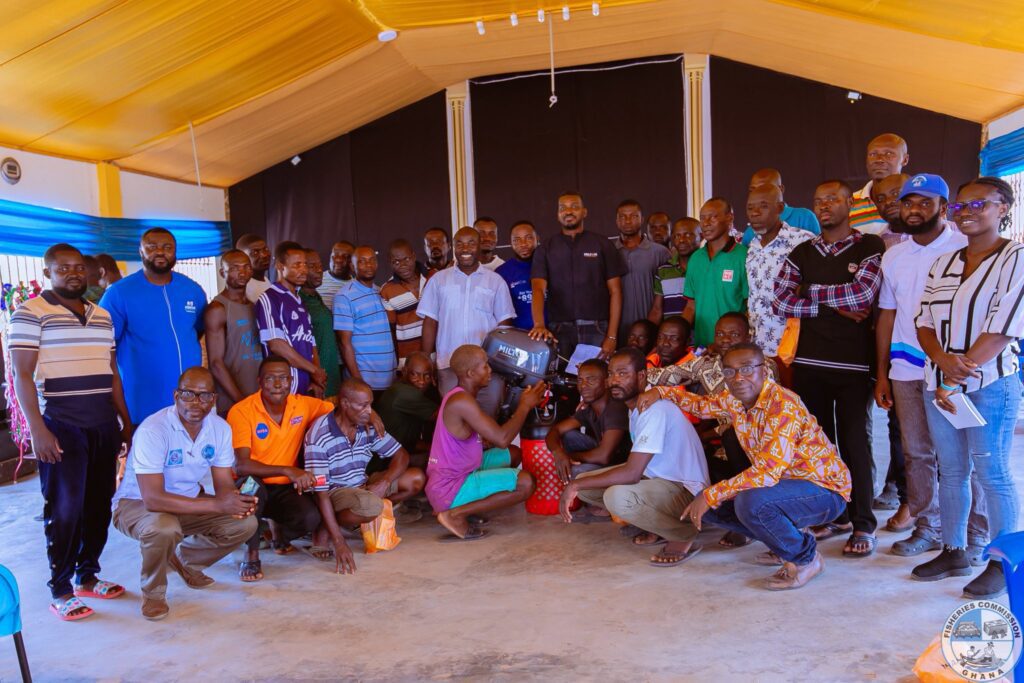
With the support of partners like Henos Energy, the transition to LPG could redefine the economic landscape of Ghana’s landing beaches, turning Akateng into the blueprint for a modernized, sustainable inland fishery.
READ ALSO: Cardinal Namdini Pledges Responsible Mining Operations in Ghana