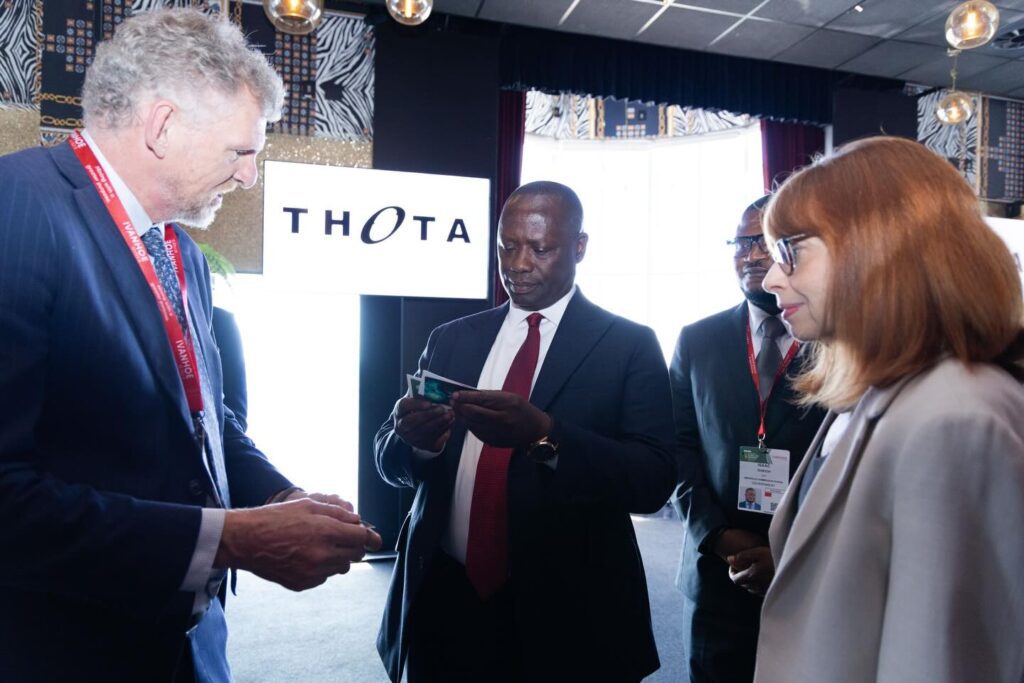
Dr. Hannah Louisa Bissiw-Kotei, the Administrator of Ghana’s Minerals Development Fund(MDF), has issued a strategic call for the implementation of deliberate financing mechanisms designed to scale the participation of women throughout Africa’s mining value chain.
Speaking at the 2026 Investing in African Mining Indaba, she framed gender-focused investment not merely as a social imperative but as a critical lever for achieving inclusive and sustainable development across the continent’s extractive industries.
The call to action, delivered during the 2nd Annual AWIMA Leadership Awards, emphasized a transition from viewing women solely as laborers to recognizing them as primary owners and decision-makers.
Dr. Bissiw-Kotei argued that the current extractive model must be transformed through intentional policy and financial support to allow women to manage licensed concessions and operate heavy-duty machinery.
She highlighted that the Minerals Development Fund(MDF) is already leading this charge by prioritizing the training of women technicians and assisting female-led enterprises with regulatory compliance, while pointing to Ghana’s upcoming Women’s Development Bank as a blueprint for institutional financing.
“Why can’t women be supported to acquire artisanal skills, operate heavy-duty mining equipment, manage value chains, and own licensed mining concessions? The answer lies in intentional policy and financial support. Financing women is a nation-building strategy rather than charity.”
Dr. Hannah Louisa Bissiw-Kote
The Economic Case for Gender Diversity in Extractives

In the high-stakes world of global commodities, the significance of women’s involvement goes far beyond representation; it is “smart economics.”
Research indicates that gender-diverse mining teams often report up to a 67% lower injury rate and significantly higher profitability margins sometimes outperforming male-dominated peers by nearly 25%.
When women occupy leadership roles, there is a documented increase in ESG (Environmental, Social, and Governance) compliance and more innovative problem-solving, which are essential for the “social license to operate” in modern mining.
Structural Barriers to Female Ownership
Despite the clear benefits, the “leaky pipeline” in the extractive sector remains a challenge. Women currently make up approximately 15-19% of the global mining workforce, but they are frequently relegated to administrative or subsistence roles due to a lack of access to credit and technical training.
Dr. Bissiw-Kotei’s advocacy for Special Purpose Vehicles (SPVs) and development banks aims to dismantle these barriers, ensuring that the “multiplier effect” where women reinvest up to 90% of their income into family health and education can be fully realized within mining communities.
Shaping Africa’s Mining Future
As the Association of Women in Mining in Africa (AWIMA) celebrates its 10th anniversary, the narrative is shifting from marginalization to leadership.
By equipping women with technical skills and ensuring they have a seat at the negotiation table for mineral royalties, African governments can ensure the sector is truly transformational for future generations.
The push for inclusive policies is no longer an elective strategy; it is the cornerstone of a resilient and competitive African mining future.
READ ALSO : Mahama to Host Accra Reset ‘Addis Reckoning’ at AU Summit