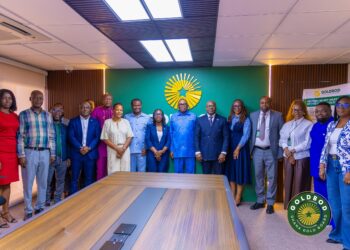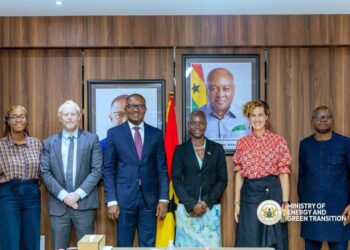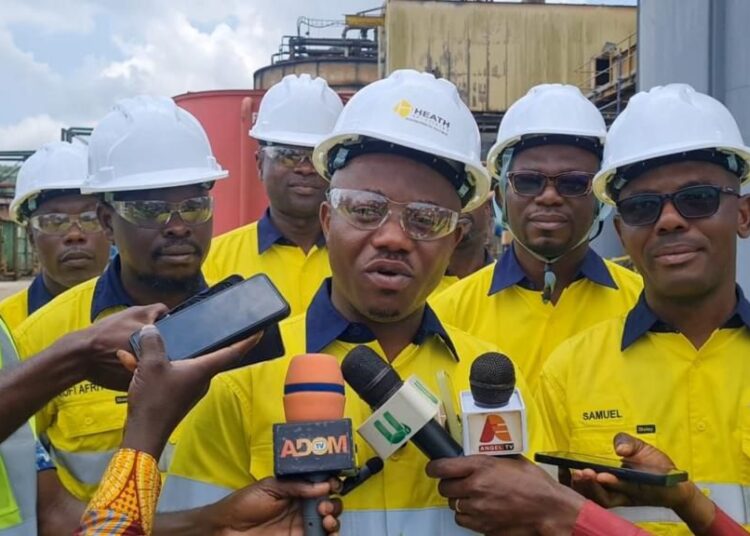
Gold Fields Ghana has underscored its role as a cornerstone of the national economy by remitting a record-breaking sum of Ghc 5.77 billion to the Government of Ghana throughout the 2025 fiscal year.
This massive fiscal injection, comprised of corporate taxes, mineral royalties, and dividends, highlights the company’s significant contribution to domestic revenue mobilization at a time when the state is intensifying efforts to bolster its fiscal independence.
“In 2025, Gold Fields contributed more than GHS 5.77 billion to the Government of Ghana. This significant remittance, backed by sustained investment from our Tarkwa and Damang Mines, reflects our commitment to fueling national growth.”
Gold Fields Ghana
The remittance is a cumulative figure derived from the high-performing Tarkwa and Damang mines, which remain pivotal to the nation’s extractive output. Of the total amount, corporate taxes accounted for the largest share at Ghc 2.9 billion, with the Tarkwa mine alone contributing Ghc 2.5 billion.
Furthermore, the government received Ghc 705.1 million in dividends, a direct return on its 10% free-carried interest in the mining operations, while mineral royalties reached Ghc 1.2billion, providing a stable and predictable revenue stream regardless of market fluctuations.
Strengthening the National Purse and Social Compact
The substantial tax remittance from Gold Fields serves as “fiscal oxygen” for Ghana’s economy, providing the necessary liquidity to fund critical public expenditures without further straining the national debt.
These funds are channeled into the Consolidated Fund and the Minerals Development Fund (MDF) to support infrastructure, healthcare, and education.
By consistently meeting these high-value obligations, Gold Fields reinforces a social compact where the extraction of mineral wealth translates into tangible public goods, thereby “fueling national growth” through the support of schools, clinics, and road networks across the country.
Local Economic Multipliers and Supply Chain Impact

Beyond the direct payments to the treasury, the relationship between Gold Fields and the Ghanaian state is strengthened through the company’s aggressive local content strategy.
In 2025, the firm spent approximately Ghc 8.8 billion on in-country procurement, with Ghc 6.5billion of that amount flowing directly to 163 suppliers within host communities.
This “measurable economic footprint” ensures that the benefits of mining extend far beyond the capital, creating thousands of indirect jobs and fostering a robust ecosystem of Ghanaian-owned businesses that provide engineering, logistics, and catering services to the mines.
Forging a Sustainable Partnership for the Future

This massive remittance acts as a stabilizer for the Ghanaian Cedi and a primary driver of foreign exchange earnings, which reached record levels in 2025 as gold prices soared.
The transparency of these payments often referred to as the “Publish What You Pay” standard enhances public accountability and builds trust between the extractive industry and the government.
As the Ghana Chamber of Mines advocates for a “sweet spot” in fiscal policy, the 2025 contributions from Gold Fields demonstrate how a stable regulatory environment allows for “sustained investment” that benefits both shareholders and the Republic of Ghana.
READ ALSO: Toyota Unveils Ghana’s First Hybrid