

In a decisive move to solidify Ghana’s position as the primary industrial gateway to Africa, the Ghana Free Zones Authority (GFZA) has hosted a high-powered trade mission from India’s Southern Gujarat Chamber of Commerce and Industry (SGCCI).
The GFZA headquarters in Accra became the focal point for bilateral economic diplomacy as the Authority sought to convert India’s manufacturing prowess into local industrial growth. The engagement was geared toward attracting high-value, export-oriented investments that leverage Ghana’s unique trade advantages under the AfCFTA.
“Led by the Chief Executive Officer of the GFZA, Dr. Mary Awusi, the session provided a comprehensive roadmap for Indian investors looking to capitalize on Ghana’s ‘Free Zones’ status.
“Dr. Awusi emphasized that the nation’s appeal extends beyond its strategic geography, citing its deep-rooted political stability and a youthful and employable population as the twin engines capable of driving sustained industrial productivity for foreign firms”
GFZA
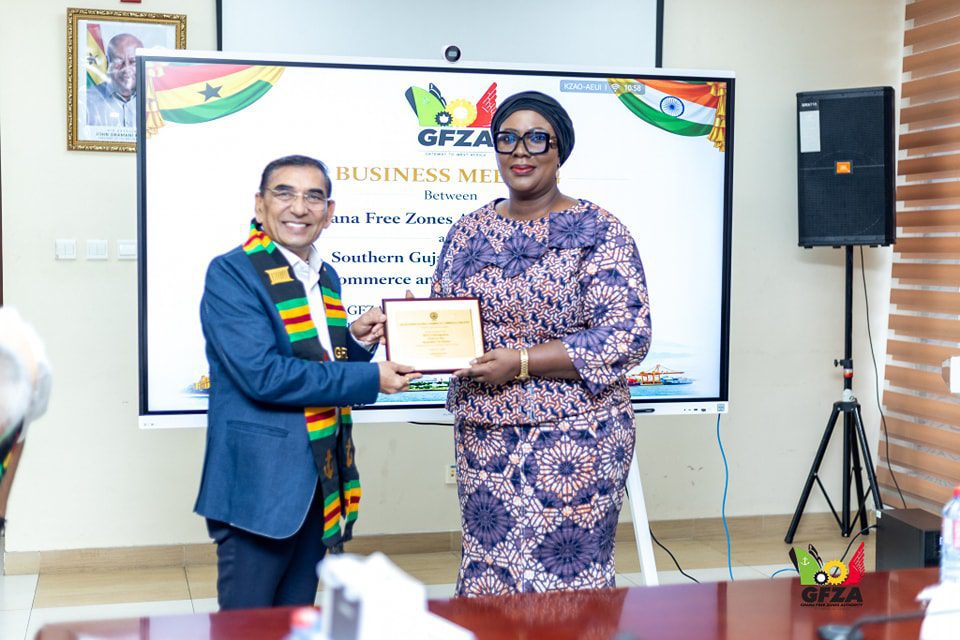
The visiting delegation, headed by SGCCI Vice President Mr. Ashok Jirawala, represented a diverse spectrum of India’s industrial backbone, including Textiles and Apparel, Agro-processing, Manufacturing, and Jewellery. These sectors are particularly critical to Ghana’s current economic agenda, which seeks to move away from the export of raw materials toward value-added manufacturing.
To provide the Indian delegation with a “360-degree” view of the business environment, the GFZA assembled a multi-agency panel.
This included top-tier representation from the Food and Drugs Authority (FDA), the Ghana Investment Promotion Centre (GIPC), the Ghana Gold Board, and the Ministry of Health. Each agency provided clarity on the regulatory guardrails and facilitation services available to ensure that new ventures can scale rapidly without bureaucratic friction.
Incentivizing Competitiveness
At the heart of the deliberations was the Free Zones Scheme, which offers a suite of fiscal and non-fiscal incentives designed to lower the cost of production for export-heavy industries.
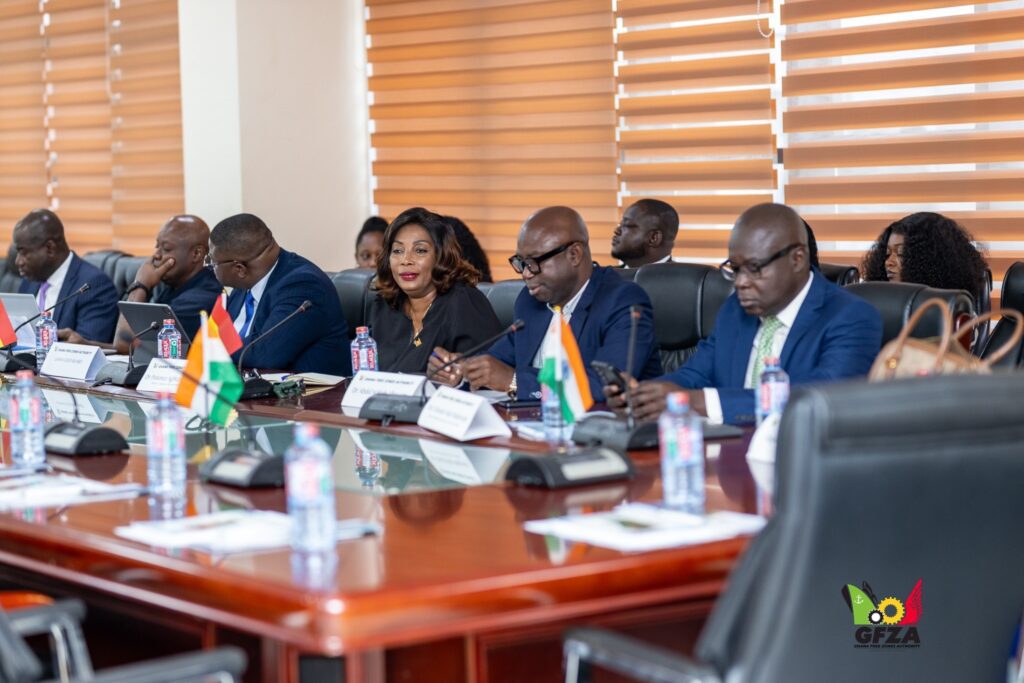
For the SGCCI delegation, these incentives – ranging from corporate tax holidays to duty-free imports of capital equipment – represent a significant competitive edge in the global market.
“Ms. Anita Novi Quashie, Director of Marketing and Investment Promotion at GFZA, gave a presentation on the Free Zones Scheme, outlining investment opportunities, priority sectors, relevant trade agreements and the GFZA’s incentive framework.
“She further emphasized that Ghana’s Free Zones Scheme is particularly well suited to export-oriented investments, given the range of incentives it offers to enhance global competitiveness”
GFZA
According to the GFZA, the presentation by the FDA’s Deputy CEO, Mr. Rodrick Daddey Adjei, was particularly crucial for the agro-processing and pharmaceutical representatives, as it outlined the rigorous quality standards that ensure “Made in Ghana” products gain seamless entry into international markets.
The meeting concluded with a clear signal of intent from the Indian side. Mr. Jirawala and his team expressed satisfaction with the transparency of the regulatory frameworks presented, indicating that the SGCCI is now looking toward long-term partnerships rather than mere short-term trade deals.

This sentiment was echoed by Mr. Lateef Apau Wiredu, Deputy CEO (Operations) of the GFZA, who noted that the Authority is ready to provide the necessary operational support to turn these discussions into ground-breaking ceremonies.
As gifts were exchanged as symbols of goodwill, the message that the industrial bridge between Gujarat and Accra has been significantly strengthened was clear as day.