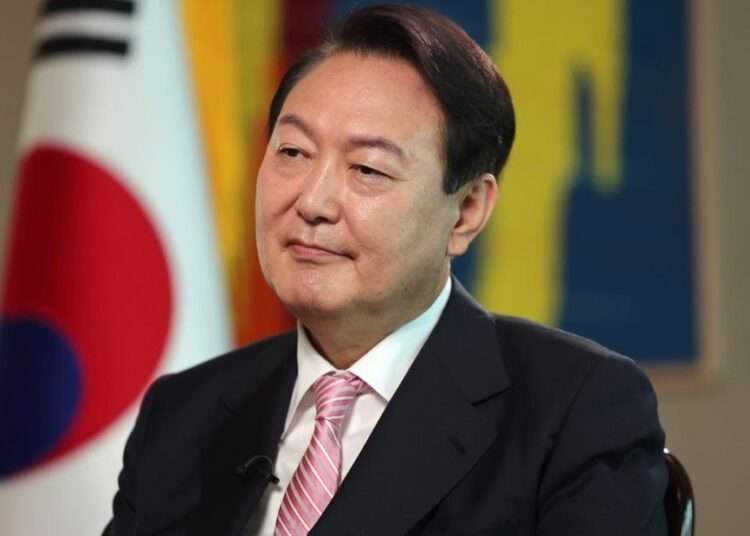
South Korea’s former President Yoon Suk Yeol has been found guilty of masterminding an insurrection over his short-lived imposition of martial law in 2024.
The Seoul Central District Court ruled that Yoon was the leader of the December 3, 2024 insurrection in a case for the disgraced ex-President, who was impeached and removed from office over his declaration of martial law.
According to reports, the court found that the core fact of Yoon’s martial law case was that he sent the military to the National Assembly in December 2024.
The court also ruled that Yoon intended to prevent and paralyse the National Assembly from functioning properly for a significant period of time, considering the words he used in the military decree and the fact he tried to arrest political opponents, including the leader of the opposition Democratic Party and his own ruling party’s leader Han Dong-hoo.
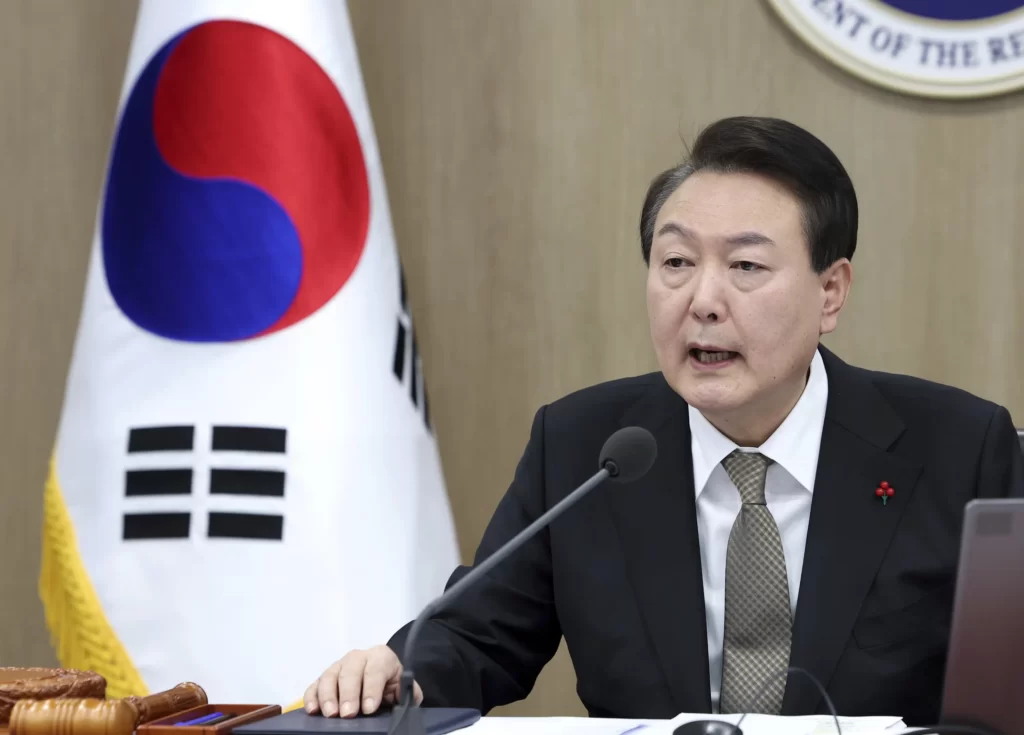
However, it rejected the Special Prosecutor’s claim that Yoon planned to establish a long-term dictatorship.
Presiding Judge Ji Gwi-yeon told the court that the declaration of martial law resulted in “enormous social costs, and it is difficult to find any indication that the defendant has expressed remorse for that.”
Ji said that the very act of dispatching armed soldiers to the parliament building and transporting them by helicopter constituted acts of insurrection. “As to defendant Yoon Suk Yeol, the crime of insurrection leadership is established,” the judge said.
Yoon, 65, had maintained his innocence throughout his court appearances, arguing that he had presidential authority to declare martial law and that his decision was aimed at preventing opposition political parties from obstructing the work of government.
Insurrection is one of the few criminal charges from which a South Korean president does not have immunity. Prosecutors had sought the death penalty, a largely symbolic move as the country hasn’t executed anyone in decades.
Special Counsel Park Eok-su said in closing arguments that the series of actions destroyed the liberal democratic constitutional order. “The shock, fear, anxiety, wounds, and sense of loss suffered by the people are beyond description,” he added.
Prosecutors said that Yoon had not shown remorse and there remained a risk that his invocation of emergency martial law could be repeated in future.
Yoon is already serving jail time for another conviction over the martial law order. He still faces two more trials in relation to it.
Yoon Sentenced To Life In Prison
The Seoul Central District Court sentenced Yoon to life in prison for leading an insurrection during his botched attempt to place the country under martial law in December 2024.
Following the court’s decision, Yoon’s lawyers said that the ruling had only affirmed a “pre-written script” and claimed that it was not supported by evidence in the case, without elaborating.
His lawyers added that they would be discussing with Yoon whether or not he wanted to appeal the case.
Today’s verdict, however, marks the first time in 30 years that South Korea has sentenced a leader for insurrection. In 1996, former President Chun Doo-hwan, an army major general, was convicted for seizing power in a 1979 military coup and presiding over the 1980 Gwangju massacre of pro-democracy demonstrators.
He was initially sentenced to death, though the sentence was commuted to life imprisonment and he was later pardoned.
Other officials were sentenced alongside Yoon. Kim Yong-hyun, who was Defence Minister in Yoon’s administration has also been found guilty of insurrection was sentenced to 30 years in prison.
Roh Sang-won, former Intelligence Commander, was sentenced to 18 years in prison. Cho Ji-ho, ex-police Chief was sentenced to 12 years. Kim Bong-sik, former Seoul Metropolitan Police Chief, sentenced to 10 years. Mok Hyun-tae, former Head of the National Assembly police guards was sentenced to 3 years.
The Court said that the defendants may appeal within a week. However, among the defendants, two were found not guilty.
They are Kim Yong-gun, the former chief of the defence ministry investigation bureau, and Yoon Seung-yeong, a former official at the police investigation bureau.
READ ALSO: Create Enabling Environment for OSP to Succeed – CDD-Ghana Fellow