

The Tema Oil Refinery (TOR) has firmly dismissed claims that it has shut down due to a lack of government investment, describing the reports as misleading and inconsistent with the reality on the ground.
Management insists that the refinery is not facing financial or technical collapse but is instead transitioning into a critical phase of its operational ramp-up.
Addressing the concerns, TOR’s Head of Corporate Affairs, Godwin Mahama Ayaba, explained that the refinery is deliberately pausing certain operations to enable technical preparations aimed at boosting output capacity. According to him, the current operational posture reflects a strategic engineering decision rather than distress.
“The narrative outside there pointing to issues of lack of investment, lack of funds, technical issues, maintenance issues, is not the fact on the ground.”
Godwin Mahama Ayaba, TOR’s Head of Corporate Affairs
Transitioning to Higher Output Capacity

At the heart of TOR’s transition is the planned integration of the F-61 furnace with the existing F-1 furnace to power the Crude Distillation Unit (CDU).
This integration is expected to increase the refinery’s output capacity significantly from 28,000 barrels per stream day (bpsd) to 45,000 bpsd.
Mr. Ayaba clarified that such engineering work cannot be undertaken while full operations are ongoing.
“Obviously, that preparation cannot be done whilst there is an ongoing process.
“So, technically, you need to hold on with operations to be able to prepare in order to do the tie-in. That is what technically or engineering-wise, that is how it ought to be, and that is what we are doing.”
Godwin Mahama Ayaba, TOR’s Head of Corporate Affairs
The CDU is a central component of the refining process, and enhancing its power capacity is seen as a crucial step in positioning TOR for sustained productivity after years of operational challenges.
Management views the integration as part of a broader strategy to restore the refinery to optimal performance levels.
Learning from the Past
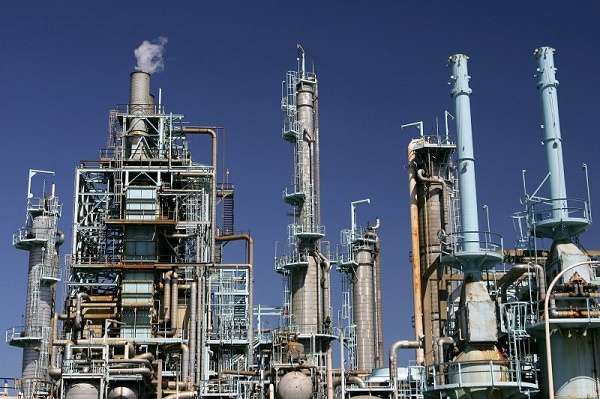
Caution has been a central theme in TOR’s preparations, particularly given the refinery’s history.
“In trying to bring it back to operation, we need to be very careful so that we meet all the engineering requirements in order not to find ourselves in the same situation that occurred in the year 2017.”
Godwin Mahama Ayaba, TOR’s Head of Corporate Affairs
This measured approach reflects management’s determination to avoid repeating past setbacks. Rather than rushing the process, TOR is prioritizing safety compliance and technical precision to ensure long-term stability and reliability.
As part of the recommissioning process, Vega Engineering, the Italian firm that constructed the F-61 furnace, has been engaged to oversee its commissioning.
The involvement of the original builders is intended to guarantee adherence to design specifications and global engineering standards.
According to Mr. Ayaba, Vega Engineering’s role is to supervise the technical process before handing over the system to TOR’s internal engineers.
“So, all those preparations are underway to be able to bring the F61 to stream so that, as I said earlier, we will be able to do the 45,000 instead of currently the 28,000 that we are doing.”
Godwin Mahama Ayaba, TOR’s Head of Corporate Affairs
The projected increase in capacity would represent a substantial improvement in TOR’s operational capability and could strengthen Ghana’s domestic refining capacity at a time when energy security remains a priority.
Reaffirming Operational Stability

TOR’s management has been unequivocal in rejecting suggestions that the refinery’s current status stems from financial distress or technical malfunction.
Instead, officials describe the move as part of a structured and carefully managed expansion process following a successful test run after years of inactivity.
The refinery’s leadership maintains that the operational adjustments are temporary and necessary to facilitate a more robust production framework.
The planned ramp-up to 45,000 bpsd could mark a significant milestone in the refinery’s recovery journey. For stakeholders in Ghana’s energy sector, the development signals progress toward enhanced local refining capacity, which could reduce dependence on imported petroleum products and improve supply stability.
As preparations continue, management has reiterated its commitment to transparency and safety, assuring the public that the refinery’s trajectory is one of measured growth rather than decline.
With international technical oversight and a clear roadmap for capacity expansion, TOR appears focused on turning a new page, one defined by caution, resilience, and renewed operational ambition.
READ ALSO: Ministry Partners TradeMark Africa To Boost Garment Exports