In a decisive move to dismantle the bureaucratic and logistical hurdles stifling Ghana’s textile industry and boost garment exports, the Ministry of Trade, Agribusiness and Industry (MoTAI) has entered a strategic partnership with TradeMark Africa (TMA).
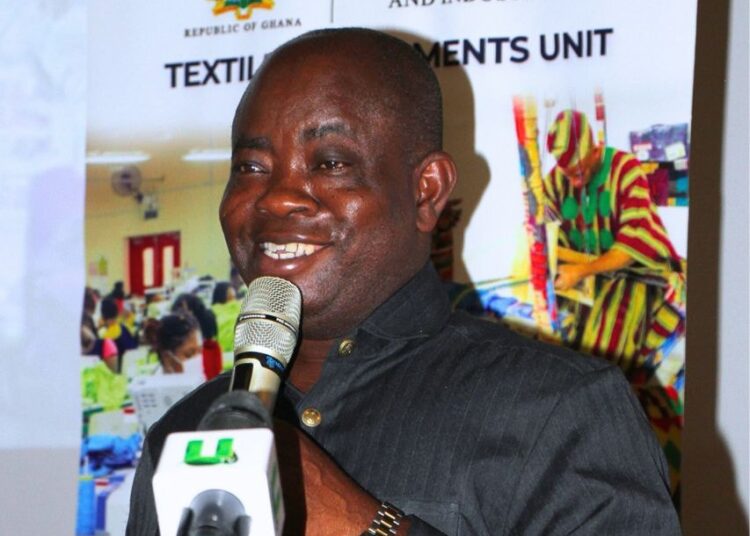
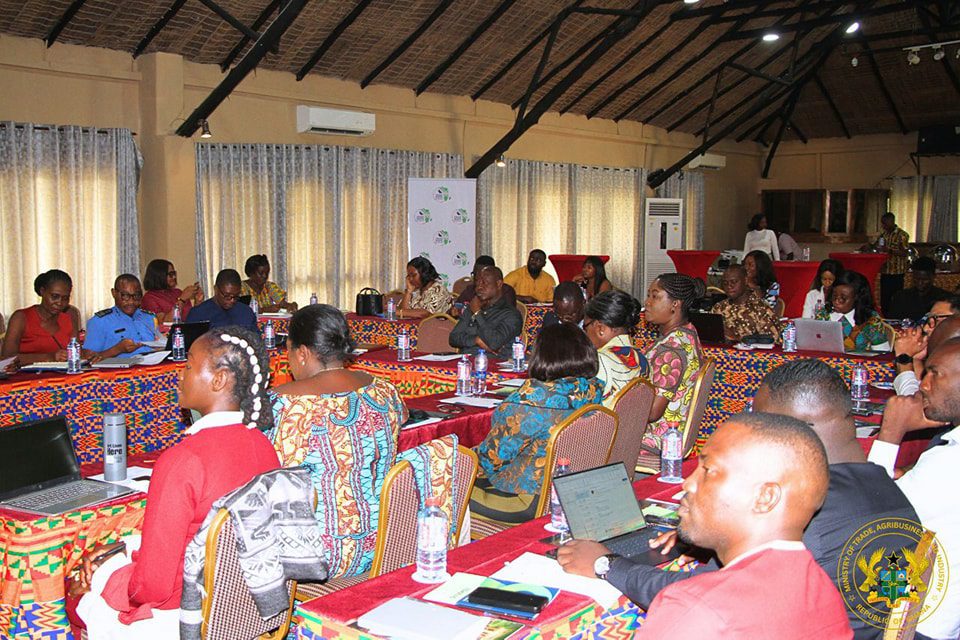
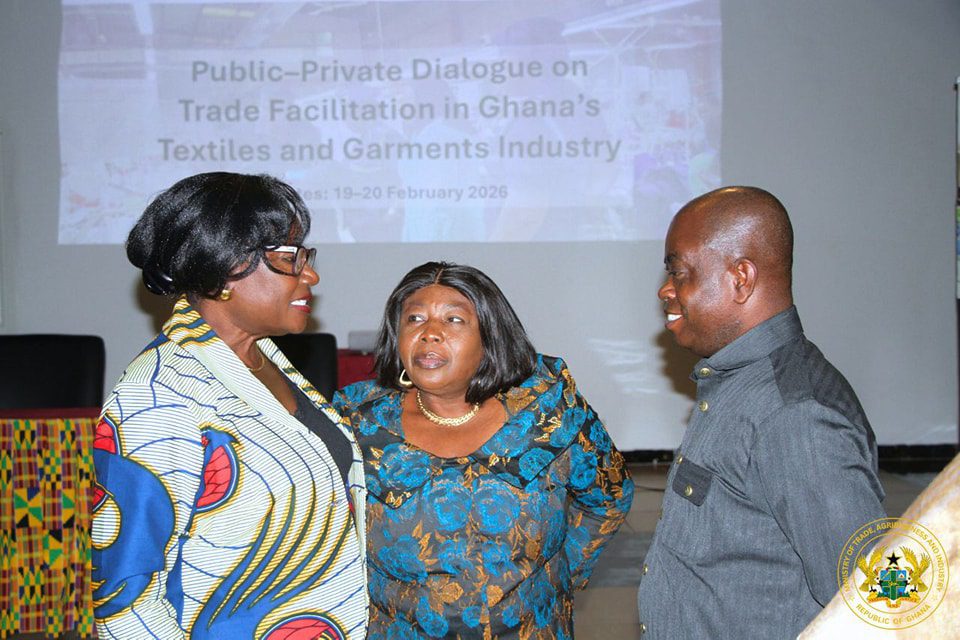
The Deputy Minister for Trade, Hon. Sampson Ahi, recently led a high-level Public-Private Dialogue in Sogakope to address the persistent trade facilitation bottlenecks that have long hampered the sector’s global competitiveness.
According to MoTAI, the two-day engagement brought together garment manufacturers, customs officials, and development partners to forge a practical roadmap for the industry’s survival and expansion.
“The government has identified the textile and garment sector as a critical pillar of its industrialization agenda, particularly due to its capacity to provide large-scale employment for women and the youth. However, players in the industry have frequently cited the high cost of doing business and prolonged turnaround times as major deterrents to growth”
MoTAI

During the deliberations, Hon. Sampson Ahi acknowledged that despite the sector’s strategic importance, manufacturers are currently battling a gauntlet of constraints. These range from complex “customs and clearance procedures, compliance requirements, logistics bottlenecks, to underutilization of trade facilitation schemes,” that weaken Ghana’s position in regional and global value chains.
The dialogue was designed to move beyond theoretical discussions and identify workable reforms that can be integrated into the national trade system.
The Deputy Trade Minister emphasized that the current cost structure is unsustainable if Ghana intends to compete effectively under the AfCFTA framework, noting that the goal is to transform the garment sector into a streamlined, export-oriented powerhouse.
Digital Reforms and the AEO Scheme
A major highlight of the dialogue was the push for the Authorized Economic Operator (AEO) Scheme. Hon. Ahi urged compliant garment businesses to take advantage of this framework, which promises faster clearance, fewer physical inspections, and greater predictability for compliant businesses.
Furthermore, the Ministry is looking to recalibrate the Integrated Customs Management System (ICUMS) to better suit the specific operational realities of the textile industry. This digital alignment is expected to reduce the friction between manufacturing timelines and port exit dates, ensuring that “Made in Ghana,” apparel reaches international retail floors without unnecessary delays.
For MoTAI, the partnership with TradeMark Africa represents a shift toward data-driven policy making. By involving the private sector directly in the Sogakope dialogue, MoTAI is ensuring that future policy actions are grounded in the lived experiences of manufacturers.
The Deputy Minister reassured the stakeholders at the Public-Private Dialogue that the recommendations gathered would not gather dust but would instead inform future policy actions, strengthen institutional coordination, and guide targeted reforms to improve the trade environment for the textile and garment industry.
“This dialogue has been convened not merely as a forum, but as a partnership,” the Deputy Minister stated, adding that the Ministry remains committed to listening, learning and collaborating with private sector actors.
As the global fashion industry looks for alternative manufacturing hubs, Ghana’s ability to resolve these internal trade bottlenecks will determine its success. With the Ministry and TradeMark Africa now aligned, the garment sector is poised for a significant competitive reset.
READ ALSO: GSE Explodes with 804% Turnover Surge