
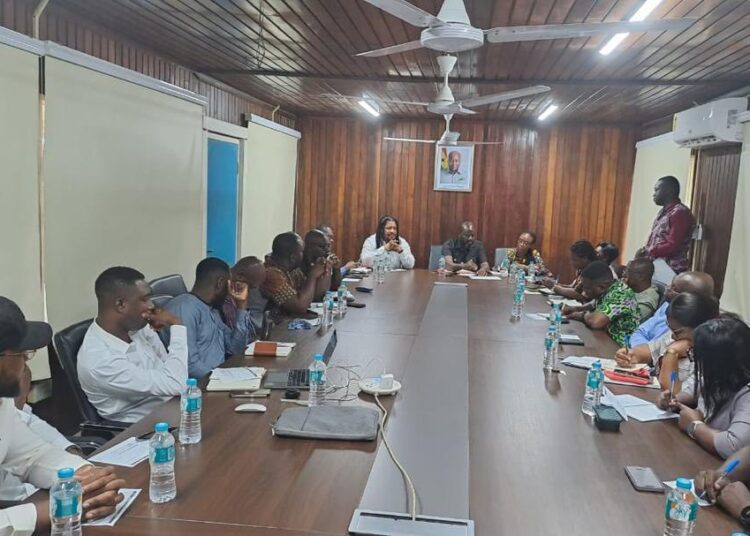
In a decisive move to secure the future of Ghana’s marine resources, the Fisheries Commission and the Ministry of Fisheries and Aquaculture Development (MoFAD) have convened a high-level stakeholder engagement to operationalize the Fisheries and Aquaculture Act, 2025 (Act 1146).
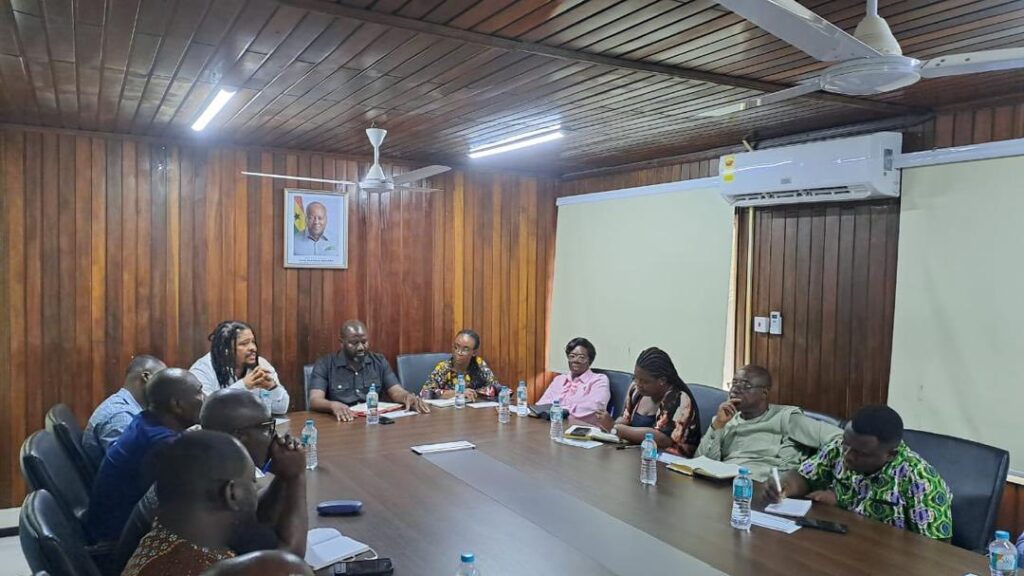
The meeting, held at the Commission’s Head Office in Accra, brought together the Ghana Industrial Trawlers Association (GITA), the National Fisheries Association of Ghana (NAFAG), and the Ghana Federation of Rural Artisans (GFRA) to focus on the transition to a sustainable, law-governed blue economy.
“The meeting provided a platform for in-depth deliberations on the implementation of the new Act, extension of the Inshore Exclusive Zone (IEZ), gear restrictions, and operational activities at sea. It reaffirmed the Commission’s commitment to inclusive dialogue and collaborative decision-making to ensure effective fisheries governance”
Fisheries Commission
The centerpiece of the discussions was the implementation of bold reforms under Act 1146, which was signed into law by President John Dramani Mahama in August 2025. This legislation is a strategic reset for a sector that contributes significantly to Ghana’s food security and supports the livelihoods of over three million people.

According to the Commission, by introducing stricter governance and technical standards, the government aims to protect Ghana’s $425 million annual seafood exports from international sanctions, specifically the looming threat of an EU “red card.”
The most transformative reform discussed was the formal extension of the Inshore Exclusive Zone (IEZ) from six nautical miles to twelve nautical miles.
This expansion is designed to create a protected buffer for artisanal fishers, who have long complained of encroachment and destructive “saiko” fishing by industrial vessels. By doubling the IEZ, the Ministry is effectively reclaiming breeding grounds for small pelagic fish – a vital protein source for millions of Ghanaian households.
While artisanal fishers have lauded the move as a victory for social justice and coastal resilience, industrial operators expressed concerns regarding the operational feasibility of being pushed further out to sea. However, the Minister for Fisheries, Hon. Emelia Arthur, maintained that the extension is a scientific necessity to allow depleted stocks to recover.
Gear Restrictions and Technical Compliance
Beyond spatial management, Act 1146 introduces rigorous gear restrictions and the mandatory use of Electronic Monitoring Systems (EMS) on all industrial vessels.
The Commission spent considerable time taking stakeholders through the updated regulatory framework, which now classifies the use of unapproved nets, light fishing, and explosives as high-level infractions with significantly increased penalties.
The new gear regime is specifically aimed at “curbing the catch of juvenile fish, ensuring that only mature, commercially viable stocks are harvested.” For the Fisheries Commission, compliance is the only path to restoring Ghana’s marine biodiversity.
This engagement signals a shift toward a co-management model where traditional knowledge from “chief fishermen,” is integrated with modern satellite surveillance. The Fisheries and Aquaculture Act, 2025, also establishes an autonomous Fisheries Commission, granting it the independence to enforce laws without political interference.
As Ghana prepares for the full rollout of Act 1146, the emphasis remains on transparency. The publication of vessel license lists and beneficial ownership details – as mandated by the Act – will ensure that only legitimate players operate in Ghanaian waters.

By fostering this collaborative environment, the government is not just regulating a sector; it is securing a national heritage.