
In a move that signals a tectonic shift in Ghana’s agricultural strategy, the Ministry of Food and Agriculture (MoFA) has signed a landmark Memorandum of Understanding (MoU) with industrial giant B5 Plus Limited.
According to the Minister of Food and Agriculture, Hon. Eric Opoku, the agreement, which paves the way for the establishment of a large-scale, state-of-the-art cashew processing plant, is a cornerstone of the John Dramani Mahama administration’s “Feed Ghana” Programme.
It is designed to end the country’s historical reliance on the export of raw cashew nuts (RCN) and replace it with a high-value agro-industrial model.
“The era of exporting raw potential is over. Under Feed Ghana, we are turning harvest into industry and agriculture into the engine of economic transformation. The MoFA-B5 Plus partnership positions Ghana to compete not merely as a raw material supplier, but as a value-added agricultural powerhouse”
Hon. Eric Opoku, Minister of Food and Agriculture

The Minister noted that Ghana currently stands as a global heavyweight in cashew production, yet the economic reality has been sobering: over 90% of the nation’s raw nuts are shipped to India and Vietnam for processing.
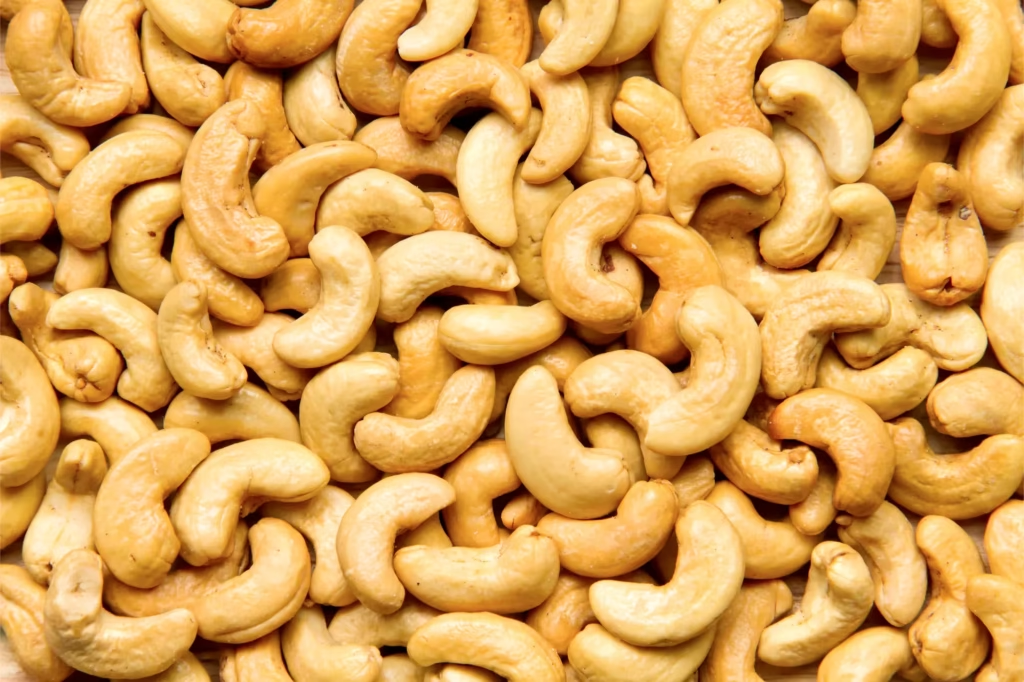
By the time these nuts reach global supermarket shelves as finished snacks, their value has multiplied tenfold – wealth that currently bypasses Ghanaian borders. This new partnership aims to keep that value home.
The MoU, signed by Hon. Eric Opoku, and Mr. Mukesh Thakwani, Executive Director of B5 Plus Limited, adopts a Build-Operate (BO) model. Under this framework, B5 Plus will shoulder the financial and operational risks of the facility, while the Ministry provides the critical policy and land support necessary to scale.
For Hon. Eric Opoku, this is the physical manifestation of moving beyond mere cultivation to full-scale industrialization. By processing cashews domestically, the government expects to stabilize farm-gate prices, which are often subject to the whims of international middlemen.
“Feed Ghana is not just about growing more crops; it is about building industries around what we grow,” he said.
A Strategic Reset
For MoFA, the impact of this plant extends far beyond the factory walls. For the over 200,000 farmers currently engaged in cashew cultivation, the facility represents a guaranteed market with transparent grading systems.
Industry analysts predict that local processing will significantly reduce post-harvest losses, which currently plague rural farmers due to inadequate storage and long transport routes to the ports.
By shelling, grading, and packaging cashews within Ghana, the project will diversify the nation’s export portfolio and strengthen the Cedi. The project will also place a heavy emphasis on skills transfer, ensuring that Ghanaian youth are trained in high-tech food engineering and managerial roles.
The partnership between MoFA and B5 Plus serves as a pilot for what the government hopes will be a broader “Agriculture for Economic Transformation,” agenda.
If successful, the Build-Operate model could be replicated for other tree crops like mango, shea, and coconut. The creation of a Joint Technical Committee to oversee milestones ensures that the project remains on a fast track toward operationalization.

The government has hinted that it may consider “export management tools,” to protect the local processing industry, ensuring a steady supply of raw materials for the new plant.
This proactive regulatory stance is aimed at making Ghana a competitive agricultural powerhouse in the AfCFTA era.
READ ALSO: Sudan Slams RSF Chief’s Meeting With Ugandan President