

The Ghana Centre for Democratic Development (CDD-Ghana) has warned that the rising cost of managing internal conflicts poses a growing threat to national stability and public finances, as security deployments become increasingly permanent rather than episodic.
The concern was raised during CDD-Ghana’s one-year assessment of the Mahama administration, presented by Dr. Kojo Pumpuni Asante, Director of Policy Engagement and Partnerships.
Speaking at the forum, Dr Asante highlighted land and chieftaincy disputes as some of the most persistent domestic security challenges confronting the state. According to him, conflicts that were once sporadic have now evolved into prolonged security engagements, placing sustained pressure on state resources and institutional capacity.
“The key challenges that we have domestically are the land conflicts and chieftaincy conflicts, most of them linked,” he noted, citing Bawku as a prominent and unresolved example. The situation, he explained, has forced the state to maintain continuous troop deployments across multiple hotspots nationwide.
Bawku Conflict Illustrates Unsustainable Security Costs
Dr Asante drew particular attention to the financial burden of security operations in Bawku, describing it as a case study in the escalating cost of conflict management. He disclosed that maintaining a security task force in the area is estimated to cost the state about six million cedis every month.

“Bawku’s security task force is costing six million a month, and I do not even know if that is a conservative estimate,” he said. The scale of deployment, he added, raises serious questions about long term sustainability, especially as similar operations are required in other conflict-prone areas.
In a pointed reflection, Dr Asante asked, “How many troops are you going to send to this conflict, to that conflict, and how are you going to sustain this over time?” His remarks underscored CDD-Ghana’s concern that Ghana’s current approach prioritises reactive military presence over preventive conflict resolution.
Beyond the financial implications, CDD-Ghana warned that overreliance on security deployments risks crowding out investments in early warning systems, mediation, and community based conflict resolution mechanisms.
Dr. Asante stressed that while boots on the ground may be necessary in the short term, they cannot substitute for long-term peacebuilding strategies, particularly due to their financial implications on the national budget.
“What are we doing in investing in the preventive parts, the conflict resolution parts?” he asked, suggesting that insufficient attention has been paid to addressing the root causes of recurring violence. According to him, failure to strengthen preventive measures will continue to trap the country in an expensive cycle of crisis response.
Security Architecture and Oversight Under Scrutiny
The assessment also examined recent efforts by government to formalise Ghana’s security architecture and enhance accountability. Dr Asante acknowledged moves to bring national security spending under closer parliamentary oversight, noting that the national security budget has been transferred to the Ministry of Interior.
“The Minister of Interior also serves as the national security minister, and maybe that brings it more into the purview of Parliament,” he observed. However, he cautioned that institutional clarity remains weak and requires urgent resolution.
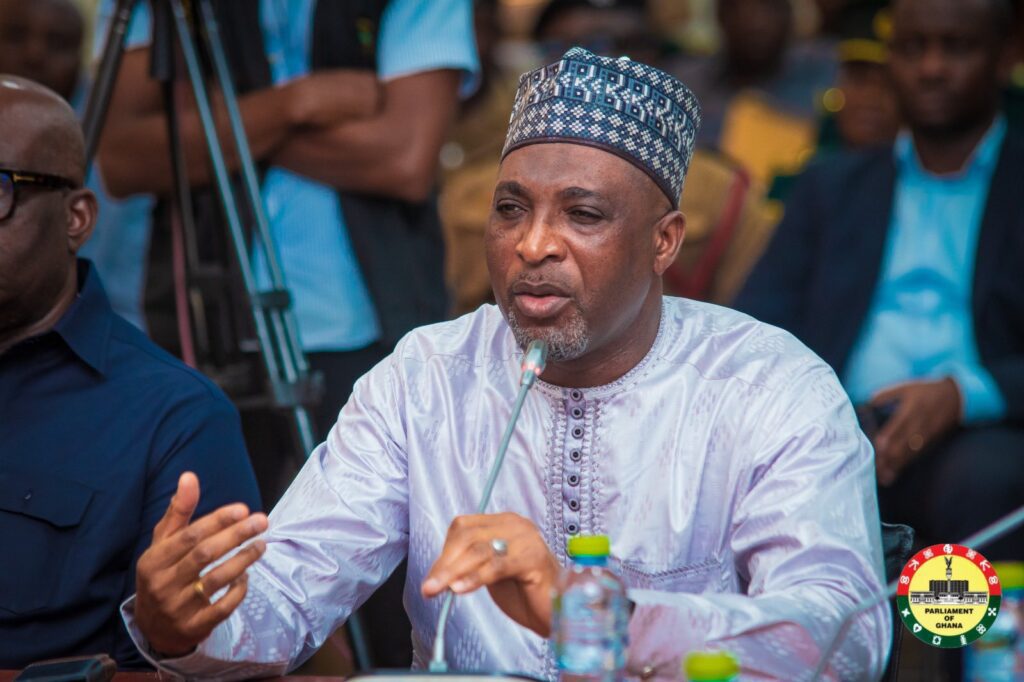
“I think everybody has to accept that we need much more scrutiny and supervision of our security activities,” Dr. Asante stated. He argued that a properly institutionalised security framework is essential to ensure transparency in spending, deployment decisions, and long-term planning.
CDD-Ghana also raised questions about the proposed audit of the security services, which government officials say is intended to end politicisation. While welcoming the intent, Dr Asante warned that the process must be clearly defined and insulated from partisan influence.
“This is very serious, but it is something that we need to understand exactly how this is going to be done, and how to sustain it beyond one regime,” he said. According to CDD-Ghana, reforms that depend solely on the goodwill of a single administration risk reversal and loss of credibility over time.
Broader Internal Security Challenges Persist
Beyond conflict zones, the assessment highlighted other internal security pressures, including prison overcrowding and unresolved farmer-herder conflicts. Dr. Asante pointed to the long-promised Community Service Act as a potential tool to ease pressure on prisons by allowing offenders convicted of minor crimes to serve non-custodial sentences.
“There is a Community Service Act that has been promised. It is still on the table,” he noted, adding that its implementation could improve both justice outcomes and resource efficiency.
CDD-Ghana concluded that Ghana’s growing security expenditure reflects deeper governance challenges that cannot be resolved through force alone. While acknowledging the complexity of managing multiple conflicts simultaneously, the organisation urged government to rebalance its approach toward prevention, institutional reform, and accountability.

As Dr. Asante put it in a reflection, “Any way in which the security architecture is properly institutionalised to allow for parliamentary oversight, spending accountability, and long-term planning has to be addressed.”
The warning from CDD-Ghana adds to the broader public debate about how Ghana can maintain internal peace without overstretching its finances or undermining democratic oversight.
The think-tank’s assessment suggests that unless preventive conflict management is prioritised, the cost of internal instability may continue to rise, with lasting consequences for governance and development.
READ ALSO: T-Bill Yields Crash to 6.4% as Demand Soars