Minority Caucus in Parliament has raised significant concerns regarding the government’s newly proposed Ghana Accelerated National Reserve Accumulation Policy (GANRAP), asserting that the core strategy of using gold to anchor the national currency is a continuation of initiatives pioneered by former Vice President Dr. Mahamudu Bawumia.
While the finance minister presented GANRAP as a novel policy during his recent address to the House, the Minority argued that the foundation of the plan leveraging the extractive sector to build external buffers was already laid between 2021 and 2022.
According to the Deputy Ranking Member on the Finance Committee, Dr. Gideon Boako, the “Domestic Gold Purchase Programme” and the “Gold for Reserves” initiative were the true catalysts that provided the initial safeguards for the Cedi.
“In fact, as the Minister is aware, somewhere in 2021-2022, the Bank of Ghana embarked on the Domestic Gold Purchase Programme and the Gold for Reserves Programme under the leadership of the former Vice President Dr. Mahamudu Bawumia.”
Dr. Gideon Boako,
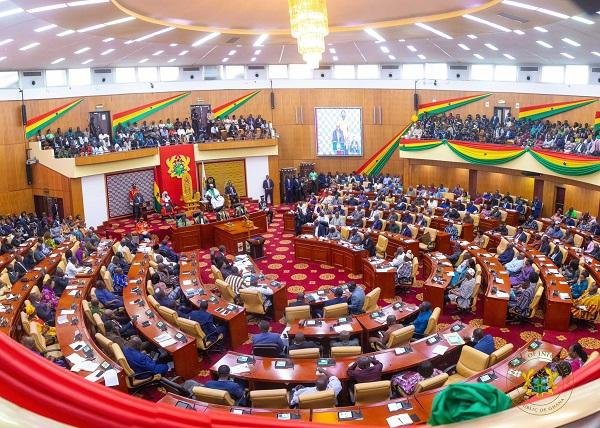
The legislative debate on GANRAP has further highlighted a sharp divide over the stewardship of Ghana’s mineral wealth, with the Minority accusing the current administration of a “haircut” approach toward strategic assets.
Dr. Boako noted that while the government has finally realized the necessity of increasing gold reserves to protect the economy, it simultaneously oversaw a drastic reduction in existing holdings. He pointed out that Ghana’s gold reserves, which historically rose from 8 tonnes to a peak of 38 tonnes, have been significantly depleted.
“It is an undeniable fact that Ghana holds a strategic position in gold production,” he remarked, emphasizing that current holdings remain “anaemic relative to the total holdings in situ.”
Management of Strategic National Assets

The Minority’s critique centers on the perceived inconsistency of selling off accumulated gold while simultaneously proposing a new policy for reserve growth.
In a pointed intervention during the preliminary comments on the Finance Minister’s statement, Dr. Gideon Boako directly challenged the government’s track record.
“Mr. Speaker, before the assumption of this government, we had increased Ghana’s gold reserves from 8 tonnes to 32 tonnes, and the government came to increase it to 38 tonnes, but today as we speak, half of our gold reserves have been sold by this government.”
Dr. Gideon Boako,
Economic Anchors and the Gold Standard

Over the years, Ghana’s gold accumulation strategy has served as a critical non-debt source of foreign exchange, helping to mitigate the volatility of the Cedi. Research indicates that the Domestic Gold Purchase Programme, launched in June 2021, allowed the Bank of Ghana to build reserves using local currency, thereby reducing the heavy reliance on the US Dollar.
By late 2025, these strategic holdings had reportedly grown to 38.04 tonnes, providing a “signaling effect” that bolstered investor confidence and offered a shield against global financial shocks. However, the recent “strategic rebalancing” which saw holdings drop back to approximately 18.6 tonnes has sparked fears that the economy’s primary defense mechanism is being weakened for short-term liquidity.
The GANRAP proposal arrives at a time when the cocoa sector is also under duress, with farmers facing potential financial losses.
The Minority maintains that any policy involving the “haircut” of farmer returns or the sale of national gold must be subject to rigorous Parliamentary debate.
They argue that the “anaemic” level of current reserves compared to the country’s vast underground resources proves that the government needs a more transparent and consistent commitment to the gold-backed model originally championed by Dr. Bawumia to ensure long-term macroeconomic stability.
Building Resilient Buffers

As the Finance Committee prepares to scrutinize the GANRAP document, the focus remains on whether the government can truly “accelerate” reserve accumulation after recent divestments.
The Minority caucus insisted that the success of any such policy depends on honesty regarding its origins and a halt to the “arbitrary sale” of the nation’s bullion.
They believe that only by returning to the disciplined framework of the 2021 programmes can Ghana effectively “anchor our currency and protect safeguards for the economy” in a manner that respects the country’s status as a global leader in gold production.
READ ALSO: Simi Denies Wrongdoing As Gov’t Probe Begins