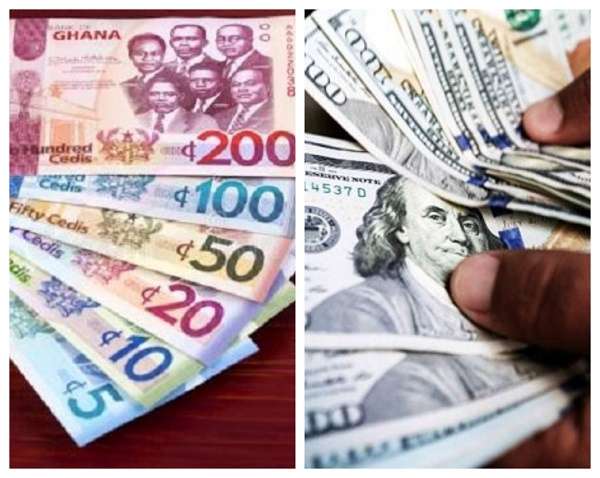
Market expert and forex strategist, Gifty Annor-Sika Asantewah, President of Women in Forex Ghana, has described Databank Research’s recent projection of a 7.20 percent depreciation of the Ghana cedi in 2026 as “measured, realistic, and far from alarming.”
In an exclusive engagement with Vaultz News, Ms Annor-Sika Asantewah offered a detailed assessment of the research findings, which indicate that the cedi could end 2026 trading at approximately GH¢12.85 to the US dollar.
According to her, the headline number must be understood within broader macroeconomic dynamics rather than interpreted as a signal of instability.
Understanding The 7.20 Percent Projection
Databank Research’s 2026 Economic Outlook forecasts a year end depreciation of 7.20 percent, anchored on steady gold inflows, tighter foreign exchange regulations, and continued multilateral support.
Reacting to this, Ms. Annor-Sika Asantewah said, “A single digit depreciation in a frontier economy like Ghana does not automatically translate into crisis. It becomes a crisis only when volatility is sharp, disorderly, and driven by panic.”
She explained that the projection factors in predictable foreign exchange demand from bulk importers, energy sector payments, and Eurobond servicing obligations.
“These are structural pressures that are embedded in the fundamentals of our economy, particularly in relation to imports, energy sector obligations, and scheduled external debt servicing. They are not unexpected shocks or sudden disruptions. They occur annually as part of Ghana’s normal fiscal and trade cycle.
“The real issue is not the existence of these outflows, but whether our foreign exchange inflows, especially from gold exports, remittances, and multilateral support, are strong and consistent enough to offset them in a sustainable manner. When inflows are properly managed and reserves are adequately built, the pressure becomes manageable rather than destabilising. Therefore, 7.2% cedi drop is not a crisis.”
Ms. Annor-Sika Asantewah
In her view, the forecast reflects equilibrium rather than distress.
To put it simply, she said, ‘The market is adjusting, not collapsing.’
Gold Inflows As The Central Pillar
A key assumption in the Databank outlook is a conservative monthly inflow of about GH¢750 million from GOLDBOD, supported by reforms in the small scale mining sector.
Ms. Annor-Sika Asantewah described this as the “anchor variable” in the entire projection.
“Gold is Ghana’s strongest natural hedge,” she stated. “If those inflows remain consistent, the Bank of Ghana will have enough liquidity to smooth excessive volatility and guide market expectations.”
She added that beyond the numerical value of inflows, confidence plays a decisive role in currency markets.
“Forex markets are as much about psychology as they are about liquidity,” she explained. “When traders see reserves building steadily, speculative demand reduces.”
According to her, steady gold backed reserve accumulation gives policymakers what she called “room to breathe.”
Multilateral Support And Market Sentiment
The research also anticipates favourable market sentiment driven by continued programme support from the International Monetary Fund and the World Bank.
Ms. Annor-Sika Asantewah believes this external backing strengthens Ghana’s credibility.
“When the IMF and World Bank remain engaged, it sends a powerful signal to global investors,” she said. “It communicates policy discipline and reform continuity.”
However, she cautioned that multilateral support is not a substitute for domestic fiscal prudence.
As she put it, “External validation helps, but internal discipline sustains.”
She stressed that market confidence will depend on the consistent implementation of reforms, particularly in revenue mobilisation and expenditure control.
Global Shifts In Reserve Dynamics
Databank’s report also highlights a gradual shift among some global central banks away from excessive reliance on the US dollar as a reserve currency, with China increasing gold holdings and BRICS countries discussing the broader role of gold.
Reacting to this development, Ms. Annor-Sika Asantewah described it as a “long term structural conversation with significant implications.”
“If gold is eventually reclassified as a High Quality Liquid Asset and widely accepted as repo collateral, that would elevate its global monetary status.”
Ms. Annor-Sika Asantewah

She explained that such a shift could indirectly benefit gold producing countries like Ghana by strengthening reserve portfolios and reducing over dependence on the US dollar.
Still, she was quick to temper expectations. “It is a high impact but low probability scenario in the near term,” she remarked.
“Volatility concerns, custody risks, and trust limitations among emerging blocs make rapid implementation unlikely.”
Ms. Annor-Sika Asantewah
Reserve Buffers And Regulatory Tightening
Beyond gold inflows and multilateral backing, Ms. Annor-Sika Asantewah pointed to stronger reserve buffers and tighter foreign exchange regulations as additional stabilising factors.
“Our reserve position today is not what it was during previous stress periods,” she said. “Buffers have improved, monitoring has tightened, and enforcement has become more robust.”
She believes these improvements reduce the likelihood of speculative spikes and parallel market distortions.
“The narrowing of gaps between official and unofficial rates enhances transparency,” she explained. “Transparency reduces panic.”
According to her, the neutral to positive outlook maintained in the research is consistent with current macroeconomic signals, provided no systemic shocks emerge.
Implications For Businesses And Investors
For businesses, especially import dependent firms, Ms. Annor-Sika Asantewah advised proactive currency planning.
“A 7.20 percent depreciation spread across twelve months is manageable,” she said. “It allows businesses to hedge, diversify suppliers, and plan pricing strategies.”
Exporters, on the other hand, may benefit from improved competitiveness.
“A moderately weaker currency can enhance export margins,” she noted. “The key is stability, not strength at all costs.”
She emphasised that market participants should avoid sensational interpretations of the headline figure.
In her words, “The narrative should not be fear driven. It should be data driven.”
A Story Of Adjustment, Not Alarm
In concluding her assessment, Ms. Gifty Annor-Sika Asantewah reiterated that the projected 7.20 percent depreciation represents structured adjustment within Ghana’s macroeconomic framework.
“This is not a doomsday forecast,” she said firmly. “It is a reflection of ongoing demand pressures balanced by gold inflows, reserve buffers, and external programme support.”
She added that confidence will ultimately determine outcomes.
“When policymakers remain consistent and communication is clear, markets respond positively. Stability is built on credibility. It is my hope that the Ghanaian cedi defies predictions just as it happened last year, where every single entity and individuals predicted the cedi to end with a certain level of depreciation, but it rather ended the year with about 40% appreciation. Same thing can happen”
Ms. Annor-Sika Asantewah
All in all, her analysis underscores a critical point. The projected cedi movement in 2026 is not a signal of crisis but a measured adjustment shaped by domestic reforms, disciplined reserve management, and evolving global monetary trends.
READ ALSO: Strait of Hormuz Disruption Could Push Ghana’s Pump Prices Higher – Expert Warns