
Oil prices surged by as much as 13 percent on Monday after shipping through the strategic Strait of Hormuz was severely disrupted by retaliatory Iranian attacks.
The escalation followed initial bombing by Israel and the United States that reportedly killed Iran’s Supreme Leader, Ali Khamenei, sending shockwaves through global energy markets.
The sharp rally underscores mounting fears that the conflict could choke off one of the world’s most critical oil transit routes, intensifying supply risks and injecting fresh volatility into already tight markets.
Brent and WTI Hit Multi-Month Highs
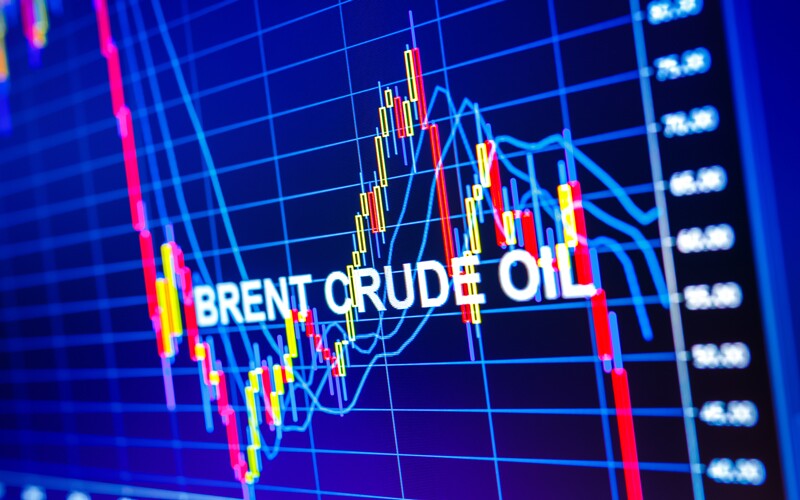
International benchmark Brent crude climbed to as much as $82.37 per barrel in early trading, its highest level since January 2025, before retreating to $78.72 by 0655 GMT. U.S.
West Texas Intermediate (WTI) crude also spiked, reaching an intraday high of $75.33, up more than 12% and marking its strongest level since June before easing to $71.76.
The surge reflects immediate market reaction to escalating hostilities in the Gulf region, particularly around the Strait of Hormuz, a narrow waterway between Iran and Oman that connects the Gulf to the Arabian Sea.
Priyanka Sachdeva, senior analyst at Phillip Nova, said the price action signals caution rather than panic.
“Markets are acknowledging the seriousness of the conflict, but are also signalling that, for now, this is a geopolitical shock, not a systemic crisis.”
Priyanka Sachdeva, senior analyst at Phillip Nova

The Strait of Hormuz handles roughly one-fifth of global oil supply on a typical day. Tankers transporting crude from Saudi Arabia, the UAE, Iraq, Iran and Kuwait pass through the corridor, alongside vessels carrying refined products such as diesel, jet fuel and gasoline to major Asian importers including China and India.
The Strait’s vulnerability is not new, but the scale of the current confrontation has heightened concerns. With so much of the world’s energy passing through a narrow maritime corridor, even temporary interruptions can reverberate globally.
Prices Pare Gains After Initial Spike
Despite the dramatic early rally, oil prices later pared gains. Analysts attribute this moderation to traders having already priced in a risk premium in anticipation of escalating tensions over recent weeks.
Before Monday’s spike, Brent had already risen more than 19 percent this year, while WTI was trading about 17 percent higher. The latest surge builds on those gains but has not yet triggered signs of panic buying or widespread supply hoarding.
Meanwhile, the OPEC+ alliance agreed on Sunday to a modest output increase of 206,000 barrels per day for April. However, RBC Capital analyst Helima Croft noted that nearly all OPEC+ producers are already pumping at capacity, with Saudi Arabia holding the most significant spare capacity.

The International Energy Agency (IEA) said it is in close contact with major Middle Eastern producers. Executive Director Fatih Birol emphasized that the agency stands ready to coordinate a release of strategic petroleum reserves from developed nations if necessary.
Globally, visible oil inventories currently stand at 7.827 million barrels, sufficient to cover approximately 74 days of demand, a level near historical medians, according to a note from Goldman Sachs. While not critically low, these stockpiles could come under pressure if disruptions persist.
Analysts at Citi expect Brent crude to trade between $80 and $90 per barrel this week amid ongoing conflict. In a note led by Max Layton, Citi analysts suggested their baseline scenario anticipates either leadership changes in Iran or sufficient de-escalation within one to two weeks to stabilize markets.
“Our baseline view is that the Iranian leadership changes, or that the regime changes sufficiently as to stop the war within 1–2 weeks,” the analysts wrote, adding that U.S. de-escalation could also ease tensions if strategic objectives are met.
For now, the market appears to be balancing immediate geopolitical risks against hopes of swift diplomatic resolution. However, as long as shipping through the Strait of Hormuz remains uncertain, oil prices are likely to remain volatile.
The coming days will determine whether the current spike proves temporary or marks the beginning of a more prolonged energy crisis.
READ ALSO: Iran’s Top Security Official Rejects US Negotiations