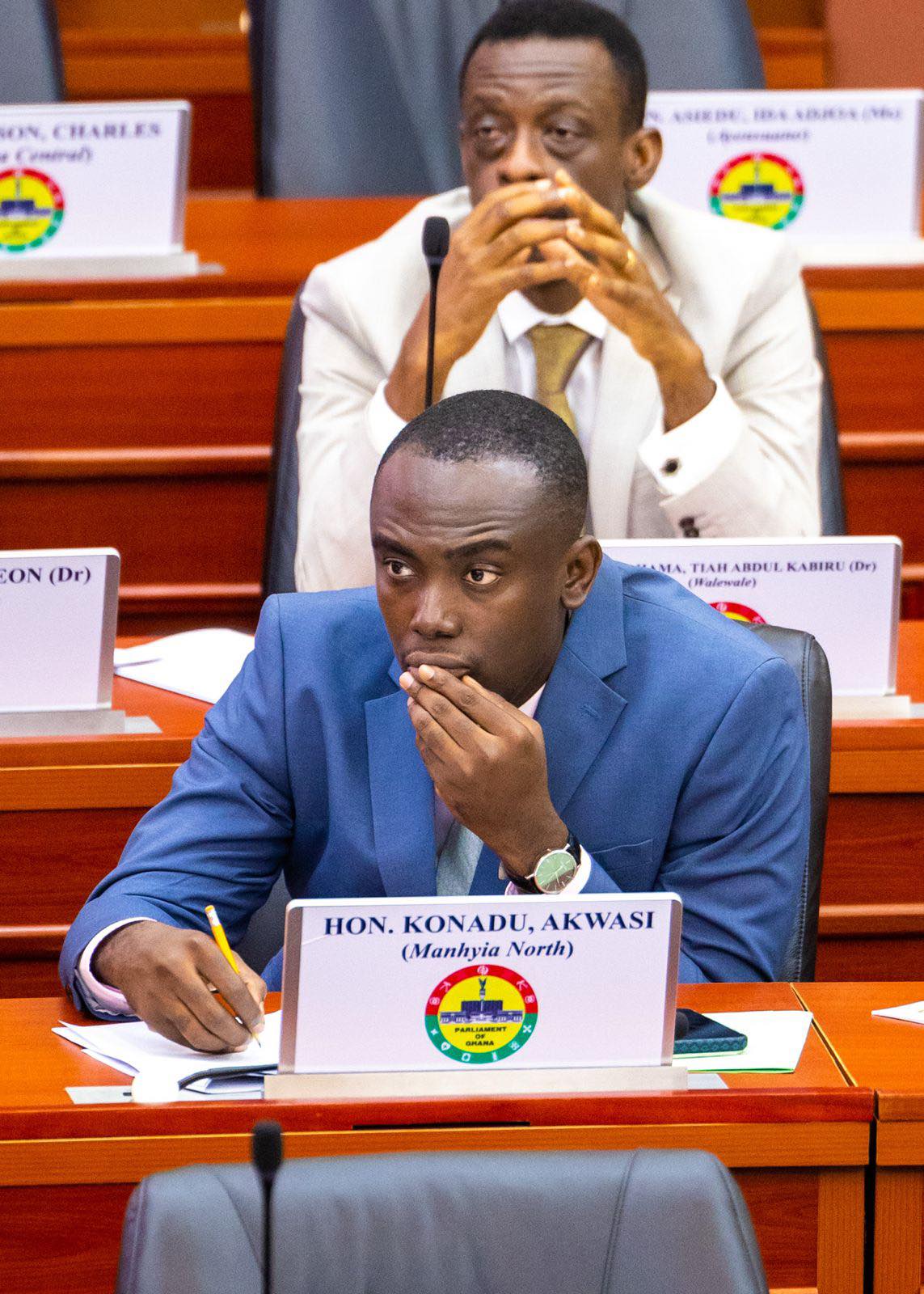
Hon. Akwasi Konadu, Member of Parliament for Manhyia North Constituency and Deputy Ranking Member on Lands and Natural Resources Committee, has raised a red flag over the precipitous decline in Ghana’s investment attractiveness following the latest Fraser Institute Annual Survey of Mining Companies.
The lawmaker believes restoring contractual sanctity, security of tenure, decisively suppresses illegal mining, implements transparent and consistent fiscal policy are needed to for the country to regain its global reputation.
He also asserted that the nation’s plummeting rank is a direct “referendum on governance” rather than a reflection of its actual geological potential.
According to Hon. Konadu, this alarming trend highlights a systemic failure to protect the legal and regulatory frameworks that once positioned Ghana as a premier destination for global mining capital.
“Until the government restores contractual sanctity, security of tenure, and decisively suppresses illegal mining, Ghana’s rankings will continue to slide. This isn’t just a statistical dip; it’s a referendum on governance. Right now, the verdict from the global mining community is overwhelmingly negative.”
Hon. Akwasi Konadu

The Deputy Ranking Member on the Lands and Natural Resources Committee points to a troubling paradox where Ghana’s relative standing is worsening even as the competitive pool of jurisdictions narrows.
In 2024, Ghana ranked 46th out of 82 jurisdictions; by 2025, it plummeted to 53rd out of only 68 surveyed regions.
This “competitive deterioration” signals to the global community that while rival African nations are stabilizing their governance regimes, Ghana is slipping backward due to “political inconsistency and enforcement failures.”
Hon. Konadu emphasizes that mining is a capital-intensive, long-term endeavor that requires high levels of certainty, noting that no serious operator would commit billions where “enforcement is selective and concessions are vulnerable.”
The consequence is a tangible economic blow, resulting in reduced Foreign Direct Investment (FDI) inflows, higher costs of capital, and the deprivation of local livelihoods.
A Governance Crisis Overshadowing Geological Wealth

The core of the issue, as diagnosed by Hon. Konadu, is that Ghana’s mineral endowment remains as rich as ever, yet the “confidence in a consistent, coherent mineral and mining governance regime” has evaporated.
The Fraser Institute ratings reflect a growing international perception that the sector has become “politicized, unpredictable, and vulnerable to illegal capture.”
This is not a failure of the earth’s resources but a failure of the state to maintain a transparent and consistent fiscal policy.
For a serious operator to commit billions of dollars over several decades, they must trust that the rules of the game will not change mid-stream.
Without this trust, Ghana’s vast reserves of gold, lithium, and critical minerals remain underutilized assets, overshadowed by a “crisis of governance” that threatens the industry’s future.
Reactive Posturing vs. Strategic Mineral Governance
A significant portion his critique focuses on the government’s “anti-galamsey posture,” which he describes as “reactive rather than strategic.” While the administration frequently announces new task forces, forms committees, and renames various enforcement operations, these actions have failed to yield results on the ground.
Instead, illegal miners continue to expand their footprint, “polluting rivers, destroying forest reserves, and overrunning concessions” with impunity.
This gap between rhetoric and reality signals a “lack of institutional coordination” and a “weak prosecutorial follow-through” that suggests possible political compromise at multiple levels.
By failing to decisively suppress illegal mining, the state essentially permits the erosion of its own credibility, telling the world that it cannot or will not protect the legal rights of legitimate concession holders.
Salvaging the Hub: Restoring the Global Ranking

Restoring Ghana’s reputation requires a total pivot toward “decisive action and institutional integrity” to reverse the current “downward slide.”
If the government implements a “coherent mineral governance strategy” that prioritizes the security of tenure and the sanctity of contracts, the country can quickly reclaim its competitive edge.
Research suggests that when contractual sanctity is guaranteed, project development timelines are shortened and exploration spending increases. By stabilizing the regulatory environment and addressing “weak prosecutorial follow-through,” Ghana can reduce the “higher costs of capital” currently plaguing its projects.
Strengthening the rule of law will not only improve Fraser Institute rankings but will also ensure that the rising global demand for minerals translates into sustainable wealth for Ghanaians.
READ ALSO: Ghana Reopens Long-Term Domestic Bond Market