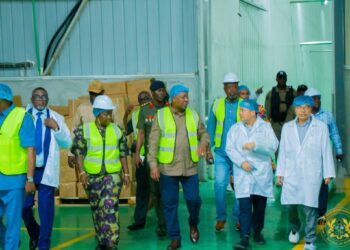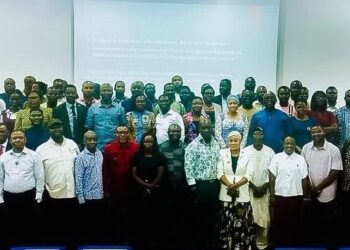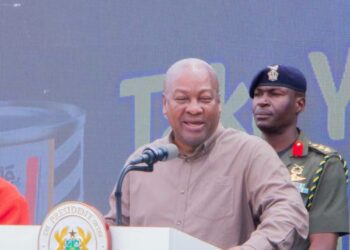
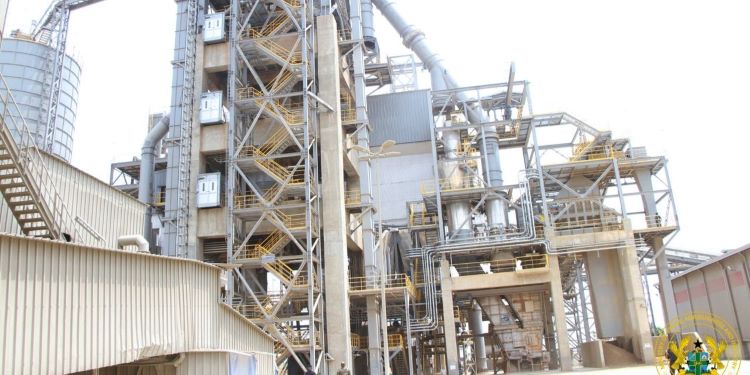
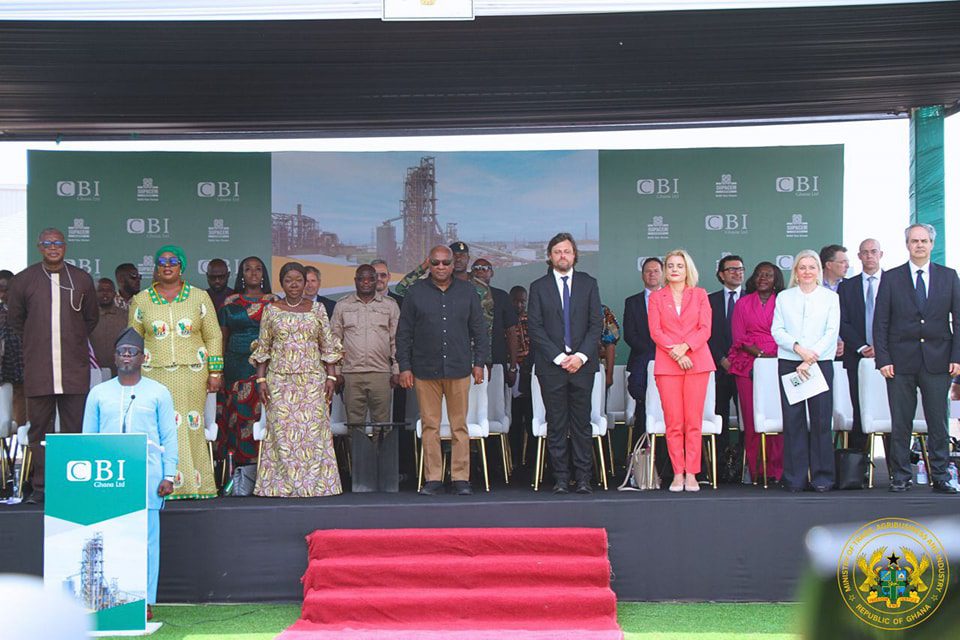
In a historic double-header that has redefined the trajectory of Ghana’s Industrialization, His Excellency President John Dramani Mahama recently descended upon the Tema and Kpone industrial enclaves, to commission two world-class manufacturing facilities.
The $205 million combined investment – comprising the world’s largest calcined clay cement plant and a state-of-the-art pasta processing facility – marks the most significant single-day industrial expansion in the nation’s recent history.
For the government, these projects are not merely private enterprises; they are the physical manifestation of the “Economic Reset” and the 24-Hour Economy policy in action.
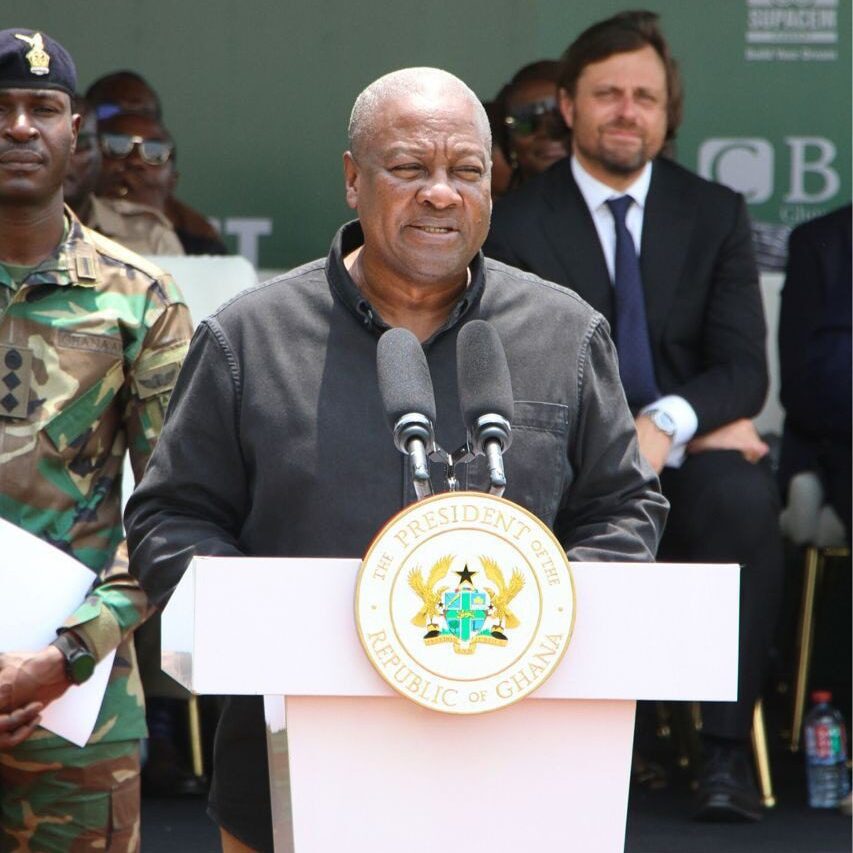
“This commissioning represents more than the opening of a factory; it is a tangible step toward repositioning Ghana as a leading industrial hub in Africa. The establishment of the calcined clay plant represents the kind of strategic private sector investment needed to drive the country’s economic transformation and infrastructure development”
President John Dramani Mahama
President Mahama, accompanied by the Minister for Trade and Industry, Hon. Elizabeth Ofosu-Adjare, and the Chief Executive Officer of the Ghana Free Zones Authority (GFZA), Dr. Mary Awusi, praised the investment and signaled that Ghana is no longer content with being a consumer of foreign goods.
By commissioning the $110 million CBI Ghana Limited plant and the $40 million Olam pasta facility, the government is aggressively pursuing an import-substitution strategy designed to protect the national currency and create thousands of sustainable jobs.
The centerpiece of the day’s activities was the inauguration of the CBI Ghana Limited plant at the Tema Free Zones Enclave. This $110 million facility is a global pioneer, utilizing Limestone Calcined Clay (LC3) technology to produce environmentally friendly cement.
Substituting a significant portion of traditional clinker with locally sourced calcined clay is how the plant reduces carbon emissions by nearly 40% while maintaining the structural integrity required for modern infrastructure.
President Mahama emphasized that this facility secures Ghana’s place in the global transition toward low-carbon construction materials and dramatically reduces the nation’s dependence on imported clinker.
With an annual production capacity of 1.5 million tonnes, the plant is poised to become a primary supplier for both domestic construction and export markets under the African Continental Free Trade Area (AfCFTA).
2030 Target
During the ceremony, the President reiterated his bold mandate for the nation’s economic future – the ambitious target to increase the manufacturing sector’s contribution to Ghana’s GDP to at least 15% by 2030.
This objective is the cornerstone of the Administration’s transformation agenda, which seeks to move the economy away from a reliance on raw material exports toward a high-value, industrial-led model.
The Minister for Trade, Agribusiness and Industry, Hon. Elizabeth Ofosu-Adjare, echoed this sentiment, noting that the CBI plant is a “milestone” in localized production. She praised the Ghana Free Zones Authority for its role in facilitating such high-impact investment, noting that the facility is designed to operate continuously.
This alignment with the 24-Hour Economy policy ensures that the capital-intensive machinery is utilized to its maximum potential, providing stable, shift-based employment for the Ghanaian youth.
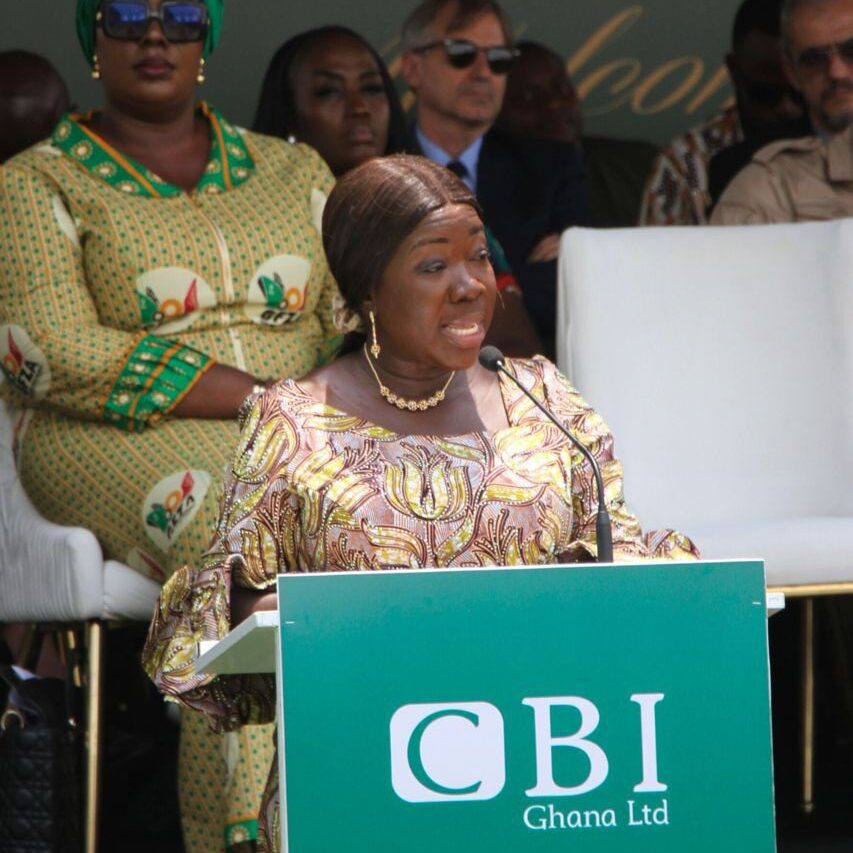
According to the Minister, the adoption of limestone calcined clay technology demonstrates how Ghana’s industrial sector can remain competitive while also responding to global climate concerns. She noted that investments such as the CBI plant will not only boost production capacity but also create jobs and stimulate local supply chains.
Integrated Agro-Processing
Following the events in Tema, the Presidential convoy moved to Kpone for the commissioning of the Olam pasta processing plant.
This $40 million facility is a masterclass in value-chain integration. The plant will manufacture high-quality pasta using flour produced from a neighboring $55 million mill, creating a closed-loop system that maximizes efficiency and reduces costs.
The project is a direct response to the government’s drive for food sovereignty. By processing essential food products locally, Ghana is insulating its citizens from global supply chain shocks and volatile international prices.
“Strengthening local production capacity across the agricultural value chain is critical to improving food security, creating employment and enhancing the competitiveness of Ghanaian industries. The project reflects government’s determination to promote agro-processing and reduce Ghana’s reliance on imported food products”
Hon. Elizabeth Ofosu-Adjare, Minister for Trade, Agribusiness and Industry
The Minister also highlighted how strengthening the agricultural value chain creates a guaranteed market for local farmers and ensures that the “value-add” stays within the borders of Ghana.
The dual commissioning highlighted a broader strategic shift toward an export-led growth model.
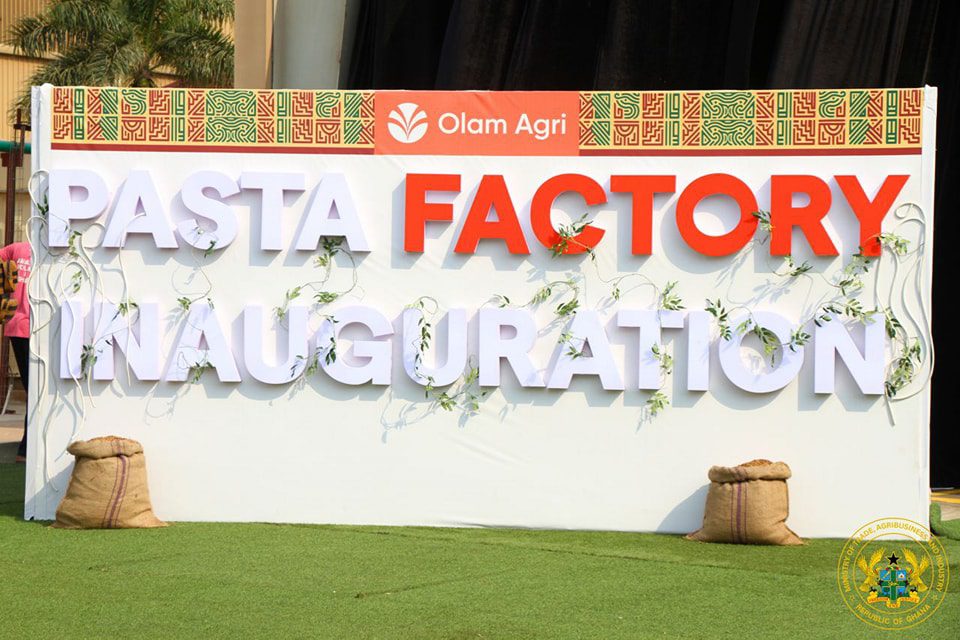
Both CBI Ghana Limited and Olam are positioned to leverage the AfCFTA to export their products across the West African sub-region. By producing at a global scale and meeting international quality standards, these companies are turning the “Made in Ghana,” label into a hallmark of excellence and sustainability.
President Mahama reiterated that the government remains committed to creating a “plug-and-play” environment for investors. This includes providing the necessary energy, road, and port infrastructure to ensure that factories can operate without bottlenecking.
He noted that the recently established 24-Hour Economy Authority is the operational body that will allow these companies to compete with global giants, by utilizing Ghana’s most valuable resource – its industrious and skilled workforce – around the clock.
“Government remains committed to creating an enabling environment for businesses to thrive, noting that industrial projects of this nature contribute significantly to job creation, technology transfer and foreign exchange savings. We are determined to support policies that encourage local production”
President John Dramani Mahama
The $205 million investment by CBI and Olam serves as a massive vote of confidence in the Ghanaian economy. In a global environment characterized by uncertainty, these multinational and local investors are betting on Ghana’s stability and its vision for the future.
The Administration has signaled that it will continue to provide the fiscal incentives and regulatory support needed to keep this momentum alive. As the machines begin to roll in Tema and Kpone, the impact will be felt far beyond the factory walls.
From the clay pits in the hinterlands to the retail shops in the cities, the ripple effects of this industrial surge will create wealth and opportunity. The “Economic Reset” is no longer a policy document; it is a reality built in steel, concrete, and local ingenuity.
READ ALSO: Ghana Secures $118m Global Fund to Rescue Basic Education