The Trump administration has designated Afghanistan as a state sponsor of wrongful detention, a move meant to deter the Taliban from abducting Americans
It is the second country to be designated as such, and the announcement comes on Hostage and Wrongful Detainee Day. The administration designated Iran as a state sponsor of wrongful detention the day before it launched military operations against the country.
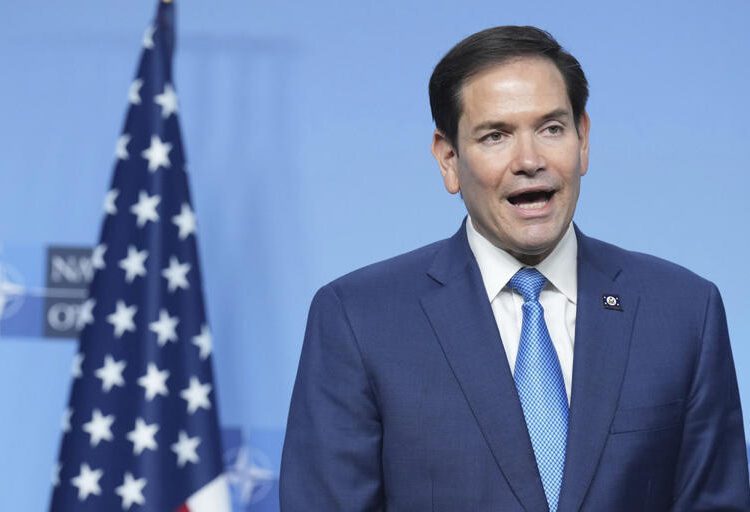
US Secretary of State, Marco Rubio said in a statement that the Taliban continues to “use terrorist tactics, kidnapping individuals for ransom or to seek policy concessions.” “These despicable tactics need to end,” he said.
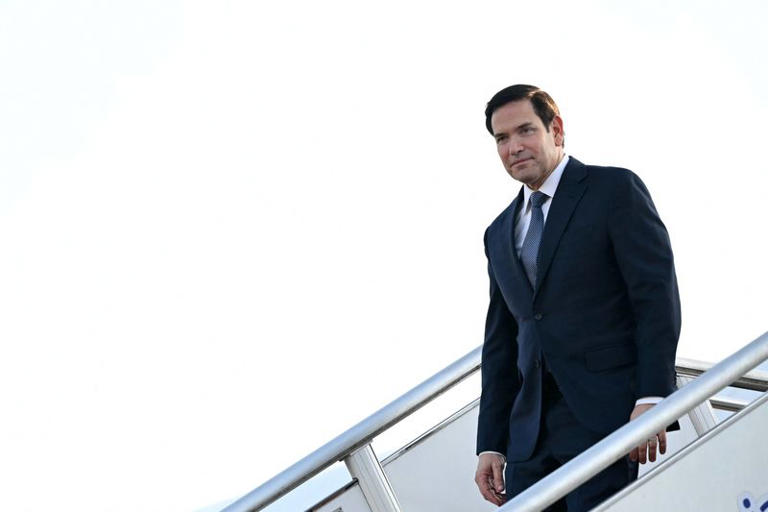
Rubio’s statement focused specifically on the issue of detentions involving foreign nationals, which the United States has repeatedly raised as a serious concern. He warned that Afghanistan remains unsafe for Americans to visit due to the risk of detention by Taliban authorities.
“It is not safe for Americans to travel to Afghanistan because the Taliban continues to unjustly detain our fellow Americans and other foreign nationals.
“The Taliban needs to release Dennis Coyle, Mahmoud Habibi, and all Americans unjustly detained in Afghanistan now and commit to cease the practice of hostage diplomacy forever.”
Marco Rubio
Habibi was detained in August 2022. The Taliban has never acknowledged holding him. The State Department is offering up to $5 million for information leading to his location, recovery and safe return.
Habibi’s brother, Ahmad Habibi, said that he met with Sebastian Gorka and special envoy Adam Boehler on Monday “and both gave me assurances that President Trump will not leave my brother behind.”
“The Taliban need to admit what we already know – that they have my brother – so we can move forward in bringing him home to his wife and young daughter. The Taliban should not be defying President Trump as he seeks to bring home Americans to their family.”
Ahmad Habibi
Coyle was detained in January 2025. His family said that he has not been charged with a crime and has been held in solitary confinement.
Several Americans detained in Afghanistan were released last year – George Glezmann, Ryan Corbett, William McKenty, and Amir Amiry.
Rubio’s call for the Taliban to commit to ceasing the “practice of hostage diplomacy forever,” signals Washington’s expectation that detentions used for bargaining purposes must stop if the group seeks greater engagement with the international community.
The issue of detained foreign nationals has periodically surfaced in discussions between Western governments and the Taliban leadership. Human rights organizations and diplomatic officials have warned that such detentions complicate humanitarian efforts and undermine prospects for broader international cooperation.
The designation announced by Rubio is intended to increase pressure on the Taliban while also warning US citizens about the risks of traveling to Afghanistan.
US officials have consistently advised Americans against travel to the country, citing security threats, limited consular assistance, and the potential for arbitrary detention.
By labeling Afghanistan as a “State Sponsor of Wrongful Detention,” the United States is formally highlighting what it considers a pattern of behavior by Taliban authorities. The move also signals Washington’s intention to keep the issue of detained Americans at the forefront of its engagement with Afghanistan
Also, the designation creates the possibility for the US to impose travel restrictions for Afghanistan.
There is such a travel restriction in place for North Korea. The US does not allow its citizens to travel to North Korea on US passports without an approved exception, and in those cases, the State Department issues a “special validation passport.”
US Skeptical Of Taliban ‘s Willingness To Meet International Commitments
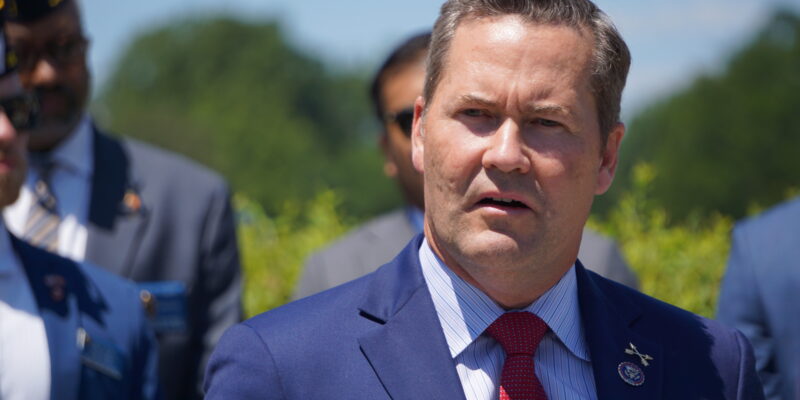
Meanwhile, US Ambassador to the United Nations, Mike Waltz told a Security Council meeting that Washington is “deeply skeptical of their [Taliban’s] willingness to meet their international commitments or respect Afghanistan’s international obligations.”
Waltz also urged a reassessment of international assistance to Afghanistan citing the Taliban’s denial of basic rights to women.
Under the Taliban’s new laws, women have been banned from public life and basic freedoms.
“This council must consider carefully the funds we collectively provide for this mission’s budget, when the mission’s female national staff are not even able to go into the office to work.”
Mike Waltz
This comes even as Afghanistan, under Taliban rule, faces one of the world’s worst humanitarian crises, with the World Food Program (WFP) estimating that one-third of the population suffers from acute food shortages.
READ ALSO: Gender Minister Leads Ghana @70th UN Commission on Status of Women