
Fuel prices in Ghana are set to increase today as the country enters the second petroleum pricing window for March 2026, with motorists and households expected to pay significantly more for petrol, diesel and liquefied petroleum gas.
The latest outlook report by the Chamber of Oil Marketing Companies indicates that prices across major petroleum products will rise sharply in response to global market developments.
According to the report, a litre of petrol is projected to increase by 16.93 per cent, while diesel is expected to rise by 17.21 per cent. Liquefied Petroleum Gas (LPG), widely used for cooking in many households, is also forecast to increase by 11.26 per cent.
The anticipated adjustment represents one of the most significant price movements recorded so far this year. Although fuel prices have been projected to rise several times since January, analysts say this is the first time in 2026 that the expected increase has reached such a large margin per litre for each petroleum product.
Industry observers say the new pricing window could have a broad impact on transportation costs and the general cost of living if the projected increases materialise at fuel stations across the country.
Global Oil Market Tensions Driving Price Surge
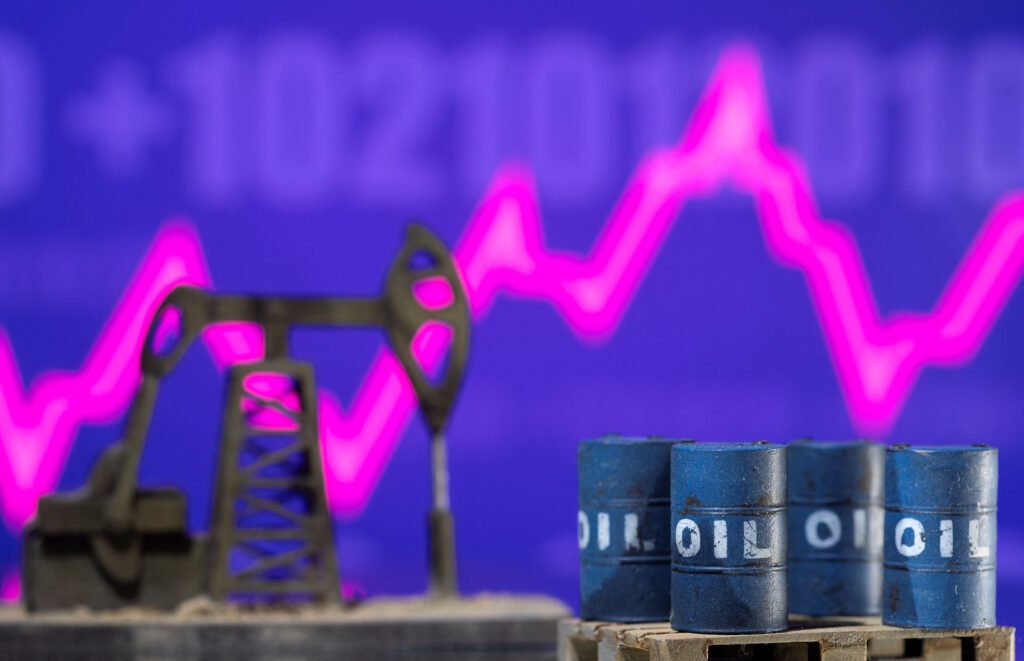
The Chamber’s report attributes the sharp rise in petroleum prices largely to developments in the international oil market, particularly geopolitical tensions in the Middle East.
These tensions have raised concerns about the stability of global oil supply chains and pushed crude prices higher on international markets.
One of the major factors cited is the disruption to shipping routes through the Strait of Hormuz, a critical maritime passage that carries a significant portion of the world’s crude oil shipments.
According to the report, the disruption to this key oil transit route has tightened global supply and triggered a surge in international petroleum prices.
Oil prices themselves have climbed sharply in recent weeks. Market data indicate that crude prices rose from about $71.41 per barrel to $86.55 per barrel in mid-March 2026.
The ripple effect has been felt across refined petroleum products. Diesel prices on the international market increased by as much as 43 per cent, while LPG rose by 23.96 per cent and petrol by 19.41 per cent.
Analysts say such increases in global benchmarks typically feed directly into local pump prices, particularly in import-dependent markets.
COPEC Calls for Market-Driven Pricing

Amid the expected increases, the Chamber of Petroleum Consumers has urged regulators to allow competitive market forces to determine retail fuel prices.
Executive Secretary Duncan Amoah argued that intervention through price controls may not be necessary during periods when global prices are already rising.
“I don’t think that the NPA should bother itself with setting price floors. Prices are going up, and the OMCs will not sell at a loss, the same as the BDCs.”
Executive Secretary Duncan Amoah
According to him, setting a price floor in such circumstances could unintentionally signal to the market that prices will rise further, potentially accelerating increases at the pump.
“Setting the floor price at this time will only send the signal to the market that prices are going to rise in the next few days.”
Executive Secretary Duncan Amoah
Mr Amoah also stressed that competition among petroleum retailers has historically played a role in moderating price increases for consumers.
“Competition has equally controlled prices. Stations that could have done about GH¢16 may come down to a maximum of GH¢15,” he said, suggesting that market rivalry among oil marketing companies could soften the expected increases.
NPA Introduces New Fuel Price Floors

While market forces remain a factor in retail pricing, the National Petroleum Authority has introduced revised minimum price floors for petroleum products for the second pricing window of March.
The regulatory benchmark applies from March 16 to March 31 and sets the lowest price level at which petroleum products can be sold by oil marketing companies.
Under the revised structure, the minimum price floor for petrol has increased from GH¢10.46 to GH¢11.57 per litre.
Diesel recorded an even sharper adjustment, rising from GH¢11.42 to GH¢14.35 per litre, a move industry observers say represents one of the steepest single-product adjustments in recent times.
Liquefied Petroleum Gas has also been revised upward, with the price floor increasing from GH¢9.38 to GH¢10.67 per kilogram.
The price floors are designed to guide market behaviour and ensure that petroleum products are not sold below cost levels within the regulated downstream sector.
The second petroleum pricing window for March will likely determine fuel price trends across the country for the remainder of the month.
Oil marketing companies are expected to adjust their pump prices based on both the revised regulatory benchmarks and the ongoing movements in global petroleum markets.
Industry analysts say the coming weeks will reveal how competition among retailers, combined with regulatory pricing frameworks, ultimately affects what consumers pay at filling stations.
With global oil markets remaining volatile and geopolitical tensions continuing to influence supply chains, Ghana’s downstream petroleum sector may face further pricing pressures in the weeks ahead.
READ ALSO: Lordina Foundation Completes Modern Health Centre for Anyima Community