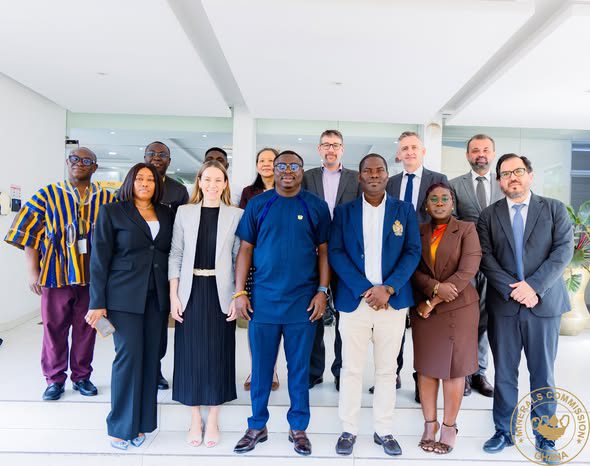
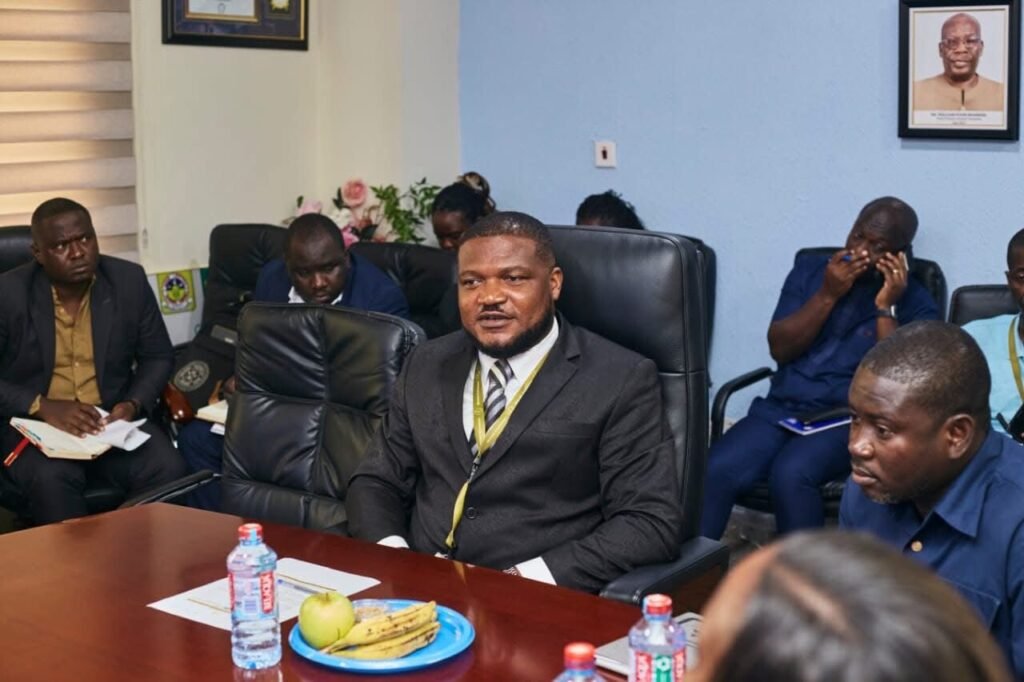
Mr. Isaac Tandoh, Chief Executive Officer of the Minerals Commission, has spearheaded a landmark technical exchange with the International Monetary Fund (IMF) to overhaul the governance structures of Ghana’s extractive industry.
The high-level engagement with the IMF Fiscal Transparency Evaluation Mission, led by Almudena Fernandez, centered on institutionalizing rigorous accountability frameworks that align with global benchmarks.
This strategic meeting at the Commission’s head office serves as a critical junction in Ghana’s quest to transition from a resource-rich nation to a transparency-led mining hub, ensuring that the wealth generated from the earth translates into measurable national prosperity.
“The Minerals Commission has held a high-level meeting with an International Monetary Fund (IMF) Fiscal Transparency Evaluation Mission led by Almudena Fernandez, to review and enhance transparency and accountability frameworks within the country’s mining sector.”
Minerals Commission
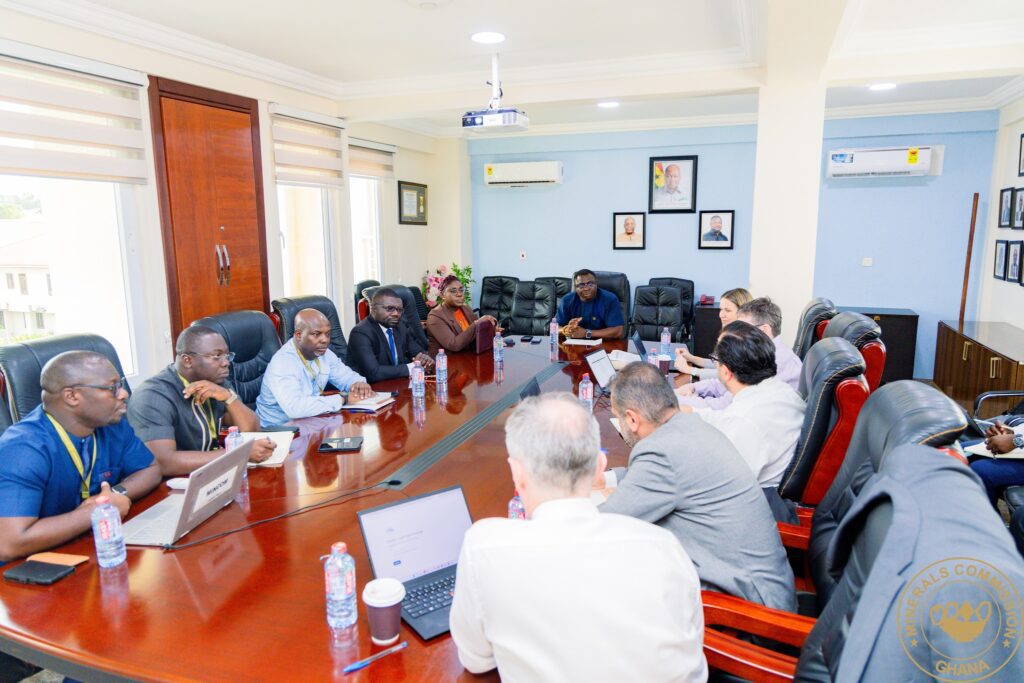
The technical discussions, facilitated by the Deputy CEO for Support Services, Mr. Emmanuel Kwamena Anyimah, provided the IMF mission with an exhaustive roadmap of Ghana’s mineral licensing architecture.
By meticulously distinguishing between exploration and exploitation rights, the Commission showcased a regulatory environment built on statutory clarity and procedural integrity.
The dialogue underscored a pivot toward “strengthening governance and reinforcing public confidence” through the strict administration of mineral rights, ensuring that every stage of the mining lifecycle from the first geological survey to the final reclamation is insulated from opaque practices.
This clarity is designed to reassure both domestic stakeholders and international investors that Ghana remains a stable, predictable, and ethical destination for mining capital.
Redefining Ownership and Licensing Timelines
A cornerstone of this new transparency era is the aggressive implementation of beneficial ownership (BO) protocols. In a move to eliminate “anonymous” influence in the extractive sector, the Commission revealed that upcoming mining legislation will mandate the full declaration of ultimate owners for all mineral rights holders.
This builds upon the 2019 directive that already compels large-scale firms and support services to disclose such data.
During the briefing, officials noted that while the industry is opening up to global scrutiny, small-scale mining licenses remain “strictly reserved for Ghanaian citizens” to protect local livelihoods.
To ensure efficient capital entry and prevent bureaucratic bottlenecks, the Commission briefed the IMF on its strict “statutory processing timelines,” which include a 90-day review period for applications and a subsequent 60-day window for Ministerial approval.
These defined periods are essential for maintaining the “sanctity of the application process,” preventing the long delays that historically discouraged exploration investment.
Fiscal Integrity and Revenue Oversight

The mission also scrutinized the flow of mineral wealth, with the Commission clarifying that royalties and other fiscal obligations remain under the strict administration of the Ghana Revenue Authority and the Minerals Income Investment Fund (MIIF).
By aligning these fiscal flows with approved international frameworks, Ghana aims to mitigate revenue leakages and ensure that the “primary surplus targets” outlined in the national budget are met through legitimate extractive earnings.
The Acting Chief Inspector of Mines, Mr. Joseph Frimpong, and the Director of Mineral Titles, Ing. Frank Asare, contributed technical data demonstrating how the Commission tracks production volumes against reported revenues.
This institutional synchronization is designed to provide investors with the fiscal predictability necessary for long-term project financing while securing the state’s fair share of mineral proceeds for infrastructure and social development.
Boosting Global Competitiveness and Investment
Industry analysts suggest that this IMF-backed evaluation will significantly enhance Ghana’s “Average Effective Tax Rate” (AETR) competitiveness by streamlining regulatory costs and improving data accessibility.
By digitizing the mineral rights cadastre and providing “verifiable geological data,” the Minerals Commission is effectively lowering the risk profile for foreign direct investment.
This transparency-first approach is expected to catalyze a new wave of exploration, particularly in “green minerals” like lithium and manganese, which are vital for the global energy transition.
Furthermore, the engagement strengthens Ghana’s standing with the Extractive Industries Transparency Initiative (EITI), signaling to the world that the “Gateway to Africa” is committed to a corruption-free extractives sector.
As the Commission continues to publish granular data on health, safety, and labor, it fosters a “culture of accountability” that benefits not just the state treasury, but the mining communities themselves.
READ ALSO: Presidential Advisor Pushes Seed System Execution Reform