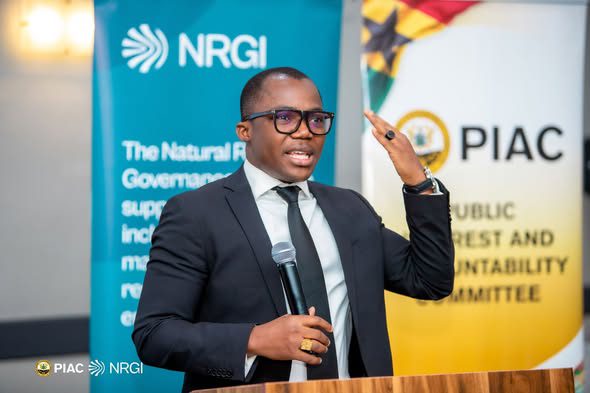
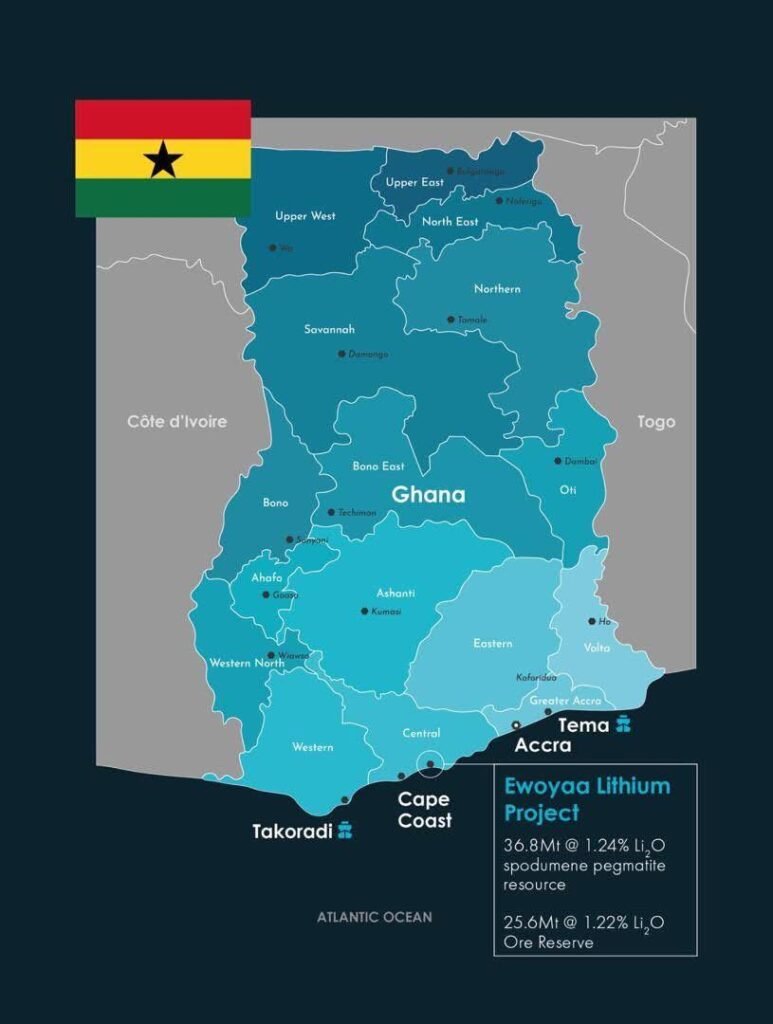
Natural Resource Governance Institute (NRGI) has disclosed that the Ewoyaa Lithium project is projected to hold 36.8 million metric tons of lithium bicarbonate (Li2O).
According to NRGI ,this discovery places Ghana firmly on the map as a potential lithium producer at a critical juncture when global demand for minerals essential to the energy transition is accelerating.
Currently, the nation’s proven reserves are concentrated in Ewoyaa and a relatively smaller deposit at Agyasimanku, marking a shift from traditional gold and bauxite dominance toward “white gold” extraction.
“Ewoyaa straddles eight small deposits, and is projected to hold 36.8 million metric tons of lithium bicarbonate (Li2O). An agreement yet to be ratified between the government of Ghana and Barari DV Ghana (a subsidiary of Australia-based Atlantic Lithium Company) may see the production of hard-rock lithium typical of Ghana’s geology.”
Natural Resource Governance Institute (NRGI)
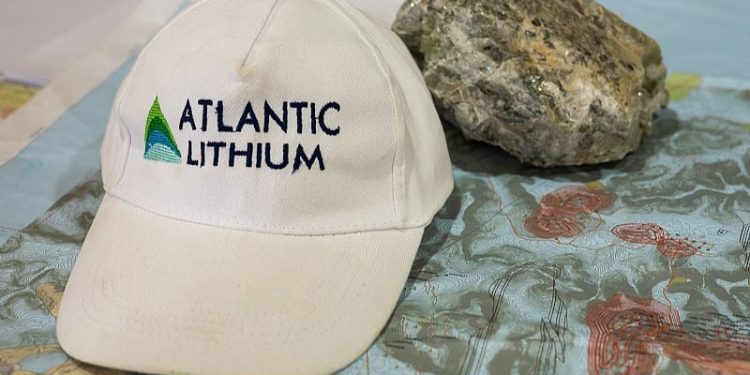
The Ewoyaa project is not just a singular discovery but a sprawling geological asset that could define the next decade of Ghanaian mining. Beyond the primary site, Atlantic Lithium has secured additional prospecting licenses for projects in Bewadze and Senya Beraku, making the Atlantic Lithium Agreement the only active lithium license in the country to date.
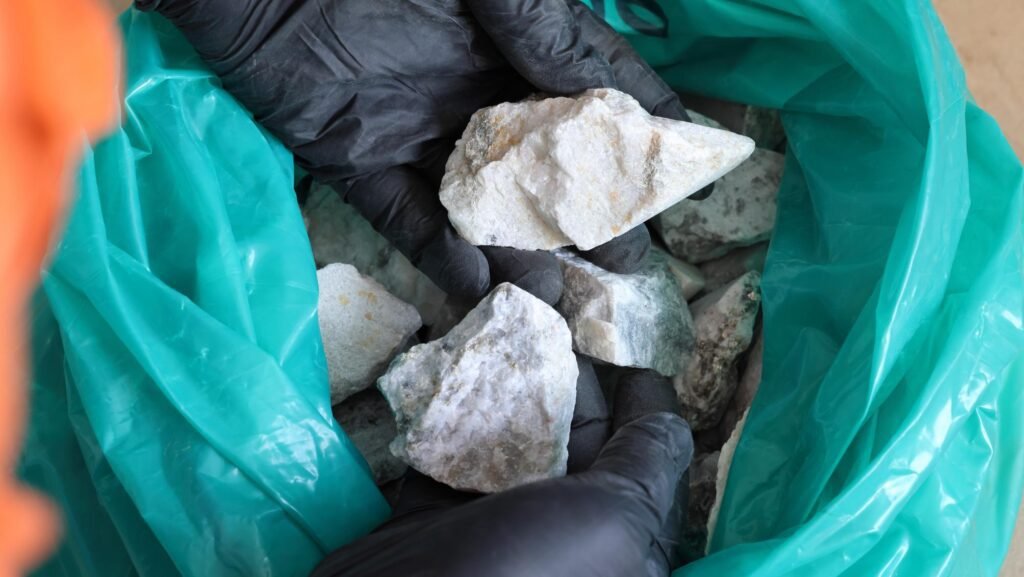
This project is expected to produce hard-rock lithium, a variety typical of Ghana’s specific geology, which is highly sought after for the production of lithium-ion batteries.
While the technical potential is immense, the operational rights remain pending; an agreement between the government and Barari DV Ghana is currently awaiting ratification by Parliament.
As interest grows, the Minerals Commission has also noted a 2025 license application for a new site in Kodwokurom, located in the Eastern Region, by Cooperative Fire Golden Limited, signaling a broadening of the country’s lithium horizons.
“The conclusion of this process does not confer rights on a company until the agreement is ratified by Parliament in accordance with the law. This ensures that the state’s interests are legally protected before any commercial extraction begins. It is a vital safeguard for natural resource governance.”
Natural Resource Governance Institute (NRGI)
Significance of the 36.8m Metric Ton Reserve
A reserve of 36.8 million metric tons is a transformative volume in the context of the global “Energy Transition.”
To put this into perspective, the International Energy Agency (IEA) suggests that the world will need significantly more lithium by 2040 to meet the goals of the Paris Agreement.
Ewoyaa’s high-grade spodumene concentrate is essential for the high-performance batteries found in electric vehicles (EVs) and grid-scale storage systems.
For Ghana, this quantity represents a “golden opportunity” to diversify its export base. By tapping into a projected 12-year mine life, the country can move beyond the volatility of the gold market and anchor its economy to the burgeoning $400 billion global battery value chain.
Economic Benefits and Local Transformation

The economic windfall for Ghana extends far beyond simple mineral royalties. Under the proposed terms, the country is set to benefit from a 10% royalty rate double the standard 5% usually applied to other minerals alongside a 13% free carried interest for the state.
This means the Ghanaian government will own a significant portion of the project without providing upfront capital.
Furthermore, the agreement mandates that 1% of gross revenue be funneled directly into a Community Development Fund, ensuring that the residents of Ewoyaa and surrounding areas see tangible improvements in infrastructure, healthcare, and education.
This “wealth-sharing” model is designed to prevent the “resource curse” by tying local prosperity to mining success.
Licensing Framework and the Path to Production
Despite the excitement surrounding the 36.8 million metric ton figure, the path to actual production follows a rigorous legal framework with series of frustrations.
In Ghana, the process for securing mining licenses is standardized across all mineral types, requiring a transparent application through the Minerals Commission.
This includes environmental impact assessments and “Proof of Financial Capability” before a recommendation is made to the Minister.
However, as noted in the Natural Resource Governance Institute report, the final step is parliamentary ratification. This legislative oversight is the “final hurdle” that ensures the Atlantic Lithium Agreement aligns with the Green Minerals Policy, which aims to promote local value addition such as domestic refining rather than the mere export of raw ore.
READ ALSO: Iran Confirms Intelligence Minister’s Killing By Israel