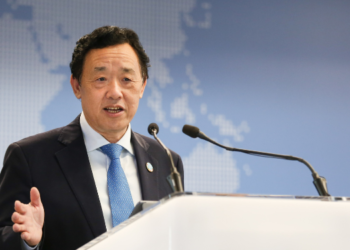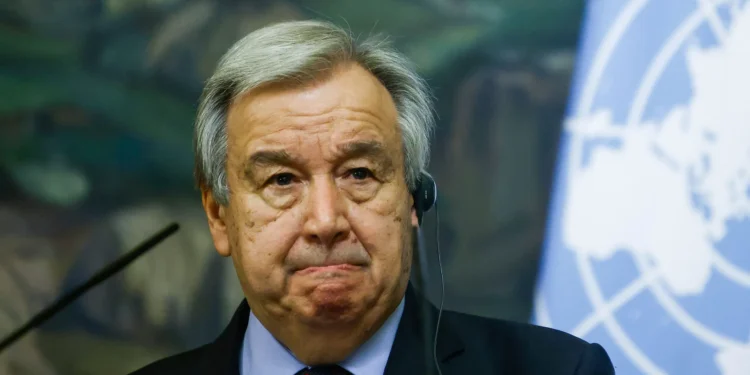
United Nations Secretary-General, António Guterres has warned of mounting threats to religious freedom amid rising political tensions, the manipulation of belief for hostile ends, and the rapid expansion of digital surveillance and artificial intelligence systems with insufficient human rights safeguards.
In his statement, issued to participants of the Conscience and Liberty 2026 conference and marking the 80th anniversary of the International Association for the Defence of Religious Liberty, he described freedom of thought, conscience, religion, and belief as a “cornerstone of human dignity” and a critical measure of whether societies are open, inclusive, and stable.
“Today, this fundamental freedom faces mounting pressure. We see it manifested in many ways, belief being manipulated to incite hostility; religious groups being targeted in the name of identity or security; and digital surveillance and artificial intelligence being deployed without sufficient safeguards for human rights.”
António Guterres
Guterres stressed that addressing these challenges requires renewed commitment to multilateralism, international law, and sustained dialogue across ideological and religious divides, as well as the defence of equal rights for all individuals, regardless of their religious beliefs.
The Conscience and Liberty 2026 Conference is focusing attention on these pressures, particularly those arising from conflict, political developments, and technological change.
A concept note circulated ahead of the event states that the global consensus on fundamental freedoms has weakened over the past decade, a trend accelerated by the COVID-19 pandemic and ongoing geopolitical crises, including the war in Ukraine and tensions in the Middle East. These developments, it notes, have contributed to strained multilateral cooperation and the increasing visibility of more authoritarian governance models.
Moreover, the Freedom of Religion or Belief (FoRB) is increasingly viewed as a key indicator of the broader human rights environment, often described as a “barometer” of overall rights conditions.
Across different regions, the rise of religious nationalism and identity-based politics is reshaping the governance of belief and in some cases, religious identity is being mobilized for political support or used to justify exclusionary policies, placing greater pressure on minority groups and limiting space for diverse religious expression.
Defending Equal Rights for Believers and Non-believers
Defending equal rights for both believers and non-believers remains a central issue within International Human Rights Law and ongoing global discussions on freedom of thought, conscience, religion, and belief.
These freedoms are enshrined in key International Legal Frameworks, including the Universal Declaration of Human Rights and the International Covenant on Civil and Political Rights, which recognize the right of every individual to adopt, change, or reject a religion or belief. Despite this legal basis, the practical application of these protections varies widely across different countries and regions.
In several jurisdictions, religious minorities continue to face restrictions that affect their ability to worship freely, organize, or publicly express their beliefs.
Reported limitations include burdensome administrative requirements for registering places of worship, restrictions on public religious gatherings, and the application of public order or national security laws in ways that may limit religious expression. In some cases, such measures have been criticized by human rights observers for disproportionately affecting minority faith groups.
At the same time, individuals who identify as non-religious, or those who choose to change or abandon their religious affiliation, also encounter legal and social pressures in certain contexts.
In some countries, laws on apostasy or blasphemy remain in force and can carry criminal penalties. Elsewhere, non-religious individuals report experiencing discrimination in employment, education, housing, and participation in public life, often linked to prevailing social attitudes or state practices.
International human rights mechanisms, including United Nations bodies and special rapporteurs on freedom of religion or belief, have repeatedly emphasized that these rights apply equally to all individuals, regardless of whether they adhere to a religion or not. The principle is intended to safeguard individuals from coercion, discrimination, and punishment based on their convictions.
Human Rights Activists further note that the level of protection afforded to freedom of religion or belief is often closely linked to broader governance structures, rule of law, and institutional safeguards within states. Where legal protections are weak or inconsistently enforced, both religious and non-religious groups may face increased vulnerability to discrimination, social exclusion, or legal sanction.
The United Nations continue to stress that ensuring equal protection for all belief systems is not only a legal obligation but also a factor in maintaining social cohesion and argues that respect for pluralism and individual conscience is essential to reducing conflict and supporting long-term stability in diverse societies.
READ ALSO : UK Equips Solomon Islands to Tackle Marine Pollution