• About
  • Advertise
  • Privacy Policy
  • Contact
Sunday, May 17, 2026
  • Login
The Vaultz News
  • Top Stories
  • News
    • General News
    • Education
    • Health
    • Opinions
  • Economics
    • Economy
    • Finance
      • Banking
      • Insurance
      • Pension
    • Securities/Markets
  • Business
    • Agribusiness
    • Vaultz Business
    • Extractives/Energy
    • Real Estate
  • World
    • Africa
    • America
    • Europe
    • UK
    • USA
    • Asia
    • Around the Globe
  • Innovation
    • Technology
    • Wheels
  • Entertainment
  • 20MOBPL2DNew
  • Jobs & Scholarships
    • Job Vacancies
    • Scholarships
No Result
View All Result
The Vaultz News
  • Top Stories
  • News
    • General News
    • Education
    • Health
    • Opinions
  • Economics
    • Economy
    • Finance
      • Banking
      • Insurance
      • Pension
    • Securities/Markets
  • Business
    • Agribusiness
    • Vaultz Business
    • Extractives/Energy
    • Real Estate
  • World
    • Africa
    • America
    • Europe
    • UK
    • USA
    • Asia
    • Around the Globe
  • Innovation
    • Technology
    • Wheels
  • Entertainment
  • 20MOBPL2DNew
  • Jobs & Scholarships
    • Job Vacancies
    • Scholarships
No Result
View All Result
The Vaultz News
No Result
View All Result
in Banking, Sub Top Stories1

Bank of Ghana Warns Middle East War Threatens Liquidity

M.Cby M.C
March 25, 2026
Reading Time: 5 mins read
BoG Negative Equity Hits Shocking GH¢93.8bn

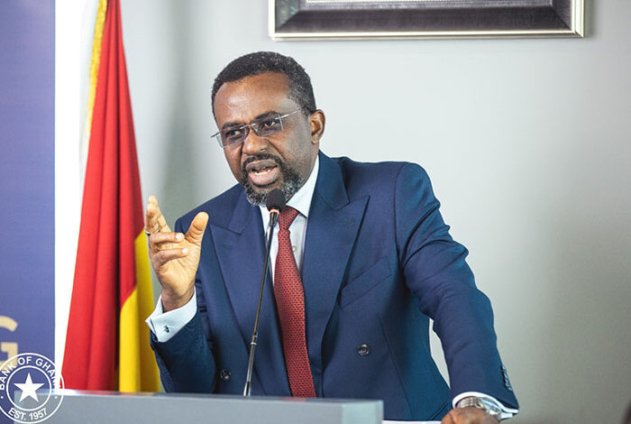
Dr.-Johnson Asiama, Governor of the Bank of Ghana

The Governor of the Bank of Ghana, Johnson P. Asiama, has cautioned that the ongoing conflict involving the United States, Israel, and Iran could pose serious liquidity risks to Ghana’s financial system if tensions persist. 

His remarks come at a time when global markets are increasingly sensitive to geopolitical instability, with commodity prices, capital flows, and currency markets reacting sharply to developments in the Middle East.

Speaking at an international conference organised by Ghana Exim Bank to commemorate its 10th anniversary, Dr Asiama stressed that Ghana, like many frontier and emerging economies, remains vulnerable to external shocks that disrupt global trade and financial flows.

He noted that while Ghana’s macroeconomic recovery remains on track, prolonged hostilities in the Middle East could transmit financial stress through multiple channels, including oil price volatility, investor risk aversion, and tightening global liquidity conditions.

ADVERTISEMENT

Liquidity Pressures Could Intensify

Liquidity remains a critical pillar of financial system stability, enabling banks and businesses to meet short term obligations and sustain economic activity. According to the Governor, any sustained geopolitical crisis that unsettles global markets could restrict access to foreign capital and reduce dollar inflows into the Ghanaian economy.

Heightened uncertainty often triggers capital flight from developing markets as investors move funds into perceived safe haven assets. This shift can weaken local currencies, tighten domestic financing conditions, and strain foreign exchange reserves.

Dr Asiama explained that Ghana’s financial system is closely linked to global markets through trade financing, correspondent banking relationships, remittances, and portfolio investments. Disruptions in these channels could reduce liquidity buffers within the banking sector and complicate monetary policy management.

He emphasized that commodity dependent economies such as Ghana are particularly exposed because global conflicts often trigger sharp swings in energy and commodity prices. Volatile oil prices, for example, can distort import bills, inflation trends, and fiscal planning.

Central Bank Assures Preparedness

Despite the risks, the Governor assured market participants that the central bank has taken proactive measures to safeguard Ghana’s financial stability. He expressed confidence in the resilience of the banking sector and the preparedness of regulators to respond swiftly if conditions deteriorate.

Dr Asiama indicated that the Bank of Ghana has strengthened its liquidity management frameworks and enhanced its market monitoring systems to detect early signs of financial stress. These measures are designed to ensure that banks maintain adequate liquidity buffers and continue lending to businesses and households even during periods of turbulence.

He also highlighted ongoing coordination with fiscal authorities and international financial institutions to ensure policy alignment and rapid response capability. This collaborative approach, he noted, strengthens Ghana’s capacity to withstand global economic disruptions.

The Governor further reassured investors that Ghana’s financial sector reforms over recent years have improved capital adequacy, risk management standards, and regulatory oversight across the banking industry.

Global Conflict, Local Consequences

Geopolitical tensions often create ripple effects that extend far beyond conflict zones. For Ghana, the potential consequences include exchange rate pressures, rising import costs, and investor caution that may affect capital market performance.

ADVERTISEMENT

International trade routes and supply chains could also face disruptions if hostilities escalate, affecting export revenues and industrial production. Ghana’s integration into global commodity and financial markets means that instability abroad can quickly influence domestic economic conditions.

Analysts warn that uncertainty driven by war risks can slow foreign direct investment and complicate sovereign financing plans. For governments pursuing economic recovery and fiscal consolidation, such external shocks can delay progress and increase borrowing costs.

Dr Asiama acknowledged these vulnerabilities but maintained that early planning and disciplined macroeconomic management can soften the impact of external disruptions.

Strategic Importance of Financial Resilience

The Governor’s remarks underscore the growing importance of financial resilience in an interconnected global economy. Central banks across emerging markets are increasingly prioritizing contingency planning, reserve buffers, and diversified funding sources to withstand unpredictable global events.

For Ghana, strengthening domestic financial markets and expanding non traditional export sectors remain key to reducing exposure to external volatility. A deeper local capital market can provide alternative funding sources when international liquidity tightens.

Dr Asiama stressed that maintaining investor confidence is essential. Clear communication, policy consistency, and institutional credibility help reassure markets during uncertain times.

He expressed optimism that diplomatic efforts will help de escalate tensions in the Middle East, easing pressure on global markets. However, he emphasized that prudent preparation remains necessary in the face of ongoing uncertainty.

GEXIM Anniversary Highlights Economic Dialogue

The warning was delivered during a milestone celebration for Ghana Exim Bank, which has played a significant role in supporting export development and industrial growth over the past decade. The anniversary event brought together policymakers, financial leaders, and development partners to discuss strategies for strengthening Ghana’s economic resilience.

The platform provided an opportunity to assess global risks and reaffirm commitments to sustainable growth, trade expansion, and private sector development.

Dr Asiama commended the bank’s contribution to export financing and economic diversification, noting that strong development finance institutions are vital in reducing vulnerability to global shocks.

Outlook Remains Cautiously Optimistic

While geopolitical tensions remain a source of concern, Ghana’s monetary authorities project cautious optimism. Continued reforms, regulatory vigilance, and coordinated economic management are expected to support stability even amid global uncertainty.

The Bank of Ghana’s assurance of preparedness aims to calm markets and reinforce confidence among investors, businesses, and the general public.

As global events continue to unfold, policymakers are closely monitoring developments and stand ready to deploy appropriate interventions to protect Ghana’s financial system.

READ ALSO: Mahama Moves Landmark Resolution, Urges UN to Declare Slavery Gravest Crime

Sign Up to Our Newsletter

Fresh updates, Straight to your inbox

Tags: Bank of Ghanacentral bank preparednessemerging markets liquiditygeopolitical economic risksGhana EconomyGhana Exim Bank anniversaryGhana financial stabilityGhana liquidity riskJohnson P AsiamaMiddle East conflict impact
Share18Tweet11Share3SendSend
Please login to join discussion
Previous Post

House Committee Holds Hearing On Partial DHS Shutdown

Next Post

Guterres Bemoans Attacks In Lebanon

Related Posts

Ecobank Ghana PLC Breaks Silence After Supreme Court Judgement
Banking

Ecobank Ghana PLC Breaks Silence After Supreme Court Judgement

May 17, 2026
Ghana Defies Odds With Record Financial Growth
Banking

Ghana Defies Odds With Record Financial Growth

May 16, 2026
IMF Chief Hails Ghana’s Remarkable Turnaround After 2022 Crisis Following Successful Exit from ECF Programme
Economy

IMF Chief Hails Ghana’s Remarkable Turnaround After 2022 Crisis Following Successful Exit from ECF Programme

May 15, 2026
Fidelity Demands Africa Own Its Digital Future At a time when Africa’s digital economy is accelerating at an unprecedented pace, Fidelity Bank Ghana has delivered one of the strongest messages yet on the continent’s technological future. The bank made a bold and urgent case for Africa to stop depending on foreign controlled digital systems and begin building its own infrastructure capable of retaining value, strengthening currencies, and driving long term economic sovereignty. As one of the key sponsors of the 3i Africa summit, Fidelity Bank did not just show up to participate. It arrived with a message that resonated deeply across conference halls and policy discussions. Fidelity Bank emerged as one of the loudest voices championing a future where African nations control the very digital rails that power their economies. Digital Infrastructure Is The New Economic Power One of the defining moments of the summit came during a high level panel discussion on digital public infrastructure, where Adeline Aryee delivered a statement that immediately captured the attention of participants. She declared that if Africa builds its own digital rails, it naturally retains the value created by those systems. Her message was clear and uncompromising. In previous decades, national infrastructure was measured by roads, bridges, ports, and airports. Today, the true engines of economic power are payment platforms, identity systems, financial technology ecosystems, and digital marketplaces. According to Aryee, digital public infrastructure is no longer a luxury. It is now a strategic national asset. Her remarks struck at the heart of one of Africa’s most pressing economic concerns. Despite growing digital adoption, many transactions across the continent still pass through foreign payment systems, resulting in value leakage and continued pressure on local currencies. Ghana’s Success Story Becomes A Continental Blueprint Aryee highlighted Ghana’s progress in financial inclusion, mobile payments, and digital banking, describing the country as an emerging model for other African economies. Over the years, Ghana has invested heavily in domestic payment systems such as GhIPSS and its flagship platform, Gh-link. These systems have significantly expanded access to financial services while promoting digital transactions across urban and rural communities. Yet Aryee argued that inclusion alone is no longer enough. The next chapter for Africa, she insisted, must focus on ownership. She questioned why local transactions continue to depend on foreign rails when domestic infrastructure already exists. According to her, such dependence creates unnecessary external exposure and limits the continent’s ability to fully capture the economic benefits of its growing digital market. Her comments triggered intense debate among summit participants, many of whom acknowledged the urgent need for policy reforms and infrastructure investments. Market Driven Innovation Takes Center Stage Beyond infrastructure, Fidelity Bank also made a strong case for innovation that begins with real market needs. During the Ecosystem Roundtable on platforms, talent, and digital markets, Prince Osei Hyeaman-Addai shared insights from the bank’s years of digital financial innovation. He stressed that successful digital products are not built in boardrooms or based on assumptions. Instead, they are created by listening carefully to the market and understanding customer pain points. According to him, the market itself reveals the problems that need solving, the type of platform required, and the path toward scalable growth. His comments reflected a growing shift in African fintech circles, where customer centered design is becoming essential for product adoption and long term relevance. Trust And Credibility Remain The Real Currency Prince also emphasized that technology alone does not guarantee success. In his view, trust, credibility, and strong operational structures remain the real foundations of successful innovation. He noted that while investor interest in African fintech continues to rise, startups must prove they can deliver sustainable solutions, maintain transparency, and build products that respond to local realities. This perspective reflects Fidelity Bank’s own journey in digital transformation. Over the years, the bank has built strategic collaborations with leading fintech players, including IT Consortium, helping pioneer wallet to bank integrations and mobile financial solutions in Ghana. These partnerships have helped position Fidelity as one of Ghana’s most innovation driven financial institutions. A Defining Moment For Africa’s Digital Future Fidelity Bank’s participation at the 3i Africa Summit 2026 was more than a corporate appearance. It was a strategic declaration. At a time when Africa is racing to build competitive digital economies, the bank’s message was impossible to ignore. Africa cannot simply consume technology created elsewhere. It must own the infrastructure, shape the platforms, and capture the value generated by its digital future. As conversations from the summit continue to ripple across financial and policy circles, one thing is becoming increasingly clear. Africa’s next economic revolution may not be built on oil, gold, or minerals. It may be built on digital rails designed, owned, and powered by Africans. READ ALSO: IMF Ghana Review Ends in Dramatic Cliffhanger Fidelity Demands Africa Own Its Digital Future At a time when Africa’s digital economy is accelerating at an unprecedented pace, Fidelity Bank Ghana has delivered one of the strongest messages yet on the continent’s technological future. The bank made a bold and urgent case for Africa to stop depending on foreign controlled digital systems and begin building its own infrastructure capable of retaining value, strengthening currencies, and driving long term economic sovereignty. As one of the key sponsors of the 3i Africa summit, Fidelity Bank did not just show up to participate. It arrived with a message that resonated deeply across conference halls and policy discussions. Fidelity Bank emerged as one of the loudest voices championing a future where African nations control the very digital rails that power their economies. Digital Infrastructure Is The New Economic Power One of the defining moments of the summit came during a high level panel discussion on digital public infrastructure, where Adeline Aryee delivered a statement that immediately captured the attention of participants. She declared that if Africa builds its own digital rails, it naturally retains the value created by those systems. Her message was clear and uncompromising. In previous decades, national infrastructure was measured by roads, bridges, ports, and airports. Today, the true engines of economic power are payment platforms, identity systems, financial technology ecosystems, and digital marketplaces. According to Aryee, digital public infrastructure is no longer a luxury. It is now a strategic national asset. Her remarks struck at the heart of one of Africa’s most pressing economic concerns. Despite growing digital adoption, many transactions across the continent still pass through foreign payment systems, resulting in value leakage and continued pressure on local currencies. Ghana’s Success Story Becomes A Continental Blueprint Aryee highlighted Ghana’s progress in financial inclusion, mobile payments, and digital banking, describing the country as an emerging model for other African economies. Over the years, Ghana has invested heavily in domestic payment systems such as GhIPSS and its flagship platform, Gh-link. These systems have significantly expanded access to financial services while promoting digital transactions across urban and rural communities. Yet Aryee argued that inclusion alone is no longer enough. The next chapter for Africa, she insisted, must focus on ownership. She questioned why local transactions continue to depend on foreign rails when domestic infrastructure already exists. According to her, such dependence creates unnecessary external exposure and limits the continent’s ability to fully capture the economic benefits of its growing digital market. Her comments triggered intense debate among summit participants, many of whom acknowledged the urgent need for policy reforms and infrastructure investments. Market Driven Innovation Takes Center Stage Beyond infrastructure, Fidelity Bank also made a strong case for innovation that begins with real market needs. During the Ecosystem Roundtable on platforms, talent, and digital markets, Prince Osei Hyeaman-Addai shared insights from the bank’s years of digital financial innovation. He stressed that successful digital products are not built in boardrooms or based on assumptions. Instead, they are created by listening carefully to the market and understanding customer pain points. According to him, the market itself reveals the problems that need solving, the type of platform required, and the path toward scalable growth. His comments reflected a growing shift in African fintech circles, where customer centered design is becoming essential for product adoption and long term relevance. Trust And Credibility Remain The Real Currency Prince also emphasized that technology alone does not guarantee success. In his view, trust, credibility, and strong operational structures remain the real foundations of successful innovation. He noted that while investor interest in African fintech continues to rise, startups must prove they can deliver sustainable solutions, maintain transparency, and build products that respond to local realities. This perspective reflects Fidelity Bank’s own journey in digital transformation. Over the years, the bank has built strategic collaborations with leading fintech players, including IT Consortium, helping pioneer wallet to bank integrations and mobile financial solutions in Ghana. These partnerships have helped position Fidelity as one of Ghana’s most innovation driven financial institutions. A Defining Moment For Africa’s Digital Future Fidelity Bank’s participation at the 3i Africa Summit 2026 was more than a corporate appearance. It was a strategic declaration. At a time when Africa is racing to build competitive digital economies, the bank’s message was impossible to ignore. Africa cannot simply consume technology created elsewhere. It must own the infrastructure, shape the platforms, and capture the value generated by its digital future. As conversations from the summit continue to ripple across financial and policy circles, one thing is becoming increasingly clear. Africa’s next economic revolution may not be built on oil, gold, or minerals. It may be built on digital rails designed, owned, and powered by Africans. READ ALSO: IMF Ghana Review Ends in Dramatic Cliffhanger Fidelity Demands Africa Own Its Digital Future
Banking

Fidelity Demands Africa Own Its Digital Future

May 15, 2026

Sign Up to Our Newsletter

Fresh updates, Straight to your inbox

Recent News

Davies Narh Korboe, President of the FAGE

Horticulture Expo 2026 Targets Non-Traditional Export Growth

May 17, 2026
Ecobank Ghana PLC Breaks Silence After Supreme Court Judgement

Ecobank Ghana PLC Breaks Silence After Supreme Court Judgement

May 17, 2026
download 53

Drone Strike Targets UAE’s Sole Nuclear Power Plant

May 17, 2026
Hanan Abdul and wife

AG Recharges Former Buffer Stock CEO as Fake Rent Documents Revive GHS70m Case

May 17, 2026
NPP's Ashanti Regional Chairman, Bernard Antwi Bosiako

AG Slaps Wontumi With Fresh GHS30m EximBank Fraud Charges

May 17, 2026
Next Post
UN Secretary-General, Antonio Guterres.

Guterres Bemoans Attacks In Lebanon

The Vaultz News

Copyright © 2025 The Vaultz News. All rights reserved.

Navigate Site

  • About
  • Advertise
  • Privacy Policy
  • Contact

Follow Us

Welcome Back!

Login to your account below

Forgotten Password?

Retrieve your password

Please enter your username or email address to reset your password.

Log In
No Result
View All Result
  • Top Stories
  • News
    • General News
    • Education
    • Health
    • Opinions
  • Economics
    • Economy
    • Finance
      • Banking
      • Insurance
      • Pension
    • Securities/Markets
  • Business
    • Agribusiness
    • Vaultz Business
    • Extractives/Energy
    • Real Estate
  • World
    • Africa
    • America
    • Europe
    • UK
    • USA
    • Asia
    • Around the Globe
  • Innovation
    • Technology
    • Wheels
  • Entertainment
  • 20MOBPL2D
  • Jobs & Scholarships
    • Job Vacancies
    • Scholarships

Copyright © 2025 The Vaultz News. All rights reserved.

This website uses cookies. By continuing to use this website you are giving consent to cookies being used. Visit our Privacy and Cookie Policy.

Discover the Details behind the story

Get an in-depth analysis of the news from our top editors

Enter your email address