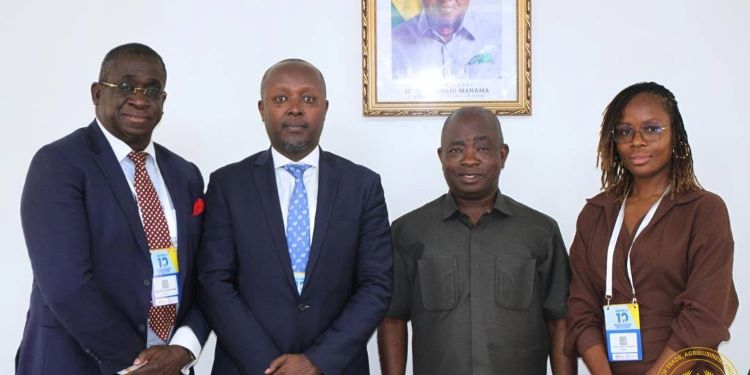
The Ministry of Trade, Agribusiness and Industry (MoTAI) has held discussions with a delegation from the African Guarantee and Economic Cooperation Fund (FAGACE) to explore Ghana’s potential induction into the regional financial institution.
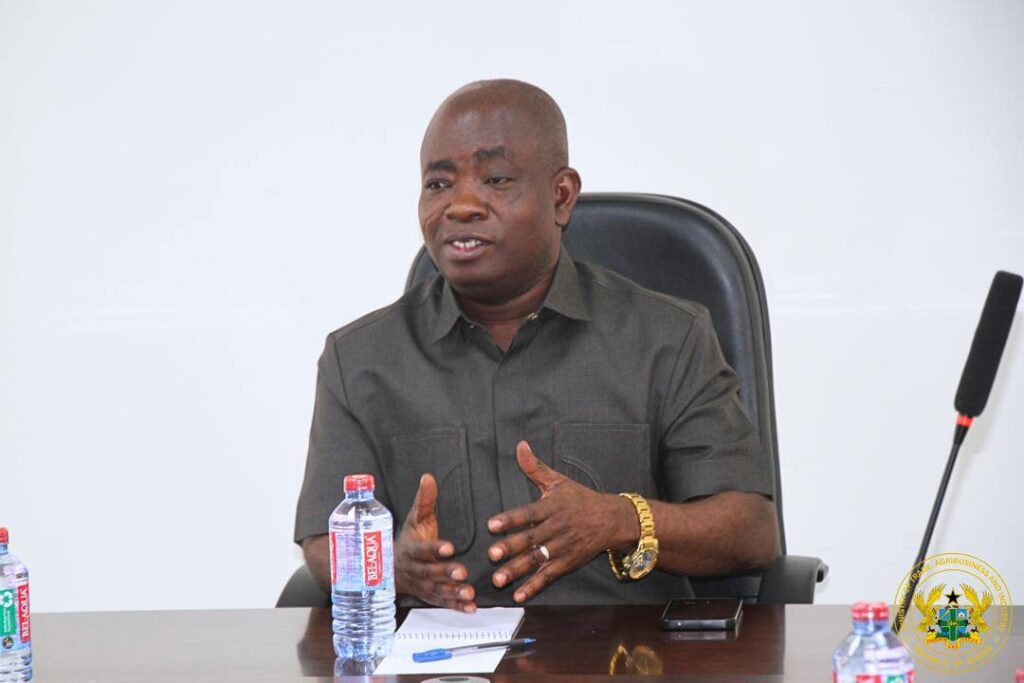
Led by Mr. Eric Nkusi Bukeye, the delegation from Rwanda was received in Accra by the Deputy Minister for Trade, Agribusiness and Industry, Hon. Sampson Ahi, who described the engagement as a step toward expanding the financing landscape for Ghana’s industrial and agribusiness sectors.
“Discussions focused on the opportunities available for Ghana, should it join FAGACE, particularly access to guarantees, loans, and grants to support economic development.
“The institution, which operates exclusively with member states, provides both individual guarantees and portfolio guarantees aimed at supporting small and medium-scale industries, helping transition them from the informal sector to more structured and formal operations”
Ministry of Trade, Agribusiness and Industry
During the briefing, the delegation explained that their primary mission is to lower the risk profile of critical sectors, thereby unlocking private capital that is often hesitant to engage with emerging industries. FAGACE provides access to a regional safety net that bridges the gap between local industrial ambitions and the stringent requirements of international and domestic lenders.
According to MoTAI, the meeting delved into the “formalization,” of the Ghanaian economy, as a significant portion of the country’s agribusiness and manufacturing activity remains within the informal sector, limiting its access to large-scale credit and global markets.
The FAGACE delegation emphasized that their interventions specifically help these businesses adopt more “structured and formal operations.” This guarantee framework acts as a “buffer” for commercial banks, encouraging them to lend to SMEs that may lack traditional collateral but possess high growth potential.
Hon. Sampson Ahi noted that this alignment with industrial growth is exactly what the Ministry requires to sustain its 24-Hour Economy and value addition mandates. He highlighted that the lack of affordable credit remains the single greatest bottleneck for local manufacturers.
If Ghana successfully integrates into the FAGACE framework, it would provide a “new layer of financial security,” for the nation’s exporters, particularly those supported by the Ghana Export-Import Bank (GEXIM). This regional cooperation is seen as a vital step in shielding the domestic economy from the volatility of global financial markets.
Roadmap For Membership
While the Ministry of Trade is the primary advocate for the industrial benefits of FAGACE membership, the Deputy Minister clarified that the final policy direction rests with the Ministry of Finance, and urged the FAGACE delegation to formally engage the Finance Ministry to finalize the technical and fiscal requirements for membership.
Once the policy green light is given, the government has already identified the Ghana Export-Import Bank (GEXIM) as the “lead implementing institution,” to manage the partnership’s high-level industrial guarantees.
Furthermore, MoTAI revealed that the Ghana Enterprises Agency (GEA) has been designated as the primary liaison for the SME sector. The GEA’s extensive network of business advisory centers across the country makes it the most appropriate vehicle for facilitating access to FAGACE’s de-risking tools for small-scale entrepreneurs.
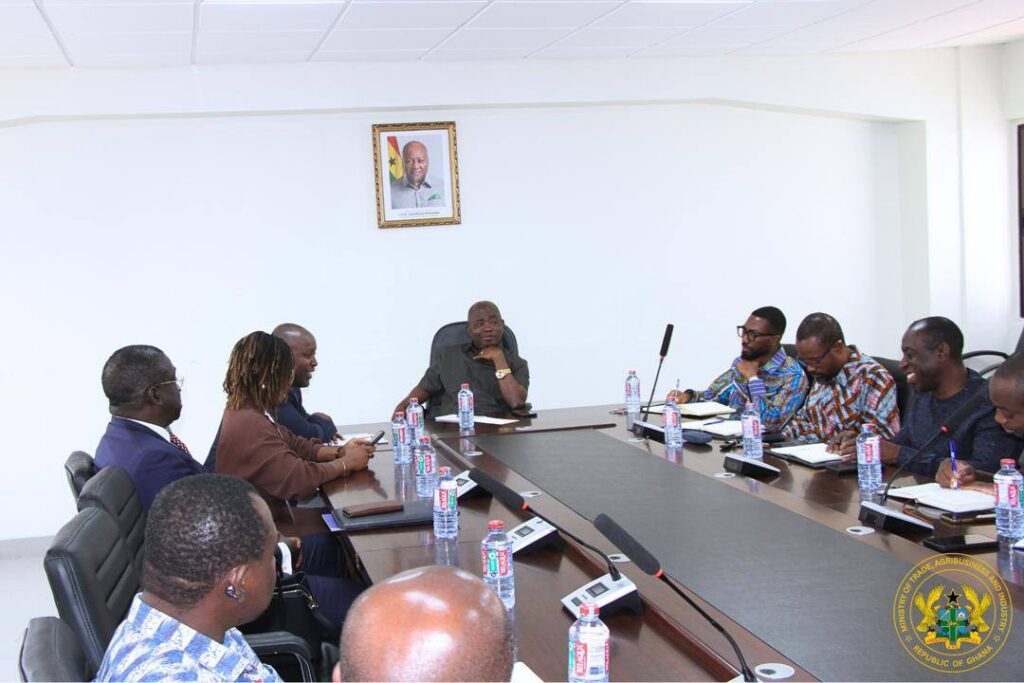
This multi-agency approach ensures that the benefits of regional membership trickle down from large-scale industrial projects to the smallest agribusinesses in rural Ghana. The Deputy Minister stressed that MoTAI’s role is to “create the enabling environment that allows these strategic collaborations to function effectively.”
The FAGACE visit was part of a broader trend of regional economic integration that has gained momentum in early 2026. For Ghana, joining regional guarantee funds position the country as a more attractive destination for quality investment.
Mr. Eric Nkusi Bukeye noted that member states of FAGACE often see a significant uptick in foreign direct investment (FDI) because the fund’s guarantees provide international investors with an extra layer of confidence. This could mean more competitive interest rates and longer-term financing for infrastructure projects linked to the agribusiness sector in Ghana.
The Deputy Minister, Hon Ahi, highlighted that these strategic alliances are essential for the AfCFTA era. To compete effectively within the continental free trade zone, Ghanaian businesses must have the financial muscle to scale production and regional institutions like FAGACE provide the collective strength needed to negotiate better terms with global financiers.
He reiterated that the government is committed to “expanding financing opportunities,” on all fronts, ensuring that no viable industrial project fails due to a lack of risk mitigation.
One of the most discussed points during the courtesy call was FAGACE’s success in transitioning businesses, since many Ghanaian SMEs are trapped in a cycle of informality because they cannot meet the documentation and collateral standards of the formal banking system.
For MoTAI, FAGACE’s portfolio guarantees allow local banks to lend to a “cluster” of SMEs, spreading the risk and reducing the burden of individual collateral. This “cluster-based financing” is a game-changer for the agribusiness sector, where farmers and small-scale processors can be grouped together to receive funding for modern equipment and inputs.
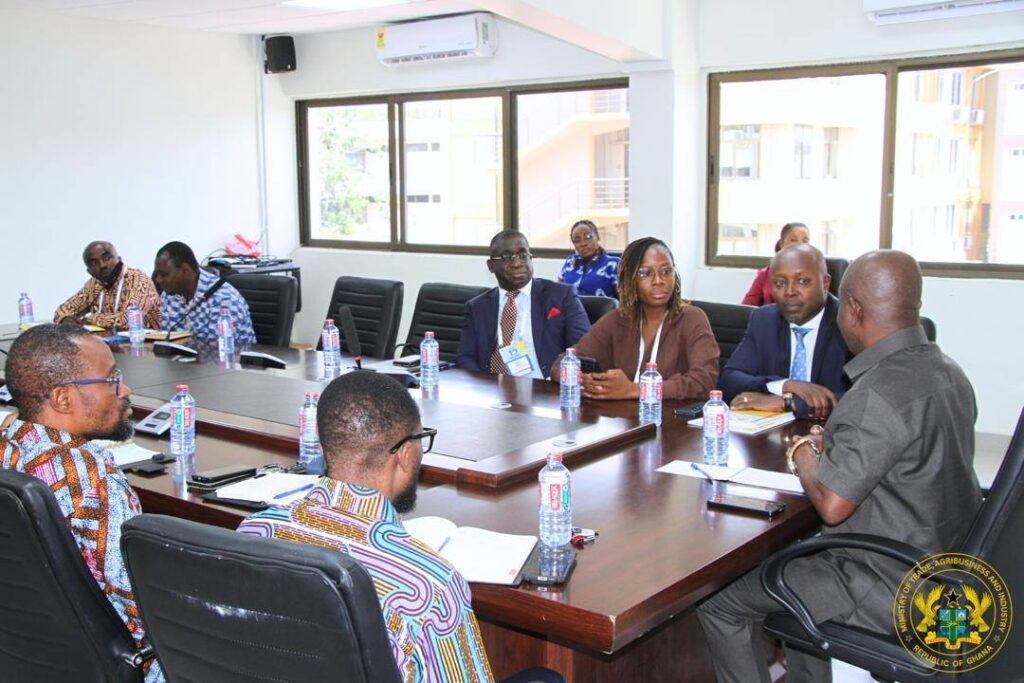
As the meeting concluded, the Deputy Minister urged the FAGACE team to look closely at the Ghana Enterprises Agency’s existing database of SMEs to identify early candidates for support, noting that the transition to formality is not just about finance but “governance and structure.”
MoTAI noted that the anticipated partnership between FAGACE and GEXIM is expected to focus on “export competitiveness,” where GEXIM, as the lead implementing agency, will likely utilize FAGACE guarantees to support large-scale industrialization projects that have a high export potential.
The courtesy call by the FAGACE delegation marks a defining moment in Ghana’s quest for a more resilient and inclusive financial architecture, with the leadership of Hon. Sampson Ahi setting the stage for a coordinated approach between MoTAI, the Ministry of Finance, and implementing agencies like GEXIM and the GEA.
READ ALSO: New Financial Risks Shake Ghana’s Stability Outlook