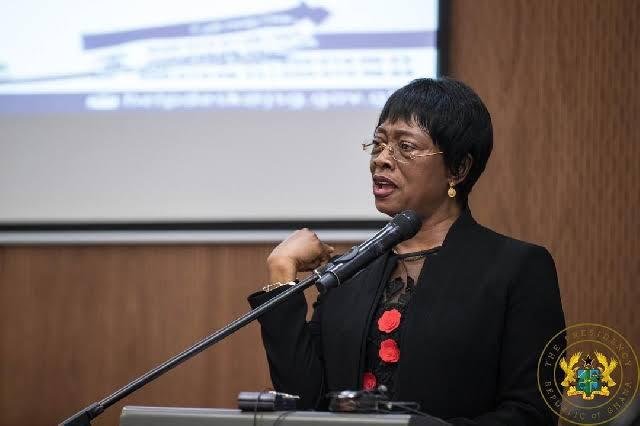
Sophia Akuffo, former Chief Justice and a fellow at the Institute of Economic Affairs (IEA) has asserted that the strategic pursuit of mineral sovereignty is not a deterrent to foreign direct investment but a necessary recalibration that redefines engagement terms to prioritize national development.
This bold stance, articulated during a recent press briefing in Accra, challenges the long-held narrative that asserting state control over natural resources inevitably frightens off global capital.
The Institute posits that a sovereign-led framework establishes a more stable, transparent, and equitable environment where investors transition from “owners” of the resource to essential partners in a state-driven industrialization agenda.
“These developments have shown that asserting sovereignty does not repel investment; rather, it redefines the terms of engagement in favor of national development. They also show that Africans have woken up, and Ghana must join the awakening.”
Sophia Akuffo

Dwelling on this vision, the Sophia Akuffo highlighted that the global shift toward critical minerals provides Ghana with a unique opportunity to lead an “African awakening.”
The former Chief Justice noted that several nations have already successfully asserted sovereignty without sacrificing investment, proving that a clear, nationalistic resource policy can actually attract higher-quality, long-term partners interested in sustainable value addition rather than mere extraction.
By shifting the paradigm, Ghana can move away from being a passive recipient of royalties and toward becoming an active participant in the global mineral value chain, ensuring that its vast wealth in lithium, gold, and bauxite serves as the bedrock for structural economic transformation.
The High Cost of the “Colonial” Royalty Model

According to Sophia Akuffo, Ghana’s economic history serves as a stark warning of the limitations of the current extractive model. Despite possessing natural and mineral resources valued in the trillions of dollars, the nation has been forced to seek financial bailouts from the International Monetary Fund (IMF) 17 times.
This paradox of “poverty in the midst of plenty” is further exacerbated by recent fiscal pressures, with the finance minister indicating a need to borrow GHS 17 billion just to cover public sector salaries.
The former Chief Justice argued that these “national disaster” are symptoms of a resource governance framework that fails to leverage its primary assets. To break this cycle, the IEA maintains that the state must maximize its “fair national share of windfall profits” and use them to catalyze industrial growth, ensuring that the wealth stays within the borders to fund critical infrastructure and social services.
A Once-in-a-Generation Opportunity for Reform
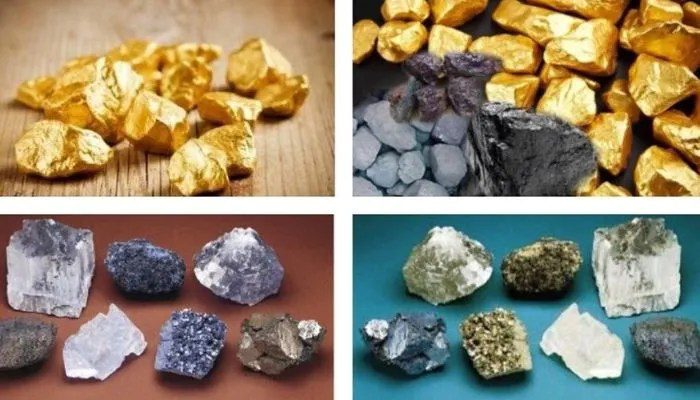
The timing for a total overhaul of Ghana’s mineral governance has never been more opportune. With over 30 mining leases nearing expiration and record-high global prices for key minerals, the government holds significant leverage.
Furthermore, the discovery of new “critical minerals” including lithium, tantalum, and nickel places Ghana at the center of the global green energy transition.
Sophia Akuffo stressed that this is a “once-in-a-generation opportunity” to reset the rules of the game before new long-term contracts are inked.
The Institute proposes a new path characterized by maximized state ownership combined with “service contracts” for private management.
This model ensures that while the state retains ultimate control and ownership of the minerals, it still benefits from the technical expertise and efficiency of both local and foreign private players.
By implementing fiscal instruments that capture a greater portion of the value, Ghana can ensure that “investor incentives must not distract from the central issue” of national benefit.
Strengthening State Participation for Industrial Transformation

For Ghana to achieve true industrial transformation, the debate must shift from a fear of losing investors to a focus on strengthening state participation.
The IEA’s proposed framework emphasizes local value addition and processing, moving away from the “export of raw ores” that has defined the sector for decades.
By insisting on domestic processing, the country can create the thousands of high-quality jobs needed to prevent future employment-related tragedies.
“Ghana stands at a critical juncture,” the IEA warned, urging the government to adopt new terms for resource extraction that guarantee long-term benefits.
By seizing this moment to redefine the mineral resource governance framework, Ghana can finally align its vast mineral wealth with its developmental aspirations.
The goal is clear: to ensure that the nation’s natural assets are no longer just commodities for export, but the engines of a prosperous, sovereign, and industrialized future.
READ ALSO: House Committee Holds Hearing On Partial DHS Shutdown