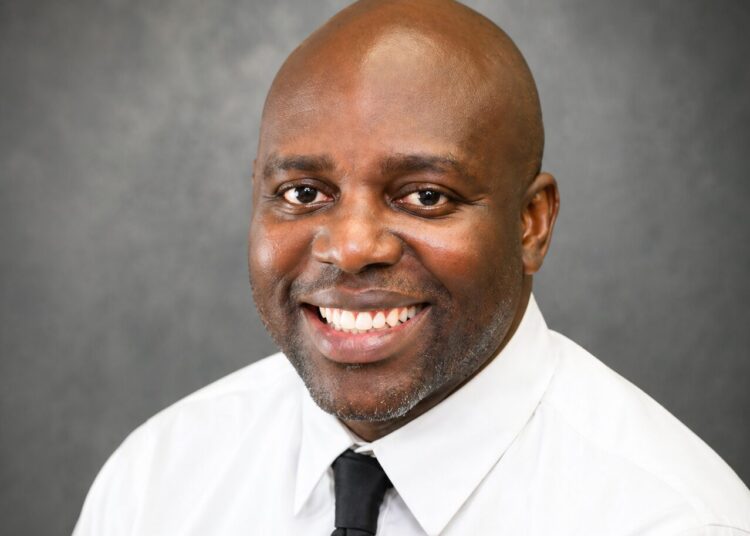
Renowned political scientist Dr. John Osae-Kwapong has expressed strong support for the Supreme Court’s decision striking down the delegate voting system that Ghana’s political parties have used for three decades to select their presidential and parliamentary candidates. The court ruled by a majority, with two justices dissenting, and gave the parties one year to open their primaries to every registered member in good standing.
In an exclusive interview with The Vaultz News, Dr Osae-Kwapong, a Democracy and Development Fellow at CDD-Ghana and Project Director of The Democracy Project, said the judgment corrects a practice that tilted internal contests toward candidates with money rather than candidates with ideas.
He believes the parties can meet the deadline because they have spent thirty years steadily widening their delegate base, and the court has effectively asked them to take one final step in a direction they were already travelling.
“It is a very welcome decision. I have never hidden the fact that I am a big proponent of open primaries and have never been a fan of the delegate system. Long before there was a constitutional challenge to it, I would express my misgivings about the delegate system in any conversation”.
Dr. John Osae-Kwapong, Democracy and Development Fellow, CDD-Ghana, and Project Director, the Democracy Project
The objection also carries personal weight. He recalled a close friend who contested a parliamentary primary and lost twice, an outcome he attributes to the incentives of the system rather than the quality of the candidate.

“In my opinion, he failed not because he lacked good ideas, and not because he was the weaker of the candidates who presented themselves. It was other things that tilted the delegate system in favour of those who had deeper pockets than he did.”
Dr. John Osae-Kwapong, Democracy and Development Fellow, CDD-Ghana, and Project Director, the Democracy Project
Why one year to scrap the delegate system is doable
Critics say no party can rebuild a thirty-year-old selection machine in twelve months. Dr Osae-Kwapong reads the history differently, noting that the parties have never treated the delegate college as fixed.
“They have been operating the delegate system for 30 years, yes. But over those 30 years, to their credit, they have been steadily expanding it. If you think back to 1992 and 1996, the number of delegates the New Patriotic Party used is far smaller than the number it used in 2025 and 2026 to elect its flagbearer”.
Dr. John Osae-Kwapong, Democracy and Development Fellow, CDD-Ghana, and Project Director, the Democracy Project
That trajectory shapes his assessment of the court’s order. “That is why, for me, one year is doable. They have a history of regularly expanding their delegate base. This ruling simply says your next expansion should cover the entire constituency.“
He conceded that the calendar leaves little room to breathe. Within the same year, both major parties would ordinarily select their flagbearers and parliamentary candidates and hold elections for constituency, regional and national executive positions. “So it is a tough timeline, but I still believe they can do it. It is a question of proper planning and working out the technical pieces,” he said.

The hardest part of the rebuild is infrastructure and a credible party register
Pressed on where the real difficulty lies, Dr Osae-Kwapong pointed away from politics and toward plumbing. “The biggest challenge is putting the technical infrastructure in place,” he said. He broke that challenge into three parts: the technology itself, the people who will operate it, and the rules the parties must now write.
Those rules will have to settle when registration opens, where registration centres sit, how members sign up, how a person proves genuine membership of a party, how the party validates each registration, and how all of it is compiled into a register that can withstand scrutiny.
The stakes attached to that document, in his view, extend far beyond the coming cycle. “That register becomes the basis for every future internal election,” he said.
Who pays for the transition to open primaries
Money sits directly behind those technical questions. Registration systems, technology and staffed centres across every constituency will demand resources parties have historically directed toward campaigns.
“Building that kind of infrastructure costs money,” Dr Osae-Kwapong said. The question the parties must now answer, he added, is how they will finance it, so that by 2027 the structures stand ready and the delegate system has disappeared completely.

What happens if the parties miss the one year deadline
Dr Osae-Kwapong trusts the organisational muscle the parties display at every general election, and sees no reason it cannot be turned inward. “Our political parties are good at mobilisation. During elections, they will find the voter in the most remote part of a constituency and canvass for that vote
He added that their capacity to mobilise across wide geographic areas is telling that they can put these structures in place, however challenging and costly, and compile a members’ register. Should that capacity fall short, he sees a legislative route rather than a crisis.
“But if they genuinely cannot do it within a year, we may need enabling legislation. We could go back and amend the Political Parties Act, and in that amendment extend the timeframe, or provide that a party which shows cause why it could not comply within a year may be granted an additional year by whichever body supervises the process, possibly the Electoral Commission.”
Dr. John Osae-Kwapong, Democracy and Development Fellow, CDD-Ghana, and Project Director, the Democracy Project
A question of attitude as much as capacity
For Dr Osae-Kwapong, the risk is not that the parties will fail the technical test. It is that they will approach the ruling as an inconvenience to be managed rather than a reform to be delivered.
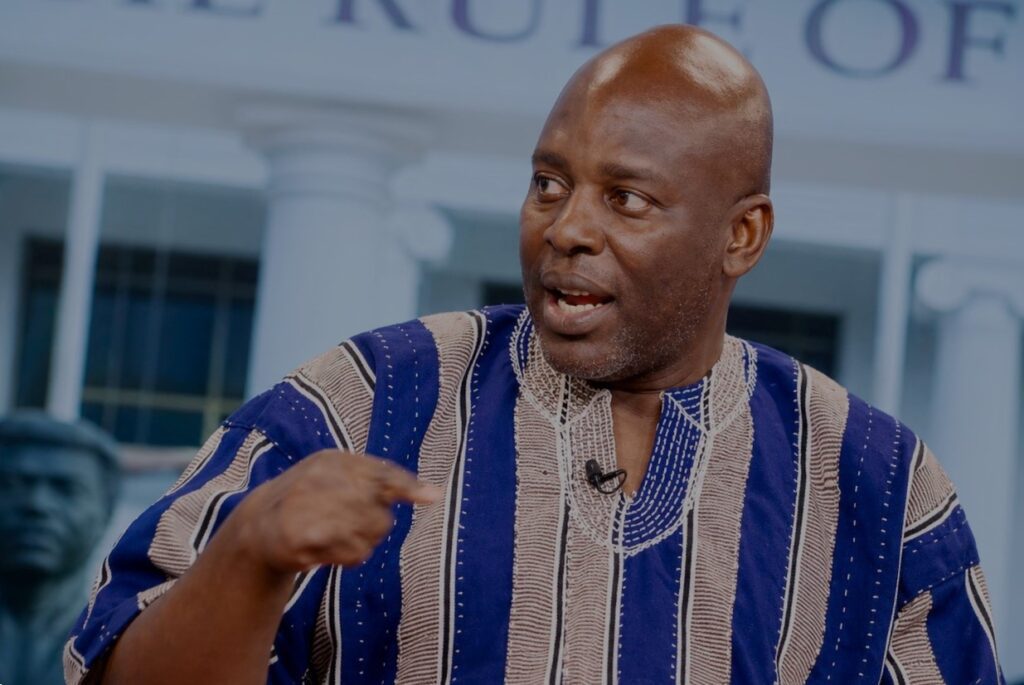
He is confident that modalities exist for handling any slippage, whether through legislation or supervision. What he does not want is for the parties to frame the judgment as a burdensome imposition they cannot possibly meet.
He would rather they acknowledge the difficulty and then ask how best to comply and move away from the delegate system to the open primary the court has ordered.
READ ALSO: Too Late to Save His Dignity, Figo Launches a Scathing Attack on Infantino