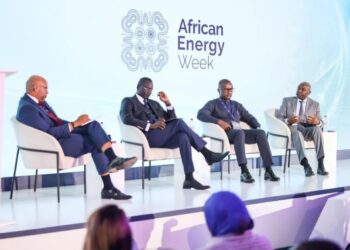

Mohammed Issah, the Director for Policy and Regulations at the Chamber of Oil Marketing Companies (COMAC), has led the charge for a more equitable downstream petroleum sector during a high-profile panel discussion at the 2026 World Consumer Rights Day.
Representing the interests of oil marketers, Mr. Issah argued that achieving true consumer protection requires a delicate calibration of policies that harmonize market stability with transparent pricing mechanisms.
The discourse centered on the theme “Transparency in Fuel Pricing: Is the Consumer Protected?“, emphasizing that a sustainable industry is one where fair competition is not sacrificed for short-term gains, but rather bolstered by robust regulatory oversight.
“During the discussion, Mohammed Issah emphasised the need for balanced policy approaches that promote transparency, market stability, and fair competition—while ensuring consumers benefit from a well-regulated and sustainable industry.”
Chamber of Oil Marketing Companies (COMAC)
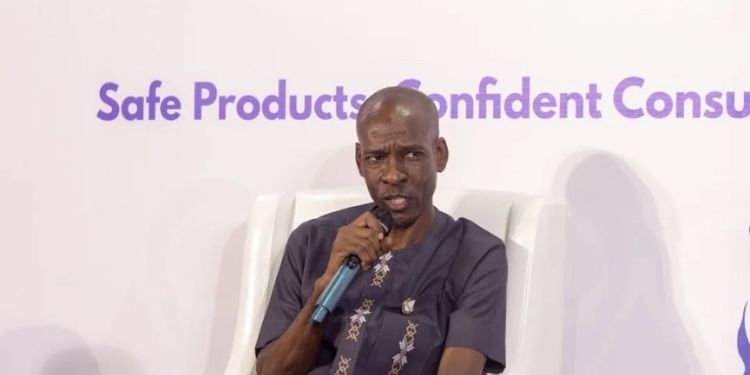
Building on this vision, the COMAC executive joined representatives from the Chamber of Petroleum Consumers (COPEC) and the Centre for Environmental Management and Sustainable Energy (CEMSE) to dissect the complexities of Ghana’s fuel market.
The National Petroleum Authority (NPA) organized the event to foster a multi-stakeholder dialogue on the structural challenges inherent in the current deregulation model.
Mr. Issah clarified that “fuel prices are largely driven by global crude oil prices, exchange rates, and taxes,” rather than the profit margins of Oil Marketing Companies (OMCs), which are often unfairly blamed for price hikes.
By highlighting the role of the Fuel Price Floor Programme, he noted that such mechanisms are essential for “maintaining market stability and discipline,” ensuring that the industry remains viable for both large and small-scale operators.
Structural Integrity and Market Stability

The call by COMAC for a “balanced policy approach” serves as a critical defense against predatory pricing and market volatility.
By supporting the NPA’s Fuel Price Floor, COMAC is effectively advocating for a level playing field where smaller, indigenous OMCs can survive alongside multinational giants.
This structural safeguard prevents dominant players from undercutting the market to create monopolies, which would ultimately lead to higher prices for the Ghanaian consumer once competition is stifled.
Strengthening “enforcement, licensing, and digital monitoring” is the next logical step in this evolution, as it ensures that every cedi paid at the pump is reflective of true market value rather than hidden inefficiencies or unfair trade practices.
Enhancing Energy Security and Consumer Welfare

From a broader energy transition view, a stable petroleum sector provides the necessary financial foundation for future “green” investments.
When the downstream market is healthy and transparent, it attracts the long-term capital needed for infrastructure improvements and cleaner fuel technologies.
For the average consumer, COMAC’s insistence on moderate fuel pricing and transparency means more predictable budgeting and protection from sudden supply disruptions.
By pushing for “uniform ex-pump prices” and the elimination of selective discounting, the chamber is ensuring that fairness is not a geographic privilege, but a national standard that benefits motorists in both urban hubs and remote rural areas.
Towards a Resilient Downstream Sector

The 2026 World Consumer Rights Day celebration has underscored that consumer protection is a shared responsibility that goes beyond simple price reductions.
Through interactive engagement with participants, it became clear that the sustainability of the energy sector depends on a “well-regulated” framework that can withstand global shocks.
As Ghana continues to refine its deregulation policy, the insights from COMAC suggest that the future lies in digital integration and rigorous compliance.
These efforts will not only protect the pockets of consumers but also safeguard the overall economic health of the nation by maintaining a resilient and competitive energy landscape.
READ ALSO: Ghana Begins Nationwide AI Training for Civil Servants