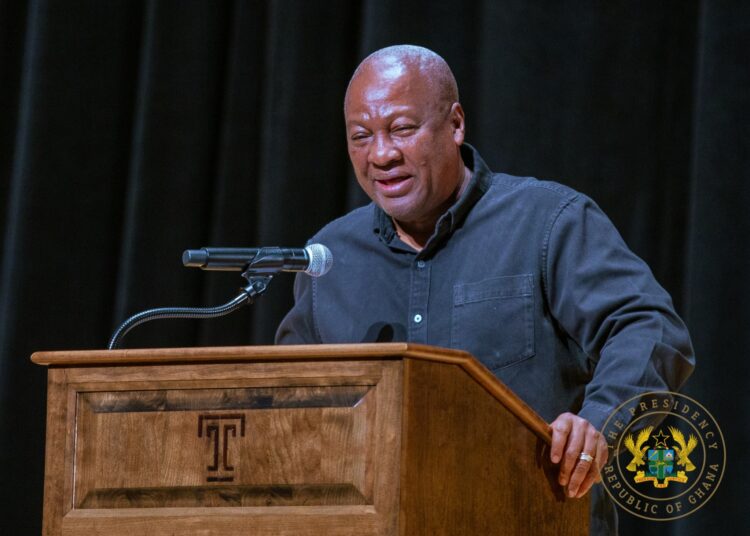
President John Dramani Mahama has commended Ghanaians living abroad for their significant contributions to the national economy, describing diaspora remittances as one of the country’s most reliable sources of foreign exchange.
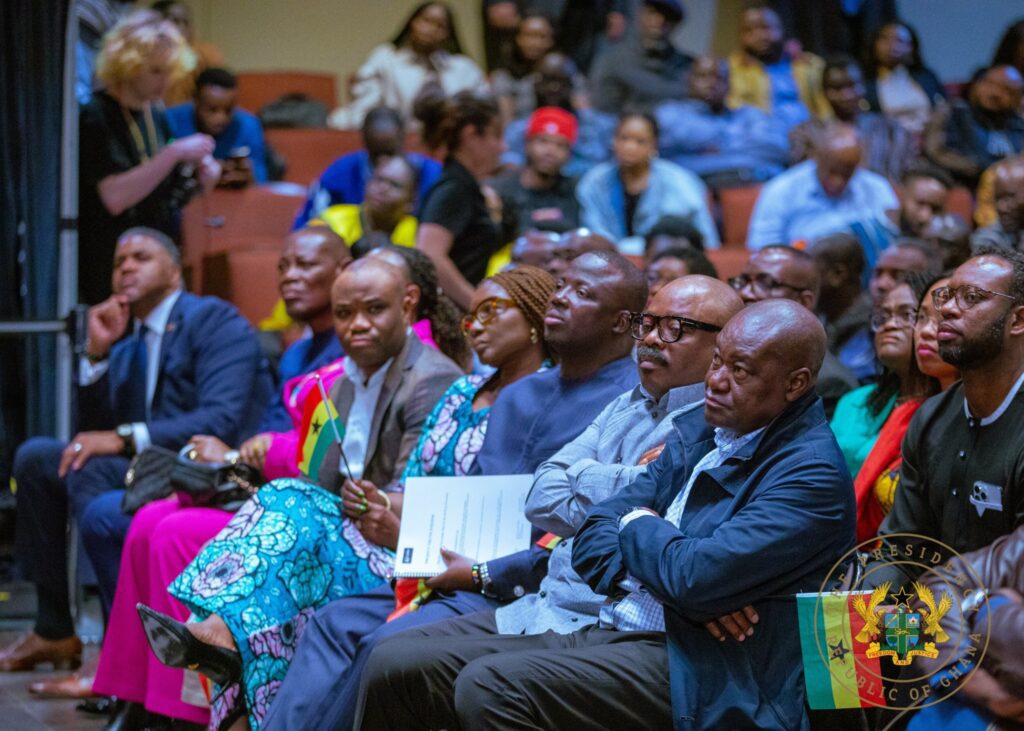
Addressing members of the Ghanaian community in Philadelphia following his United Nations reparation mission, the President highlighted the critical role played by the diaspora not only in supporting families but also in sustaining broader economic activity across the country.
He noted that financial inflows from Ghanaians abroad have become a stabilizing force, particularly in times of economic uncertainty. “Through your remittances, investments, professional networks, and expertise, you continue to support families across our country,” he said, emphasizing that these contributions extend far beyond direct financial transfers.
According to him, diaspora engagement has strengthened communities, supported livelihoods, and contributed meaningfully to Ghana’s development trajectory. The President’s remarks reflect growing recognition of the diaspora as a key pillar of national progress.
Record Remittances Highlight Economic Impact
President Mahama provided detailed insight into the scale of diaspora contributions, revealing that remittance inflows reached a record 7.8 billion dollars. This places remittances among the top sources of foreign exchange for the country, second only to gold exports.
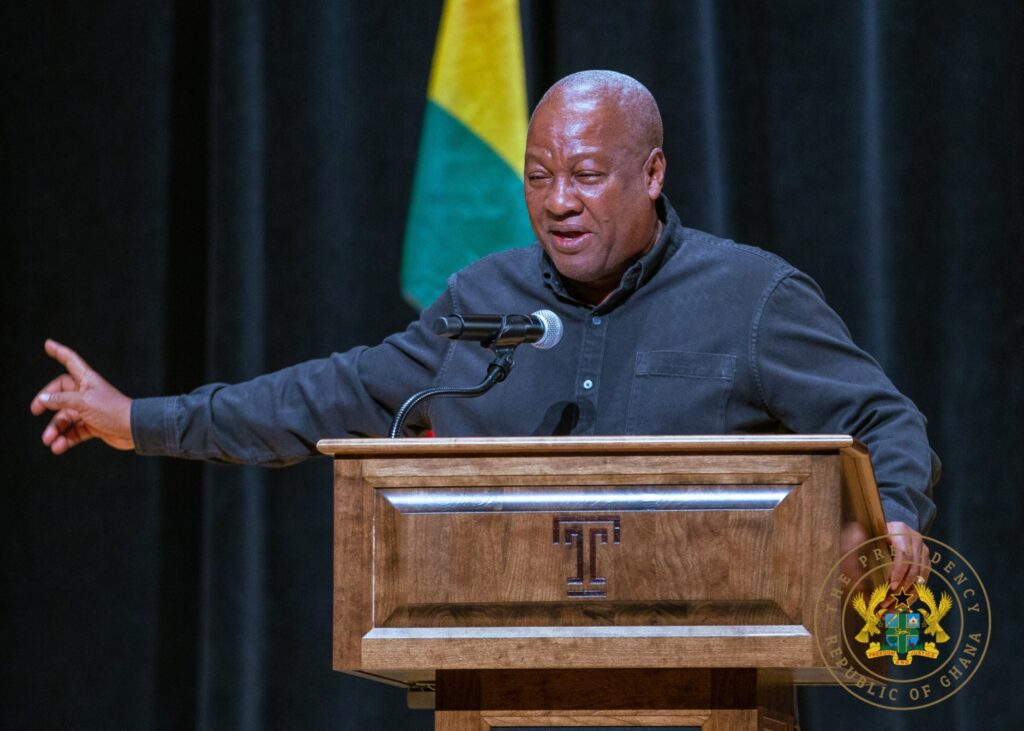
He explained that while gold generated approximately 11 billion dollars, remittances followed closely, underscoring their importance in maintaining economic balance. This comparison illustrates the magnitude of diaspora contributions and their role in supporting macroeconomic stability.
“Remittances remain one of Ghana’s most stable sources of foreign exchange,” he stated, adding that their consistency makes them particularly valuable in an environment where other revenue streams may fluctuate.
Beyond the financial figures, the President stressed that the diaspora contributes intangible assets that are equally important. He pointed to knowledge transfer, global exposure, innovation, and professional expertise as critical resources that Ghanaians abroad bring back to the country.
“But beyond that, you bring something even more valuable. Knowledge, exposure, innovation, and a global perspective,” he added, framing diaspora engagement as a multidimensional contribution to national development.
Government Moves to Expand Political Participation
In a significant policy announcement, President Mahama assured the diaspora community that the government is actively working to remove constitutional barriers that limit their participation in Ghana’s political system.
He revealed that a bipartisan bill is currently before Parliament of Ghana, aimed at allowing dual citizens to fully engage in political administration without having to renounce their foreign citizenship or residency status.
This proposed reform addresses longstanding concerns among diaspora communities who have sought greater inclusion in governance. Under existing provisions, certain public offices have been restricted to individuals without dual citizenship, effectively excluding many qualified Ghanaians living abroad.
“And so that clause in our constitution that excludes you, we have a bill in parliament that is bipartisan,” the President said, emphasizing the broad political support behind the initiative.
He explained that once the amendment is passed, members of the diaspora will be eligible to contest for parliamentary positions or be appointed as ministers while retaining their dual status. “You do not need to renounce your citizenship or your residence status before you stand for parliament or be appointed as a minister in Ghana,” he stated.
Bridging the Gap Between Home and Abroad
The proposed reforms reflect a broader effort to strengthen ties between Ghana and its global diaspora. By enabling greater political participation, the government aims to harness the skills, experience, and perspectives of Ghanaians abroad in shaping national policy.
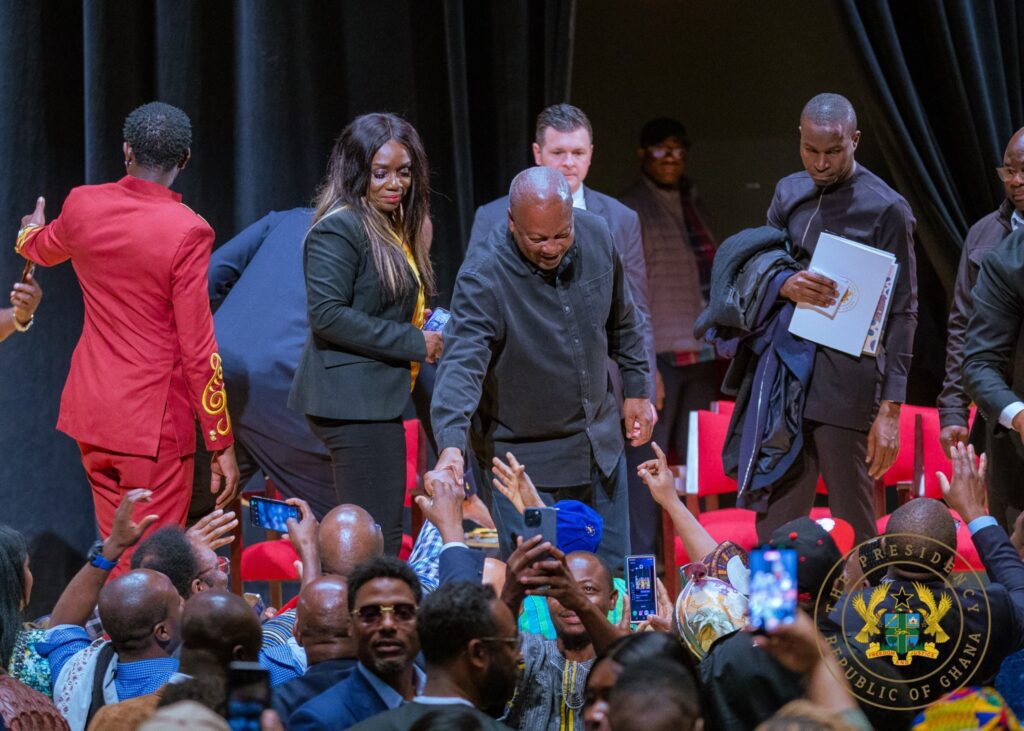
President Mahama’s remarks suggest a shift toward a more inclusive governance framework, one that recognizes the diaspora not just as contributors to the economy but as stakeholders in decision-making processes.
This approach aligns with global trends, where countries increasingly engage their diaspora communities as partners in development. By removing barriers to participation, Ghana positions itself to benefit from a wider pool of talent and expertise.
The President’s address signals a new phase in Ghana’s relationship with its diaspora, characterized by deeper integration and mutual collaboration. While remittances have long been acknowledged as vital, the emphasis is now expanding to include governance, innovation, and strategic development.
The combination of economic recognition and political inclusion reflects an evolving understanding of the diaspora’s role. It moves beyond traditional narratives of financial support to embrace a more comprehensive partnership.
For many in the Ghanaian community abroad, the announcement represents both validation and opportunity. It acknowledges their contributions while opening the door to greater involvement in national affairs.
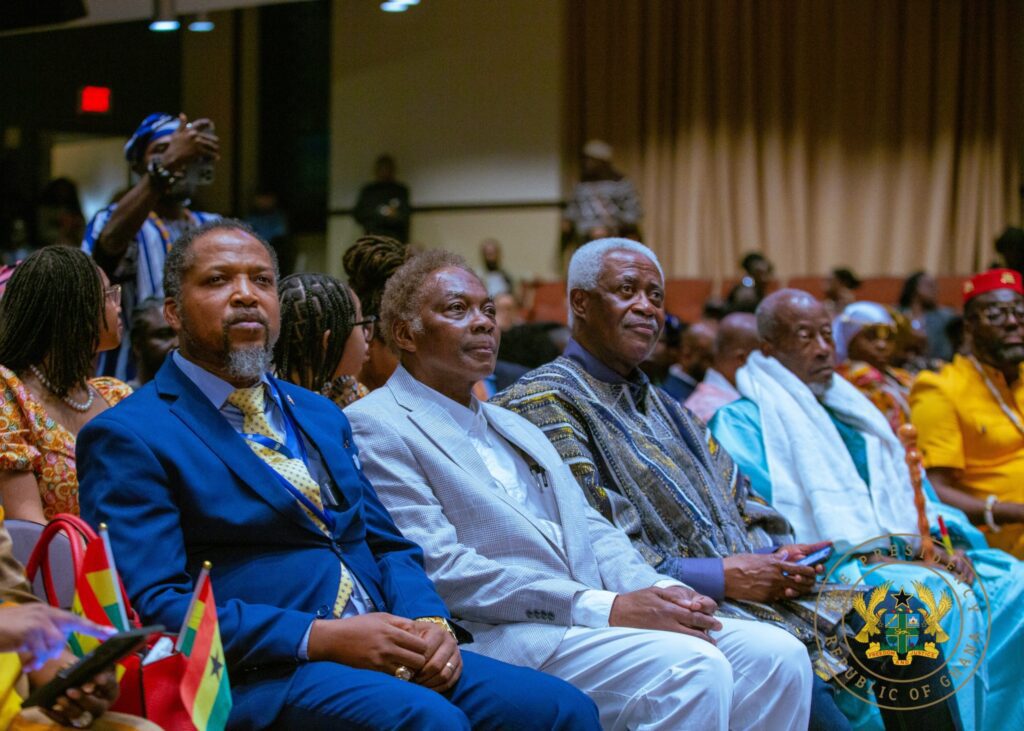
As discussions around the proposed constitutional amendment continue, the focus will remain on ensuring that the framework balances inclusivity with effective governance. The success of this initiative will depend on how well it is implemented and how it resonates with both domestic and diaspora stakeholders.
In highlighting the achievements and potential of Ghanaians abroad, President Mahama’s message underscores a central theme that national development is not confined by borders. Instead, it is shaped by the collective efforts of citizens, both at home and across the world.
READ ALSO: Ramaphosa Shrugs Off Reports of Withdrawn G7 Invitation