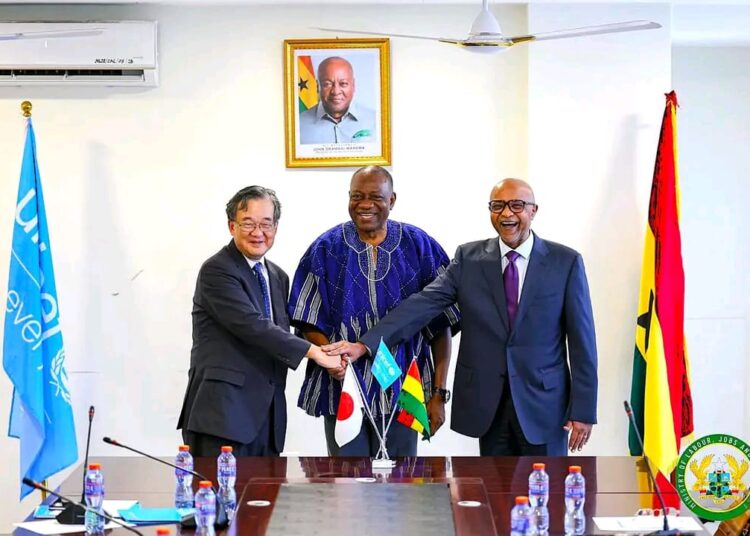
The Government of Ghana has launched a major public-private partnership with Japan to combat child labour and strengthen child protection systems.
The initiative, implemented in collaboration with UNICEF and the Embassy of Japan, aims to protect vulnerable children while promoting inclusive and sustainable development across the country.
The launch, held in Accra on March 26, 2026, marks another step in Ghana’s ongoing efforts to eliminate child labour and improve the well-being of children nationwide.
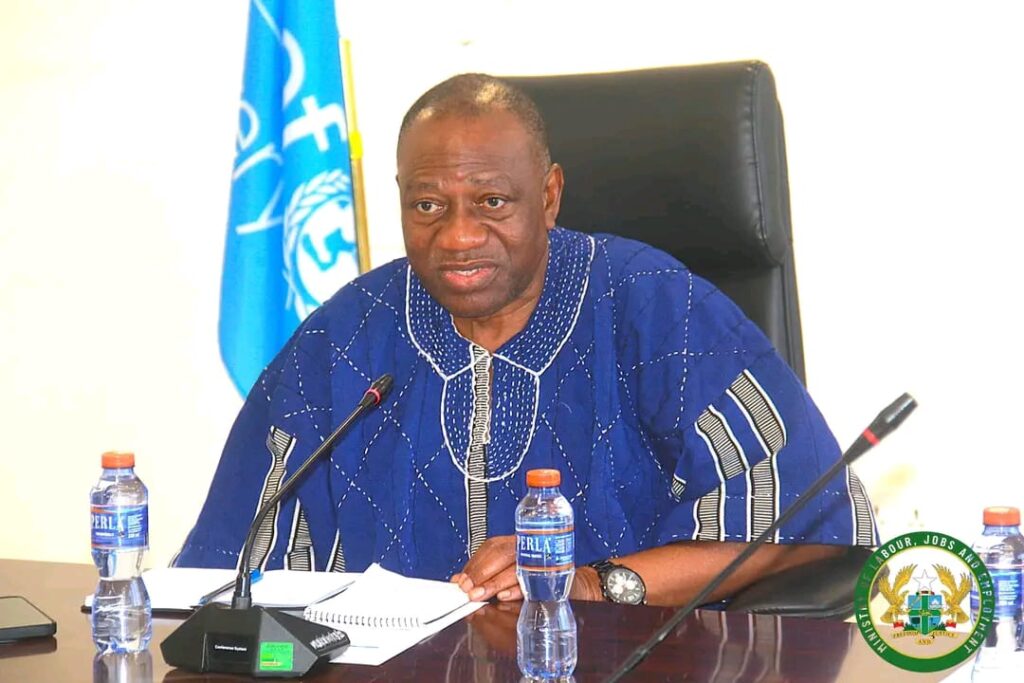
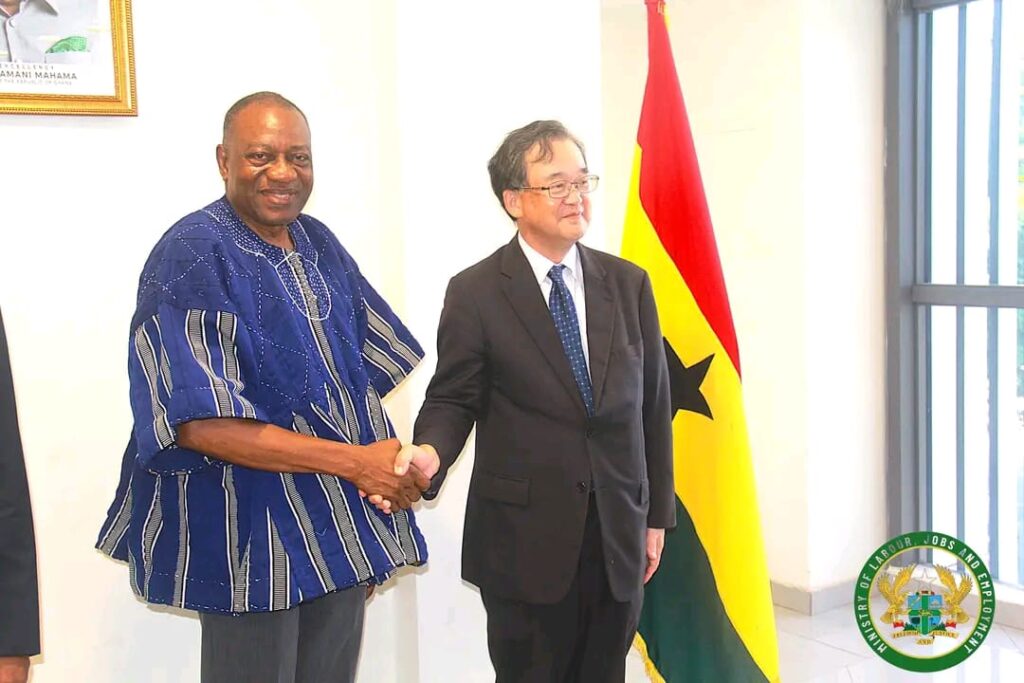
Minister for Labour, Jobs and Employment, Abdul-Rashid Pelpuo, reaffirmed the government’s commitment to leading the coordination and implementation of the programme. He emphasised that investing in children is central to national development and warned against the long-term consequences of child labour.
“Any development built on the labour of children is not sustainable. If we fail to protect our children today, we risk undermining the future of our nation.”
Abdul-Rashid Pelpuo, Minister for Labour, Jobs and Employment
His remarks highlight growing concern among policymakers about the impact of child labour on education, health, and long-term economic growth.
Ambassador Calls for Collective Responsibility
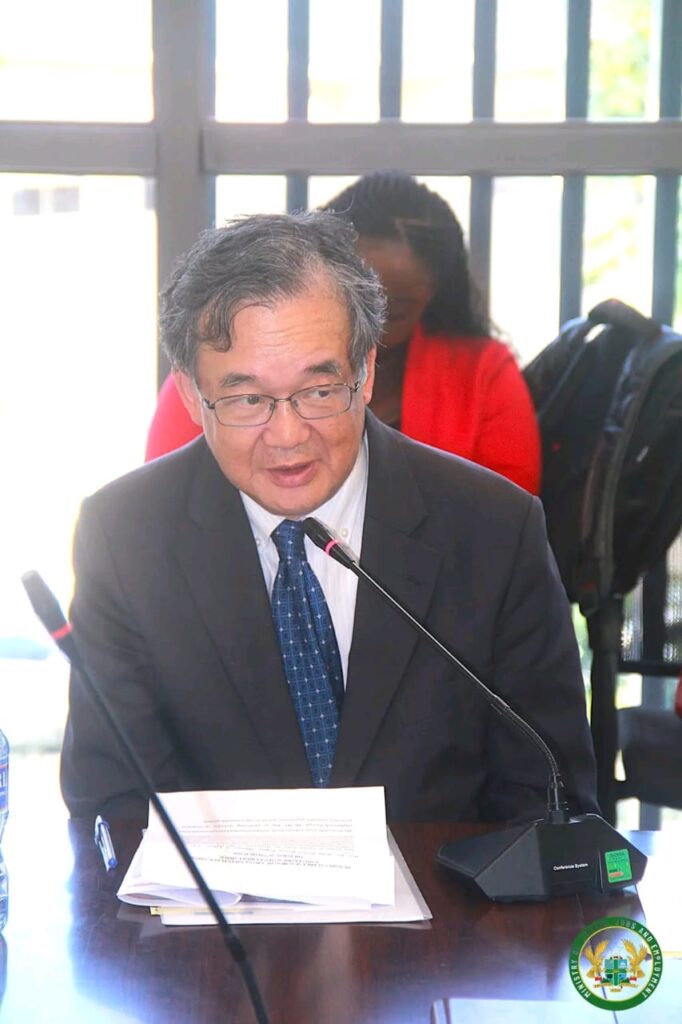
Japan’s Ambassador to Ghana, Hiroshi Yoshimoto, stressed that addressing child labour requires collective effort. He described the initiative as a shared responsibility involving governments, communities, development partners, and the private sector.
“This project is not the responsibility of one institution alone. It requires the combined efforts of all stakeholders to ensure that children are protected, empowered, and given the opportunity to thrive.”
Hiroshi Yoshimoto, Japan’s Ambassador to Ghana
The partnership reflects Japan’s continued support for development programmes in Ghana, particularly those focused on human security and social protection. The Country Representative of UNICEF, Osama Makkawi Khogali, described the initiative as a significant milestone in Ghana’s child protection efforts.
He stressed that the programme goes beyond a routine intervention and represents a shared commitment to safeguarding children. “This is more than a project launch; it represents a shared promise to the children of Ghana,” said the Country Representative of UNICEF.
He noted that child labour remains a serious issue in the country, affecting an estimated 1.1 million children across sectors such as agriculture, fisheries, and mining.
Available data also show that about 21 percent of children in Ghana are engaged in child labour, with many involved in hazardous activities that affect their health and development.
Initiative Focuses on Innovation and Data Systems
The programme is expected to leverage Japanese technological expertise alongside Ghana’s national systems to improve child protection efforts. Officials say the initiative will strengthen data collection systems, expand social protection services, and improve the identification of children at risk.
By using data-driven approaches, the partnership aims to ensure that interventions are targeted, efficient, and sustainable. The project is expected to directly benefit more than 13,000 children and caregivers through access to education, protection services, and community support systems.
The initiative is supported under the framework of the Tokyo International Conference on African Development (TICAD), which promotes sustainable development and human security across Africa.

It also aligns with Ghana’s national policies, including the Ghana Accelerated Action Plan Against Child Labour (2023–2027), which focuses on reducing child labour and improving child welfare.
Globally, child labour remains a major concern, with about 138 million children affected worldwide, the majority of them in sub-Saharan Africa. Experts say addressing the root causes of child labour requires a combination of education, social protection, and economic support for families.
Partnership Strengthens Multi-Stakeholder Approach
The Ghana–Japan partnership reflects a broader shift toward multi-stakeholder approaches in addressing child labour. Previous initiatives have shown that collaboration between governments, development partners, and the private sector is essential for tackling the complex drivers of child labour, including poverty and limited access to education.
By bringing together diverse actors, the initiative aims to strengthen coordination and improve the effectiveness of interventions at both national and community levels. The launch of the partnership reinforces Ghana’s commitment to protecting children and promoting their rights.
Government officials say the initiative will contribute to building stronger child protection systems while supporting long-term development goals. As efforts continue, stakeholders remain focused on ensuring that every child has access to education, protection, and opportunities to reach their full potential.
The programme represents a significant step toward eliminating child labour and creating a safer, more inclusive future for children across Ghana.
READ ALSO: GEA Signs INSPIRE Project MoU For Jobs
.