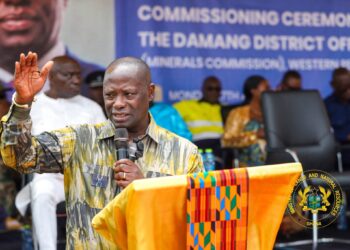
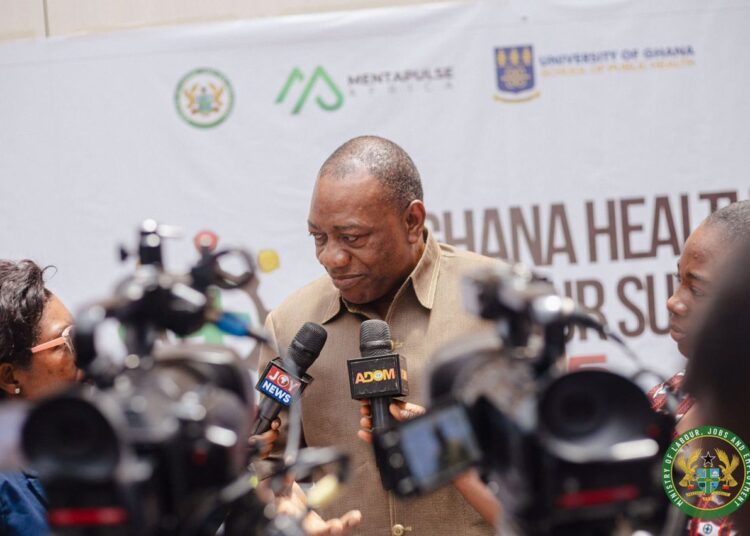
Dr. Abdul-Rashid Pelpuo, the Minister for Labour and Employment, has declared that Africa’s vast reserves of critical minerals have effectively placed the continent at the epicenter of the global transition toward sustainable green energy.
Speaking at the 3rd Executive Council Meeting of the African Federation of Miners and Mineral Wealth (AFMMW) in Accra, the Minister asserted that the continent’s wealth in cobalt, lithium, and rare earth elements is no longer just a commodity for export but the primary engine for a new era of global technological advancement.
The Minister elaborated on this strategic positioning by highlighting that Africa currently holds an estimated $8.6 trillion in untapped mineral resources, representing over 30 percent of the world’s critical green minerals.
During the gathering, Dr. Pelpuo explained that while these resources give the continent significant leverage in the global energy and technology sectors, this advantage can only be realized through strategic local harnessing.
He noted that the surging global demand for electric vehicles, wind turbines, and solar panels presents a unique opportunity for Africa to move away from being a mere exporter of raw materials toward becoming a hub for industrialization and local value addition.
“Africa holds over 30 percent of the world’s critical green minerals. Yet, for too long, our resources have powered development elsewhere while our communities remain underdeveloped. The continent must industrialize, integrate, and unite, ensuring our people are at the center of that future.”
Dr. Abdul-Rashid Pelpuo, the Minister for Labour and Employment
Catalyzing Economic Value Through Local Processing
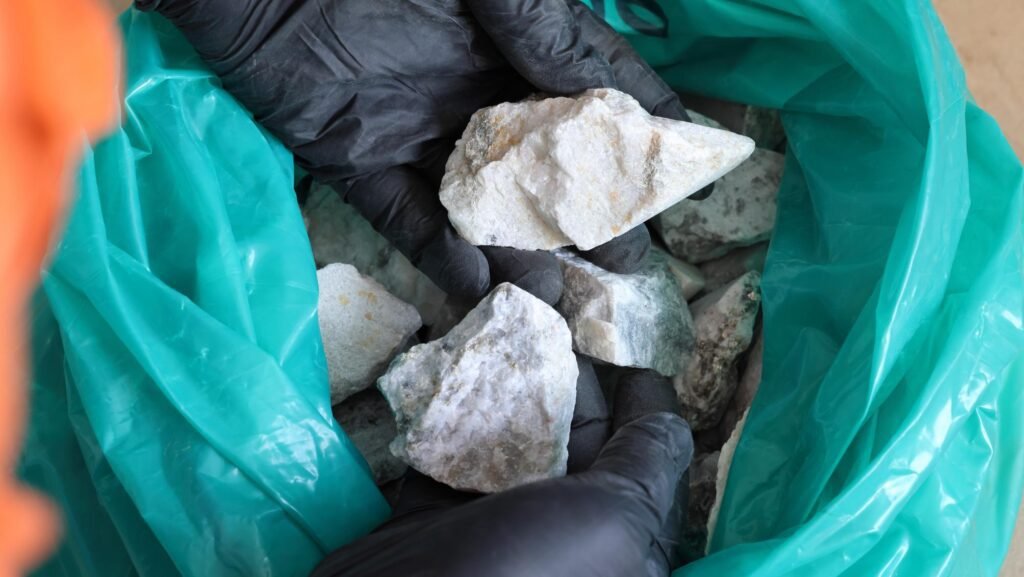
To move beyond the historic “extractive model,” Dr. Pelpuo argued that Africa must prioritize the establishment of local processing and manufacturing plants to utilize these criticized endowed mineral resources.
Experts from the African Union and the African Development Bank support this vision, noting that processing minerals at the source known as local beneficiation could create upwards of 2.3 million jobs across the continent and increase continental GDP by roughly 12 percent.
By transforming raw lithium and cobalt into battery precursors and refined components within African borders, the continent can capture a larger share of the global value chain.
This shift is seen as essential to “ensuring that the wealth generated by Africa’s resources reaches its people,” rather than simply facilitating industrial growth in overseas markets.
Regional Integration and the AfCFTA Advantage
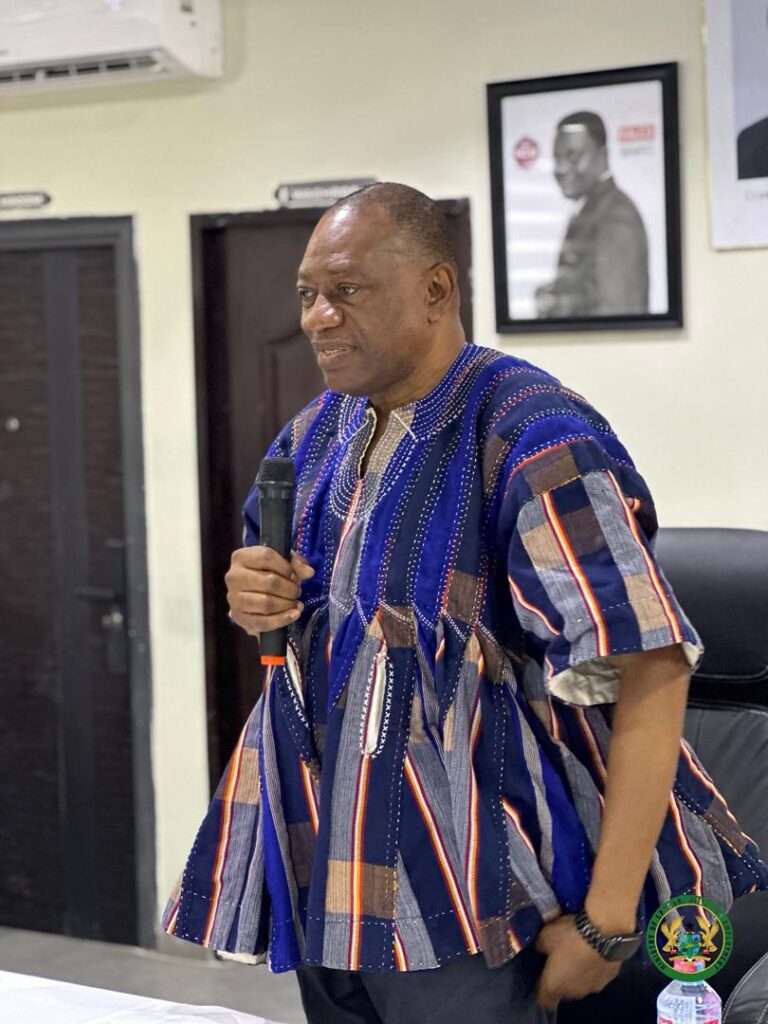
The Minister emphasized that the African Continental Free Trade Area (AfCFTA) serves as the “key to boosting trade among African nations” and creating the scale necessary for competitive industrialization.
By removing trade barriers, African nations can develop regional value chains where one country mines the raw ore, other processes it using shared infrastructure, and a third assembles the final green technology products.
This collaborative approach, often described by experts as “Equitable Resource-Based Industrialization,” allows smaller economies to participate in the global supply chain.
Hon. Pelpuo stressed that such regional unity is the most effective defense against the “heightened global competition” that seeks to exploit African resources without providing sustainable development.
Strategic Partnerships and the Role of Organized Labor
While advocating for “maintaining African control over its resources,” Dr. Pelpuo acknowledged the necessity of building strategic partnerships with global investors to access the required capital, technology, and technical expertise as equally championed by experts.
He pointed out that these partnerships must be balanced and transparent to prevent the exploitation and conflict that have historically undermined development in resource-rich regions.
Furthermore, the Minister underscored that trade unions and worker associations are indispensable in this transition.
Organized labor, according to Pelpuo, acts as a safeguard to “negotiate royalties, secure development projects, and advocate for fair labor practices,” ensuring that the green energy revolution does not repeat the mistakes of the past but instead fosters a “prosperous and peaceful Africa” centered on the dignity of its workforce.
READ ALSO: Austria Plans Social Media Ban For Under-14s