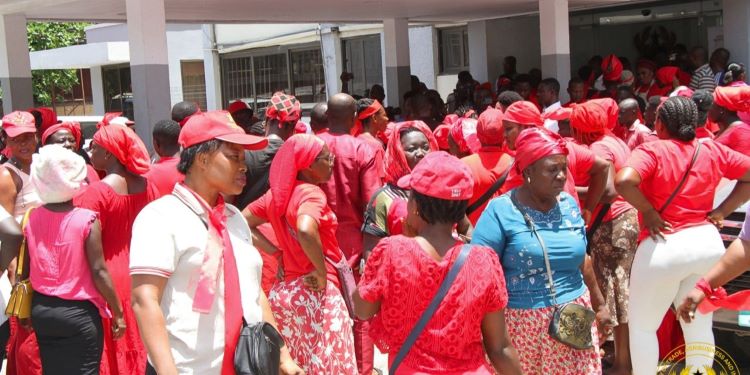
Petty traders operating within the Kasoa market enclave have formally petitioned the Ministry of Trade, Agribusiness and Industry (MoTAI) following an abrupt eviction notice served to them. The traders, representing a significant portion of the informal retail sector in one of Ghana’s most populated and economically vibrant municipalities, are seeking the Ministry’s urgent intervention to halt the displacement.
The traders contended that the notice served on Thursday, March 26, 2026, which requires them to vacate their current trading locations immediately, threatens to dismantle their primary source of livelihood and cause irreparable economic harm to thousands of families who depend on the daily micro-commerce generated at the site.
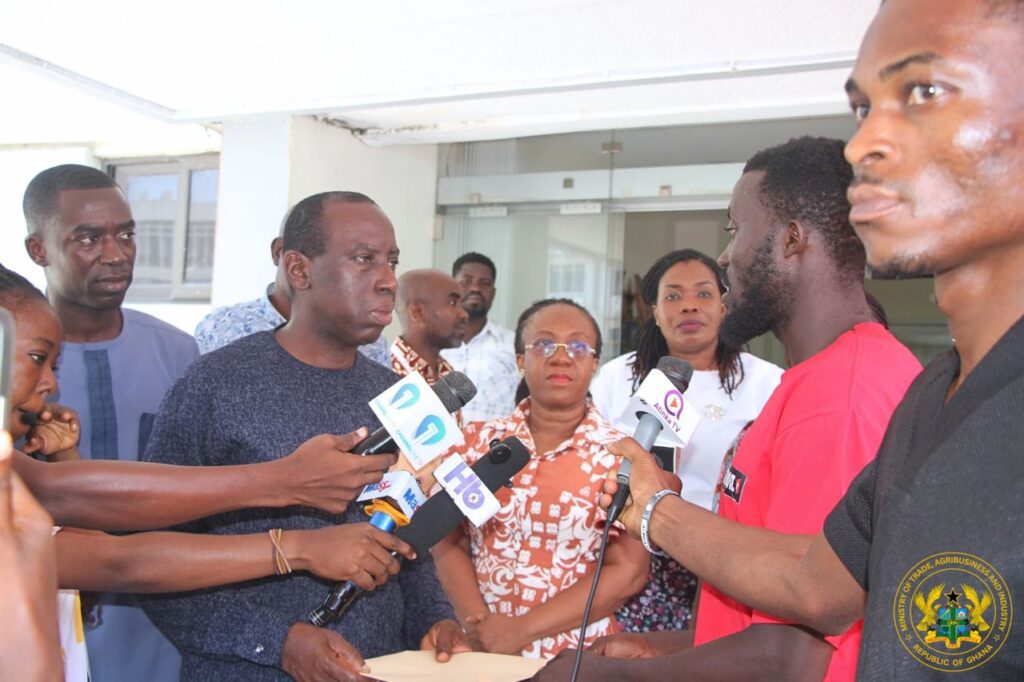
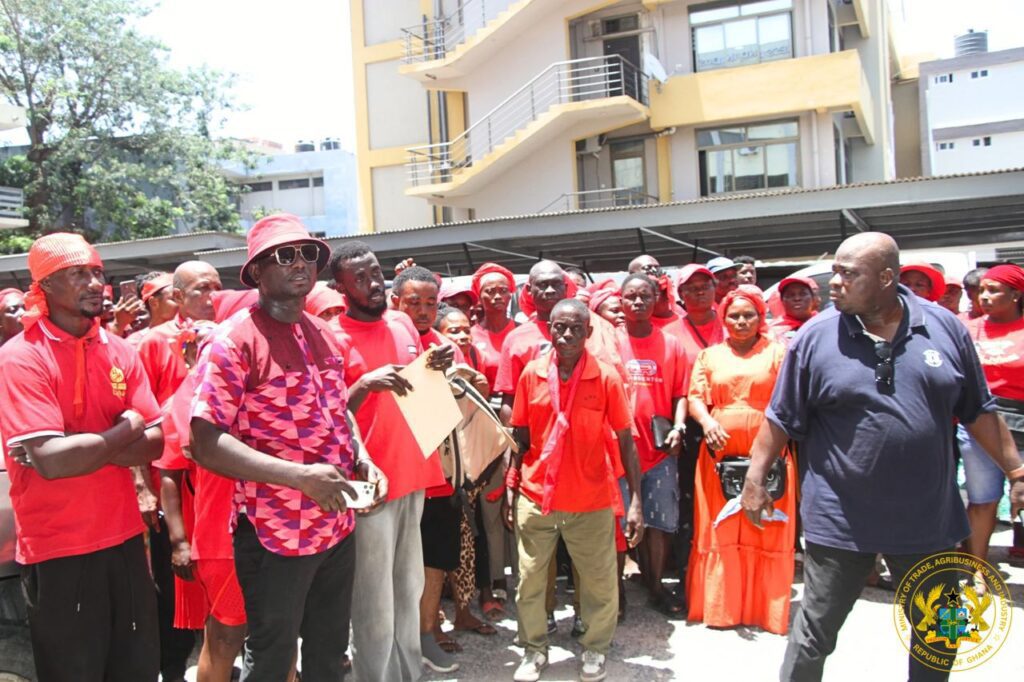
“In a formal presentation at the Ministry of Trade, Agribusiness and Industry’s headquarters, the Director in Charge of Industries, Mr. Kofi Addo, received the petition on behalf of the Sector Minister, Hon. Elizabeth Ofosu-Adjare. He assured the traders that the petition would be presented to the Hon. Minister”
Ministry of Trade, Agribusiness and Industry
The Kasoa market is a critical node in the regional trade network, serving as a transit point for goods moving between the Greater Accra and Central regions. For many of the petty traders, their presence on the fringes of the main market is not a matter of choice but a necessity born out of a lack of affordable, formalized stall space.
The petition highlights that the sudden nature of the eviction notice provides no clear alternative for relocation, leaving the traders in a state of economic paralysis. They argued that without a structured transition plan or a designated alternative market site, the eviction will lead to a total loss of income and a surge in local unemployment.
The informal sector, of which these petty traders are a cornerstone, accounts for a vast majority of employment in the Kasoa area. The traders’ grievance is rooted in the “abrupt disruption,” of a delicate economic ecosystem. Many have outstanding loans with microfinance institutions, taken out to purchase stock for the current season.
An immediate eviction would not only stop their cash flow but also trigger a wave of defaults, affecting the local financial sector. The petition stressed that the Ministry of Trade must view this not merely as a spatial or decongestion issue, but as a massive labor dispute involving the nation’s most vulnerable economic actors.
Mr. Kofi Addo, while receiving the document, acknowledged the vital contribution of petty traders to the national economy. He noted that the Ministry recognizes the importance of the informal retail chain in distributing goods from the agribusiness sector to the final consumer.
However, he also pointed out that the Ministry must balance these livelihoods with the need for orderly industrial and commercial development, as he assured the traders that their petition will now undergo a critical review to determine how its demands can be reconciled with the municipal assembly’s planning requirements.
Advocacy For Market Infrastructure
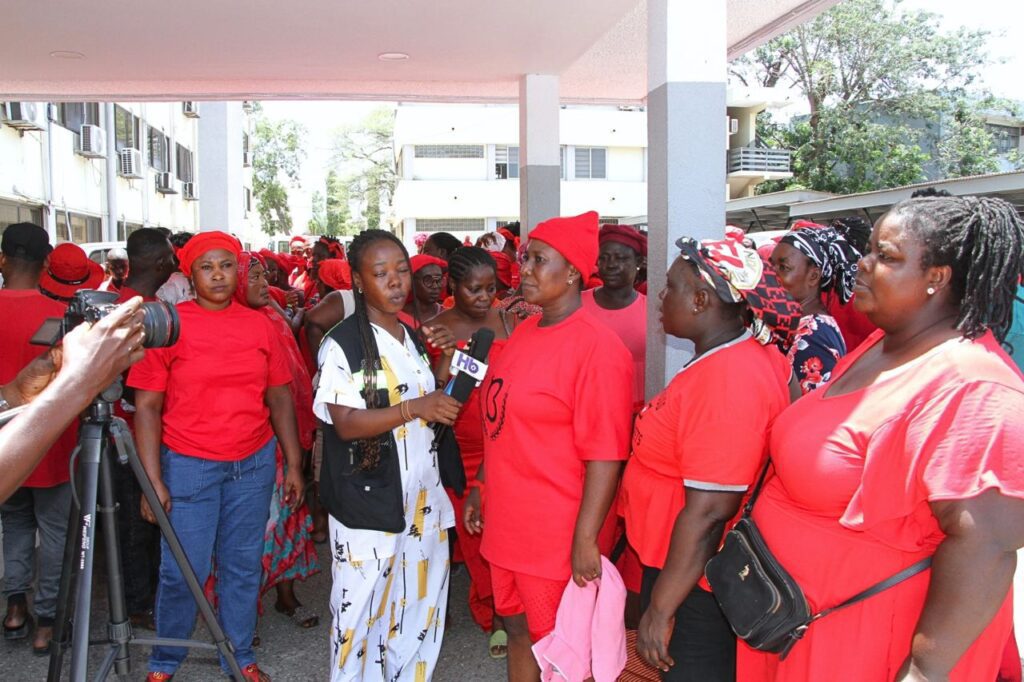
The petitioners, clad in red clothing, highlighted a chronic infrastructure deficit as the root cause of the current friction.
They claimed that the existing Kasoa market is over-saturated, forcing them into unauthorized spaces and urging the Ministry to facilitate the construction of secondary markets and agribusiness hubs in the peri-urban areas surrounding Kasoa.
They noted that such a move would naturally decongest the city center without the need for aggressive eviction tactics, arguing that construction, not eviction, is the only sustainable path forward for a growing city.
Furthermore, the traders advocated for the creation of trade zones where petty traders can operate under a regulated permit system. This would allow the municipal assembly to collect revenue while providing the traders with legal protection from sudden displacement.
The petition underscored that the informal sector is ready to comply with regulations, provided those regulations are fair and provide a stable environment for commerce. The current notice of vacation, however, is seen as a regression that ignores the reality of how the majority of Ghanaians earn their living.
The Ministry of Trade, Agribusiness and Industry is now tasked with coordinating with the Kasoa Municipal Assembly to find a middle ground. While the assembly is focused on traffic decongestion and sanitation, MoTAI’s mandate is the growth of trade.
The petitioners expressed hope that the Ministry will advocate for a phased approach to any changes in the market layout. They called for empathy in policy-making, reminding the government that every petty trader is a micro-entrepreneur contributing to the national GDP, and a sudden eviction on the eve of a new month is a recipe for social and economic unrest.
Mr. Kofi Addo’s assurance that the petition will reach the Minister provided a temporary sense of relief, but the traders remain on high alert. They have announced that they will wait patiently for a response before taking any further action.
This diplomatic approach by the traders’ association is intended to show that they believe in the power of petitioning the state. However, the clock is ticking on the eviction notice, and the Ministry’s response must be swift to prevent the economic destitution that the traders fear.
READ ALSO: Damang Mine: Minority Vows to Conduct Forensic Review in Next Government