The AI Centre Ghana initiative has received Cabinet approval, with government committing $250 million to establish a national Artificial Intelligence (AI) computer centre aimed at accelerating innovation and digital transformation across the country.
The AI Centre Ghana is expected to support research, development, and deployment of artificial intelligence solutions in key sectors such as agriculture, healthcare, education, and financial services. The move forms part of a broader national strategy to position Ghana as a leading hub for responsible AI innovation in Africa.
Speaking at a National Stakeholder Engagement on Ghana’s AI Readiness Assessment Methodology (RAM) Report in Accra, the Minister for Communication, Digital Technology and Innovations, Hon. Samuel Nartey George, described the initiative as a defining moment in Ghana’s technological advancement.
“Today marks a decisive step in Ghana’s path toward a responsible, innovative, and globally competitive Artificial Intelligence ecosystem.”
Hon. Sam Nartey George, Minister of Communications Digital Technology and Innovations
Strengthening Ghana’s Digital Economy
The establishment of the AI Centre Ghana aligns with government’s vision to harness digital technologies to drive economic growth and improve service delivery. With mobile penetration exceeding 110 percent and over 38 million mobile subscriptions nationwide, Ghana is considered well-positioned to leverage AI for national development.
The Minister also revealed that Ghana’s National Artificial Intelligence Strategy has received Cabinet approval and is scheduled for launch on April 24, 2026. He described the strategy as a milestone that will guide AI adoption across all sectors of the economy.

According to him, the AI Centre Ghana will play a central role in implementing the strategy by providing the infrastructure and resources needed to support innovation and technological advancement
Key Priorities for AI Development
Hon. Samuel Nartey George outlined four priority areas that will shape Ghana’s AI agenda. These include strengthening data governance systems, investing in AI research and computing infrastructure, expanding AI education and digital skills, and embedding ethical safeguards in AI deployment.
He noted that the UNESCO AI Readiness Assessment Methodology provides a comprehensive framework for evaluating Ghana’s preparedness in areas such as governance, infrastructure, data ecosystems, research capacity, and ethical standards.Findings from the assessment, he said, will directly inform policy decisions and implementation strategies for the AI Centre Ghana and the broader national AI ecosystem.
Stakeholders Highlight Responsible AI Use
The Director-General of the Data Protection Commission, Dr. Arnold Kavaarpuo, commended Ghana’s efforts to promote ethical AI adoption while safeguarding cultural and institutional values.He emphasised the need to bridge the digital divide between urban and rural communities and pledged the Commission’s support for a transparent and inclusive AI ecosystem.
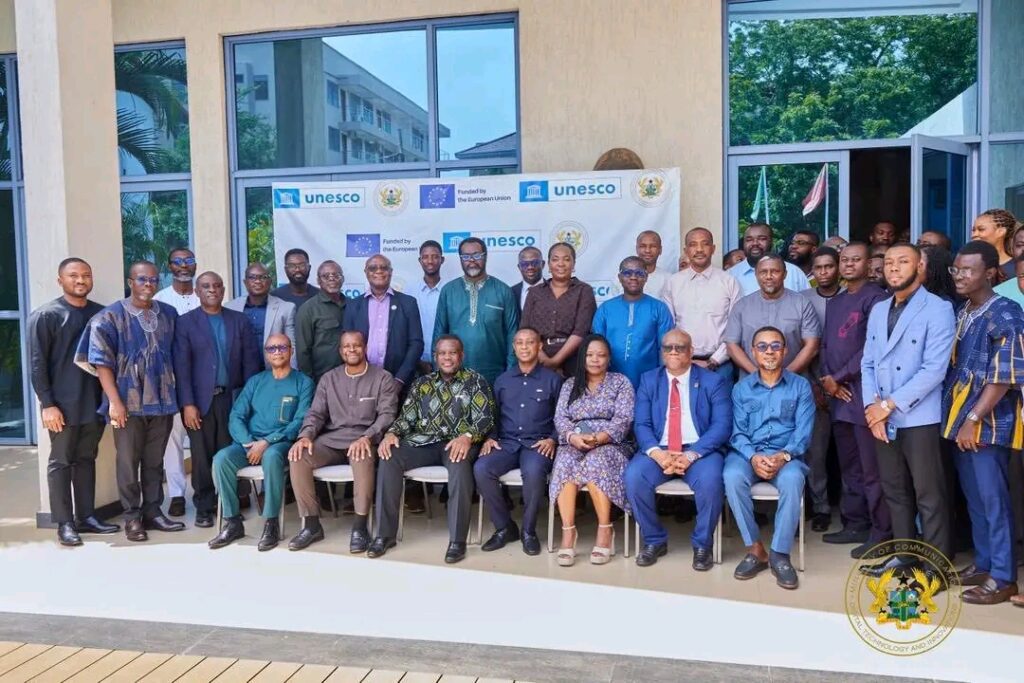
Similarly, the Secretary-General of the Ghana Commission for UNESCO, Dr. Osman Tahidu-Damba, described the Readiness Assessment Methodology as a structured framework for sustainable growth.He explained that it evaluates Ghana across four key dimensions: policies, infrastructure, human capacity, and societal impact.
Call for Multi-Sector Collaboration
UNESCO Representative Mr. Moukala stressed that strong institutions are critical to the success of digital transformation efforts and called for collaboration across sectors.” he said. “This methodology is designed to support your unique mandates.”
He added that AI governance requires flexibility and responsiveness to ensure that technological advancements benefit all citizens.
“AI governance requires a multi-sectoral approach and demands that our regulatory bodies are as agile as the technologies they oversee,” he noted.
Mr. Moukala described the validation of the AI Readiness Assessment report as a turning point, urging stakeholders to take decisive action.

“Let today’s validation be the catalyst for action. Let this report guide your investments, inform your policies, and shape your collaborations.”
Mr. Moukala, UNESCO Representative.
He further stressed that Ghana’s AI journey goes beyond technology and reflects a broader national responsibility.“We are not just building technological systems; we are building the future social contract of the Ghanaian nation,” he added.
Ghana’s Position in Africa’s Digital Landscape
With the African Continental Free Trade Area Secretariat headquartered in Accra, Ghana is strategically positioned to lead in Africa’s emerging digital economy.
The AI Centre Ghana is expected to strengthen the country’s role in digital trade and innovation while creating opportunities for startups, researchers, and private sector players.
As Ghana advances its AI agenda, stakeholders remain optimistic that the initiative will drive inclusive growth, enhance productivity, and secure the country’s place as a leader in responsible AI development across the continent.
READ ALSO: AGI Confronts Tema West MCE Over Industrial Road Collapse