
In a definitive move to shift Ghana’s agricultural sector from subsistence to industrial-scale production, Hon. Felix Kwakye-Ofosu, Presidential Spokesperson and Minister of State for Government Communications, has unveiled the technical specifications for the Farmer Services Centers (FSCs).
Initiated by President John Dramani Mahama with a recent symbolic sod-cutting at Afram Plains, the project has moved from being a conceptual promise to a massive logistical deployment, with centers to be established across 50 agricultural Districts. Hon. Kwakye-Ofosu noted how this mechanization system will eliminate the primary barrier to rural prosperity: the lack of modern equipment.
“President Mahama promised to establish Farmer Services Centers in 50 agricultural Districts to provide agricultural services to farmers. He cut sod for work to begin on them a few weeks ago at Afram Plains. These Centers will have over 4,000 different agricultural machinery”
Hon. Felix Kwakye-Ofosu, Presidential Spokesperson and Minister of State for Government Communications
According to Hon. Kwakye-Ofosu, the scale of this intervention is unprecedented in Ghana’s post-independence history, as FSCs will house a fleet of specialized agricultural machinery, specifically curated to address every stage of the crop cycle – from land preparation to precision planting and high-speed harvesting.
For the Ghanaian farmer, this represents the transition from the hoe and cutlass to a sophisticated, state-led service model that treats mechanization as a utility. The procurement list presented by the Minister revealed a tiered strategy to support both large-scale commercial estates and small-holder cooperatives.
At the heart of the fleet are 660 high-capacity tractors and 200 tractor trailers, providing the raw horsepower needed for large-scale land clearing. However, the inclusion of 200 mini tractors and their associated tillers, cultivators, and harrows indicates a nuanced understanding of Ghana’s varied topography.

These smaller units will allow the FSCs to service fragmented plots and mountainous terrain where larger machinery remains impractical.
The true value multiplier in this 4,000-unit inventory, however, was the focus on precision agronomy, with the deployment of 100 mineral fertilizer spreaders and a variety of precision seed drills – ranging from 4-row to 32-row pneumatic units – to strike against traditional broadcast farming.
Hon. Kwakye-Ofosu noted that ensuring seeds and fertilizers are placed with scientific accuracy will significantly reduce input waste and maximize plant population density, thus ensuring Ghana’s food sovereignty goals are met in the shortest time possible.
Solving the Harvest Loss Crisis
With Ghana’s grain deficit being driven by low yields and not just by post-harvest loss, the FSCs are being equipped to address this through the deployment of 50 combine harvesters that come with specialized maize and soy headers.
This is supposed to be a great intervention since when maize or soy reaches maturity, there is a narrow window for harvest before spoilage or pod-shattering occurs, and manual harvesting is too slow to compete with the weather.
These combine harvesters allow a single machine to do the work of hundreds of manual laborers in a fraction of the time, ensuring that the national harvest is secured before the rains – and housing these units in district-level centers provides a much needed harvest-on-demand services.
This allows farmers to scale their acreage with the confidence that they will not lose their investment at the finish line. This is the industrial logic of the 24-Hour Economy: ensuring that productivity does not stop because of a lack of technical capacity.

The establishment of these centers near production hubs like Afram Plains is a strategic attempt to solve the last mile logistics problem. This takes into account the fact that even when machinery was available in Accra or Kumasi, the cost of transporting it to remote farms was prohibitive.
Now, by decentralizing the fleet, the FSCs will act as agricultural hubs where farmers can easily access mechanization services.
Furthermore, the FSCs model implies a centralized maintenance regime, since one of the greatest failures of previous agricultural interventions was the distributed graveyard effect, where machinery was given to individuals without the technical skill or parts to maintain them.
The FSCs, by contrast, will feature dedicated workshops to ensure the longevity of the 800L Boom Sprayers and 16-disc harrows. This ensures that the US$ billions invested in this fleet remain operational for the duration of their technical lifespan, providing a sustained return on investment for the Ghanaian taxpayer.
“The breakdown of the 4,000 units also includes 660 tractors, 200 tractor trailers, 200 mini tractors, 200 mini tractor trailers, 200 mini tractor tillers, 200 mini tractor cultivators, 200 mini tractor ploughs, 200 mini tractor harrows, 200 mini tractor cutter bars, 200 mini tractor mowers, 460 3-disc ploughs, 300 4- disc ploughs, 330 16-disc harrows, 100 4-row precision seed drills, 100 6-row precision seed drills, and 100 32-row pneumatic seed drills”
Hon. Felix Kwakye-Ofosu, Presidential Spokesperson and Minister of State for Government Communications
The announcement by Hon. Felix Kwakye Ofosu marks the end of aspiration and the beginning of implementation. The 4,000 pieces of machinery headed for the 50 FSCs represent the will and capability of the Ghanaian state to feed its people.
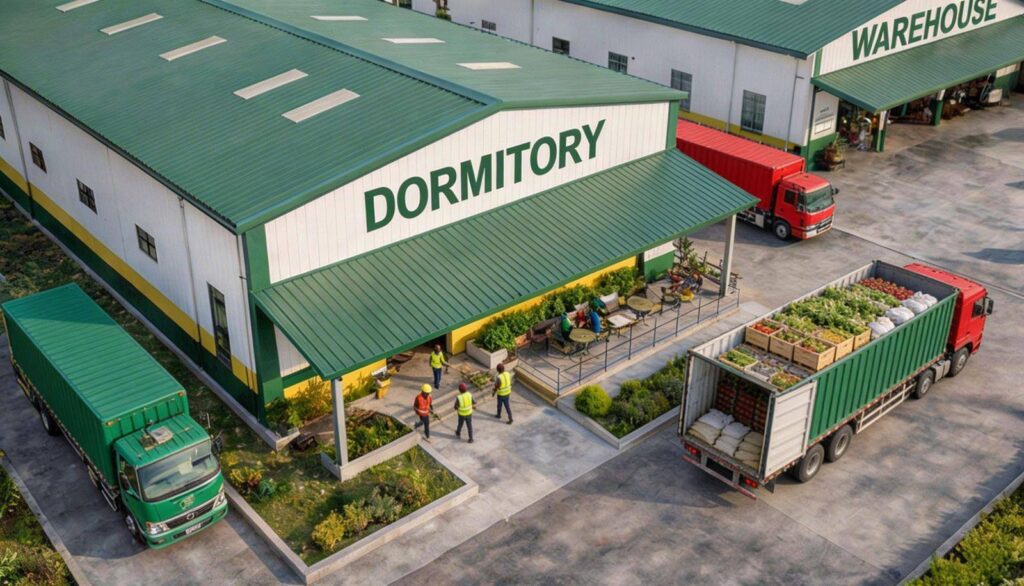
Through integrating tractors, precision drills, and combine harvesters into a single district-level service point, the Mahama administration hopes to provide the agricultural sector with the tools to compete on a global scale.
As the first centers progress, the focus moves from sod-cutting to output. Ultimately, for the Government and the Ministry of Food and Agriculture (MoFA), the success of the Farmer Services Centers will be measured in the silos of the Afram Plains and the reduced import bills at the Tema Port.
READ ALSO: Two US Lawmakers Call For Permanent Solution To Cuba’s Crises