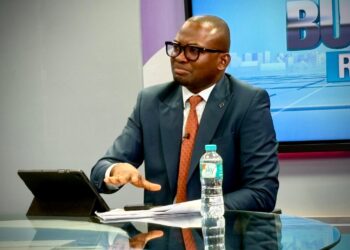
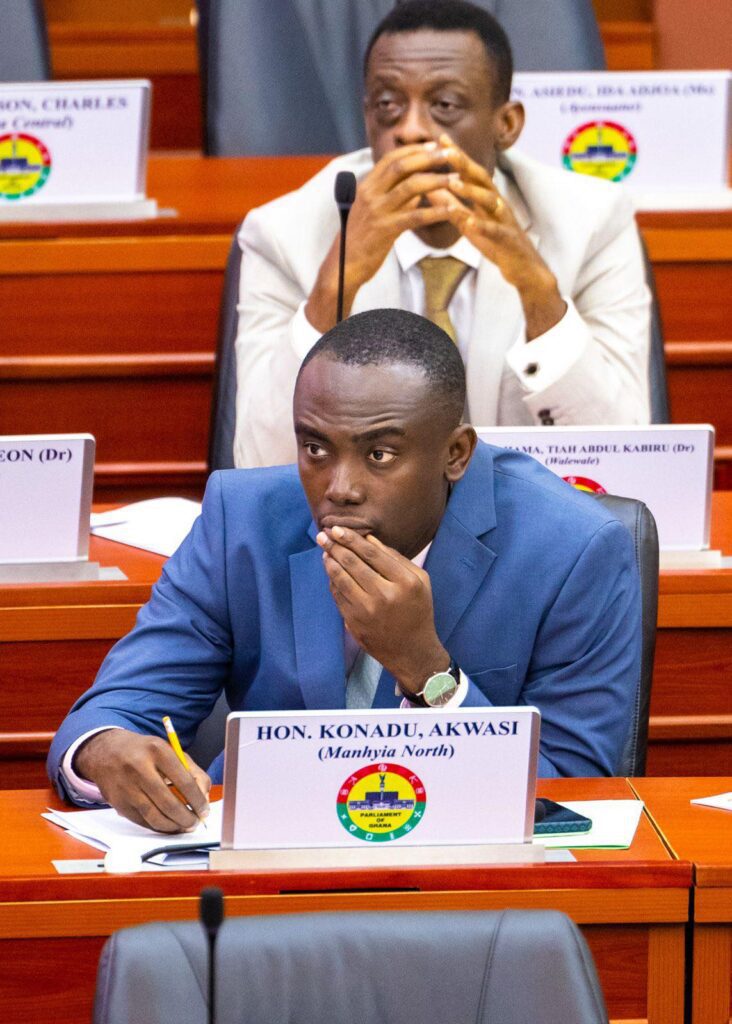
Hon. Akwasi Konadu, the Member of Parliament for Manhyia North and Deputy Ranking Member on the Lands and Natural Resources Committee, has raised a red flag over the transparency and fairness of the leasing process for the Damang Mine project, cautioning the government against “giving away” the nation’s mineral wealth through opaque administrative procedures.
The legislator’s intervention comes amidst growing concerns regarding the procurement process used to select partners for the strategic mining asset, specifically questioning whether the Ministry of Lands and Natural Resources adhered to competitive bidding standards.
As the state moves toward a significant transition for the Damang site, Konadu asserts that the lack of public clarity regarding when the tender was opened, the timeline for evaluations, and the specific criteria used to vet participants threatens the fiscal integrity of Ghana’s extractive sector.
“Nobody in this country, and no matter of fact from our side, is against Ghanaian participation or ownership in our natural resource exploration. All that anybody would be against is a manner of allocation that is not so transparent that every other Ghanaian could not have the same opportunity. Rushing approvals undermines public confidence and could leave qualified Ghanaians at a disadvantage.”
Hon. Akwasi Konadu
The controversy centers on the perceived absence of a comprehensive report detailing the technical and financial benchmarks that governed the selection process for the project’s personalization.
According to Hon. Akwasi Konadu, the Minority in Parliament remains skeptical of the “80% financial and 20% technical” weighting system reportedly used to assess bidders, arguing that these requirements may have been structured in a way that limits genuine competition.
He expressed bewilderment over how the process progressed from the mention of a single entity to a sudden influx of multiple companies, such as Vortex and others, just days before the set deadline.
The Deputy Ranking Member emphasized that while the promotion of local content is essential, it must not serve as a veil for non-competitive practices that could undervalue Ghana’s gold reserves or compromise the long-term viability of the Damang expansion.
Skepticism Over Tender Transparency and Deadlines
The demand for the full technical report is rooted in a broader concern regarding the “minimum capital requirement” established for the project.
Hon. Akwasi Konadu noted that some documents seen prior to the official briefing suggest that the set capital thresholds might not even be sufficient to “personalize” or effectively execute the Damang expansion.
This discrepancy raises questions about the due diligence performed by the Ministry.
The MP indicated that a two-page letter from the Sector Minister fails to provide the depth of information required for a transaction of this magnitude.
“Is this all of this?” he questioned, noting the difficulty in accepting that various qualified entities simply “could not meet the minimum qualification” without seeing the underlying data that informed such a conclusion.
The Fiscal Risks of Opaque Mineral Governance

From a governance perspective, the danger of rushing or obscuring the allocation of mineral rights extends far beyond immediate political friction.
When natural resources are managed without a “process that would be so open,” the country faces the risk of “resource stripping,” where assets are undervalued, leading to significant losses in potential tax revenue and royalties.
In the extractive industry, a lack of genuine competition often leads to suboptimal technical management of the mine, which can reduce the Life of Mine (LOM) and result in environmental degradation that the state must eventually remediate.
Furthermore, opaque leasing agreements can deter high-quality international and local investors who prioritize “free, competitive, and open” markets, potentially trapping the sector in a cycle of litigation and stagnation.
Safeguarding National Interest Through Accountability
The MP’s scrutiny highlights a critical moment for the Damang Mine, an asset that remains a cornerstone of Ghana’s gold production profile.
By demanding that the government “brief ourselves with” the specific criteria of the evaluation, the Lands and Natural Resources Committee is seeking to prevent a situation where the state’s bargaining power is compromised.
Hon. Akwasi Konadu’s warning serves as a reminder that the “financial capabilities” of a partner must be matched by a “technical capability” that ensures the project is not just awarded, but successfully delivered.
Without a transparent audit of the tender committee’s findings, the suspicion remains that the “vortex” of activity surrounding the deadline was a reactive measure rather than a planned, competitive exercise.
While the industry awaits the full disclosure of the tender committee’s report, the focus remains on whether the Ministry can prove that this lease was not merely a “giveaway” but a strategic partnership.