The Tree Crops Development Authority (TCDA) has launched a robust nationwide sensitization campaign to streamline the movement of agricultural produce and enhance regulatory compliance within the sector.
Under the strategic direction of its Chief Executive Officer, Dr. Andy Osei Okrah, the Authority is rolling out the Conveyance Certificate System (CCS), a move designed to bring much-needed transparency and data-driven oversight to Ghana’s high-value tree crop value chains.
“The Tree Crops Development Authority, as part of its efforts to educate and enhance awareness on the introduction of its Conveyance Certificate System (CCS) under the leadership of the CEO, Dr. Andy Osei Okrah has engaged value chain actors and stakeholders across the six selected tree crops”
Tree Crops Development Authority
As Ghana seeks to diversify its agricultural exports beyond cocoa, the TCDA’s mandate covers six critical tree crops: Cashew, Shea, Mango, Coconut, Rubber, and Oil Palm. The introduction of the CCS represents a significant leap forward in the Authority’s mission to regulate these industries, ensuring that produce movement is tracked, quality is maintained, and stakeholders are integrated into a formal economic framework.
The rollout of the CCS is a fundamental adjustment to how tree crops are managed from farmgate to market. Recognizing the complexity of this transition, Dr. Andy Osei Okrah and his leadership team have prioritized stakeholder education as the foundation of the system’s success.

The ongoing engagement drive aims to ensure that every participant in the value chain – from smallholder farmers and aggregators to large-scale processors and exporters – understands the legal and operational requirements of the new certificate system.
This engagement strategy is built on the premise that regulation is most effective when it is understood and embraced by those it affects. The TCDA is meeting directly with stakeholders to address concerns regarding the logistics of produce movement and the administrative processes involved in securing conveyance certificates.
The Authority is emphasizing that the CCS is a tool for empowerment, designed to protect legitimate actors and eliminate the middleman inefficiencies and smuggling activities that have historically hampered the growth of the sector.
A Nationwide Reach
The sensitization tour has seen the TCDA leadership travel across the length and breadth of the country, targeting key agricultural hubs where these six tree crops are most prominent, with the geographical scope of the mission underscoring a commitment to a truly national regulatory framework.
The Authority has held high-level meetings and town-hall-style engagements in locations spanning from the coastal regions to the northern borders.
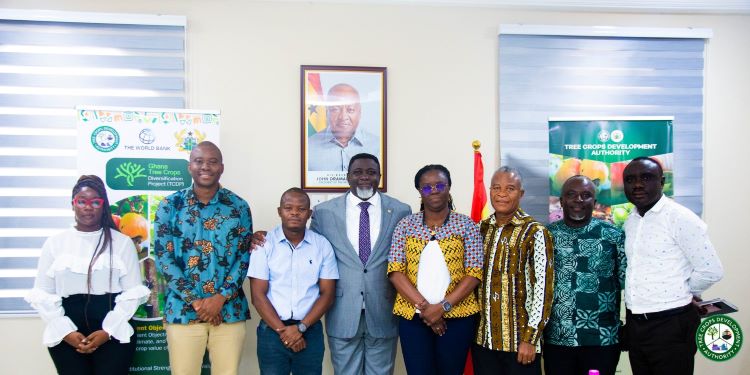
According to the TCDA, the tour has touched down in critical hubs including Half Assini, Agona Nkwanta, Kade, Akyem Wenchi, Abaam, Asuom, Kwae, and Hamile, in addition to targeted consultations held at the TCDA Office in Accra – each location representing a specific node in the tree crop ecosystem.
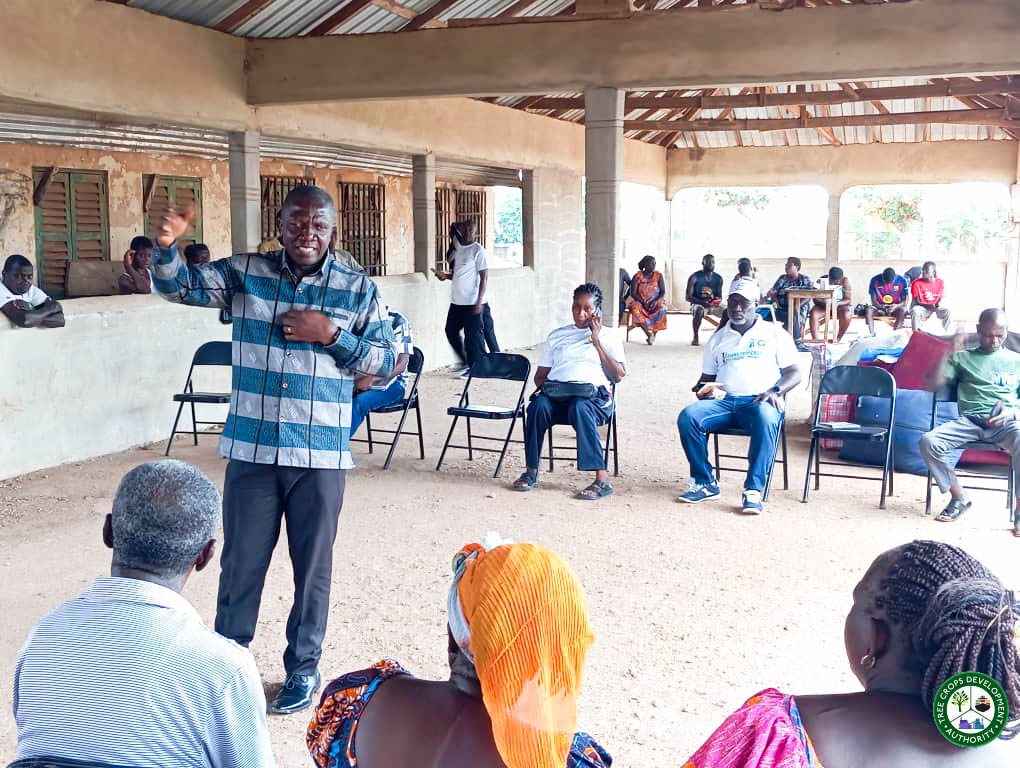
For instance, the engagements in Hamile focused on the Shea and Cashew belts, while Kade and Kwae represented major centers for Oil Palm and Rubber production.
Through physically visiting these districts, Dr. Okrah’s team is sending a clear message: the Authority is not just an Accra-based regulator but a partner present in the field. This highlights the ground approach’s effect for building trust in the CCS, which will require local actors to adapt their daily operations to include new documentation protocols.
The CCS is the digital and administrative spine of the TCDA’s broader strategy to elevate Ghana’s non-traditional exports. With the global demand for cashew and shea rising, and the regional importance of palm oil and rubber becoming more pronounced, Ghana cannot afford to have an unregulated movement of these goods.
The Conveyance Certificate System will allow the TCDA to collect real-time data on volumes, origins, and destinations of produce, providing the government with the insights needed for infrastructure planning and export forecasting.
Dr. Andy Osei Okrah has consistently advocated for a more structured approach to tree crop development, arguing that without proper tracking and certification, the industry remains vulnerable to volatility and external exploitation. The CCS ensures that every bag of cashew or ton of palm oil moved within the country carries a verifiable identity card, linking it back to the licensed actors in the TCDA database.
The Authority also noted that this regulatory tightening is also expected to improve the “bankability” of the sector, since financial institutions are more likely to offer credit to farmers and aggregators, when movement is certified and data is transparent – knowing that the value chain is organized and monitored by a central authority.

As the sensitization phase continues to intensify, the TCDA is preparing to transition into the full implementation of the CCS, making it clear that while education is the current priority, compliance will soon become a mandatory standard for all stakeholders.
The goal is to create a business environment where “doing the right thing,” is the easiest and most profitable path for all actors.
READ ALSO: AMA Introduces New Shift System for Street Sweepers to Boost Sanitation