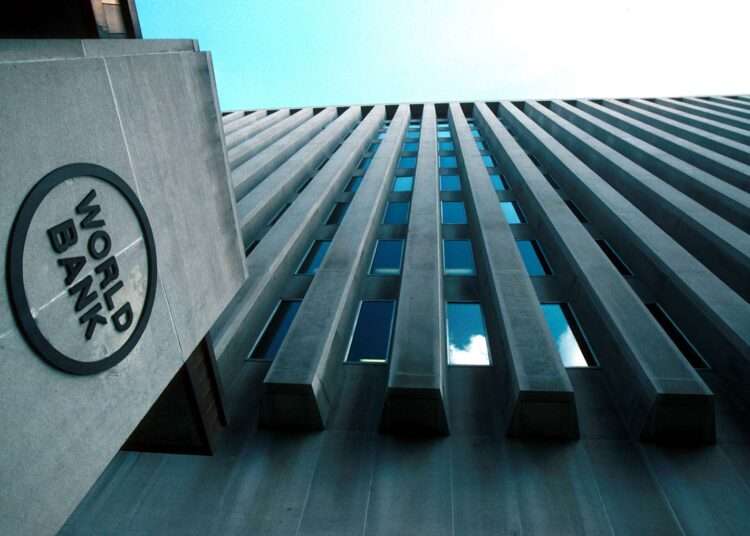
Ghana’s economic outlook for 2026 has taken a more cautious turn, following fresh projections from the World Bank that point to slower growth and a slight uptick in inflationary pressures.
According to the Bank’s latest Africa Economic Update report, the Ghanaian economy is expected to grow by 4.8 percent in 2026, while inflation is projected to end the year at 9 percent.
The projected growth rate aligns with the government’s own estimates as outlined in the 2026 budget. However, it reflects a notable slowdown when compared to the 6 percent GDP growth recorded at the end of 2025. This shift signals a more restrained economic expansion, influenced by both domestic caution and external uncertainties.
While the specific drivers behind the anticipated slowdown were not clearly outlined in the report, government officials have previously indicated that external developments remain a key concern. Global economic volatility, geopolitical tensions, and shifting commodity prices are all factors that could weigh on Ghana’s performance in the coming year.
Inflation Pressures Expected to Rise
On the inflation front, the World Bank’s projection of 9 percent by the end of 2026 slightly exceeds the 8 percent target set by Ghana’s Finance Minister, Cassiel Ato Forson. This suggests that inflationary pressures may persist in the short term, even though the country is expected to maintain single digit inflation overall.
As of March 2026, Ghana’s inflation rate stood at 3.2 percent, reflecting a sustained period of disinflation. However, some analysts believe that prices could increase in the coming months before stabilizing toward the end of the year. This anticipated rise is partly linked to developments in global energy markets, particularly ongoing tensions in the Middle East.
Recent escalations in the region have led to spikes in petroleum prices, which could have a ripple effect on transportation, production, and consumer goods costs in Ghana. Such external shocks remain a major vulnerability for the country, given its reliance on imported fuel and exposure to global supply chains.
External Risks Cloud Economic Stability
The World Bank report highlights that Ghana’s outlook cannot be viewed in isolation, as broader regional and global dynamics continue to shape economic performance. In Sub-Saharan Africa, growth is projected to remain steady at 4.1 percent in 2026, unchanged from 2025 levels. However, this stability masks growing downside risks.
The Bank notes that the region’s recovery from recent global shocks is gradually losing momentum. Growth projections have already been revised downward by 0.3 percentage points compared to earlier forecasts released in October 2025. This suggests that economic resilience across the continent is being tested by a combination of internal and external pressures.
Among the key risks identified are rising geopolitical tensions, particularly in the Middle East, which have intensified in recent months. Attacks on critical energy infrastructure and disruptions to global shipping routes have heightened uncertainty in international markets. These developments could have far reaching implications for commodity prices and trade flows, both of which are crucial to Ghana’s economy.

Domestic Demand Offers Some Support
Despite the challenging outlook, there are still positive indicators that could help sustain Ghana’s growth trajectory. The World Bank points to strong domestic demand as a key driver of economic activity across the region. Private consumption and investment continue to play a significant role in supporting growth, aided by relatively accommodative monetary policies.
In addition, improving external conditions and a weaker United States dollar have helped ease inflationary pressures in some African economies. For Ghana, this could translate into reduced import costs and improved purchasing power for households, providing some relief amid rising global uncertainties.
Commodity prices also remain a bright spot. High prices for key exports such as cocoa have supported revenues in recent years and are expected to continue strengthening fiscal and external balances. As one of the world’s leading cocoa producers, Ghana stands to benefit from favorable market conditions, even as other sectors face headwinds.
Balancing Opportunities and Challenges
The World Bank’s latest projections paint a mixed picture of Ghana’s economic future. On one hand, the country is expected to maintain steady growth and achieve single digit inflation, which are positive indicators of macroeconomic stability. On the other hand, the slowdown in growth and potential rise in inflation highlight the challenges that lie ahead.
High debt servicing costs, structural constraints, and global uncertainties remain significant obstacles to sustained economic expansion. Addressing these issues will require careful policy coordination and a continued focus on building resilience against external shocks.
Outlook for 2026
While growth is expected to moderate, the economy remains on a stable footing as 2026 grinds on, supported by domestic demand and favorable commodity prices.
However, the evolving global landscape means that risks cannot be ignored. Geopolitical tensions, energy price volatility, and broader economic uncertainties will continue to shape Ghana’s trajectory in the months ahead.
Ultimately, the ability of the country to adapt to these challenges while leveraging its strengths will determine whether it can sustain growth and maintain macroeconomic stability in 2026 and beyond.
READ ALSO: Ukraine Boosts Ghana’s Feed Ghana Programme, Explores Agrohub Launch