
The Minister for Fisheries and Aquaculture Development, Hon. Emelia Arthur, has officially inaugurated a reconstituted 12-member Board of the Fisheries Commission to operationalize the nation’s modernized maritime laws.
According to the Ministry of Fisheries and Aquaculture Development (MoFAD), the swearing-in ceremony, held in Accra, represents far more than a routine administrative shuffle, as it is the first major institutional milestone under the newly enacted Fisheries Act 1146.
The government effectively seeks the start of a new era in the governance of Ghana’s territorial waters – one defined by inter-agency synergy and a rigorous commitment to the “Blue Economy,” with the high-powered council chaired by the distinguished Prof. Wisdom Akpalu.
“Hon. Emelia Arthur underscored the importance of the Board’s role, describing their appointment as ‘not just administrative, but a national calling.’ She urged members to uphold the highest standards of accountability, demonstrate strong environmental stewardship, and commit to advancing Ghana’s Blue Economy agenda”
Ministry of Fisheries and Aquaculture Development
The transition to Act 1146 marks a shift in how Ghana views its aquatic resources. No longer treated as an inexhaustible commodity, the fisheries sector is now being managed under a framework that prioritizes long-term resilience over short-term extraction.
MoFAD noted that the expansion of the Board to include a wider array of institutional representatives is a deliberate attempt to break down the challenges that have hampered maritime enforcement and policy implementation.
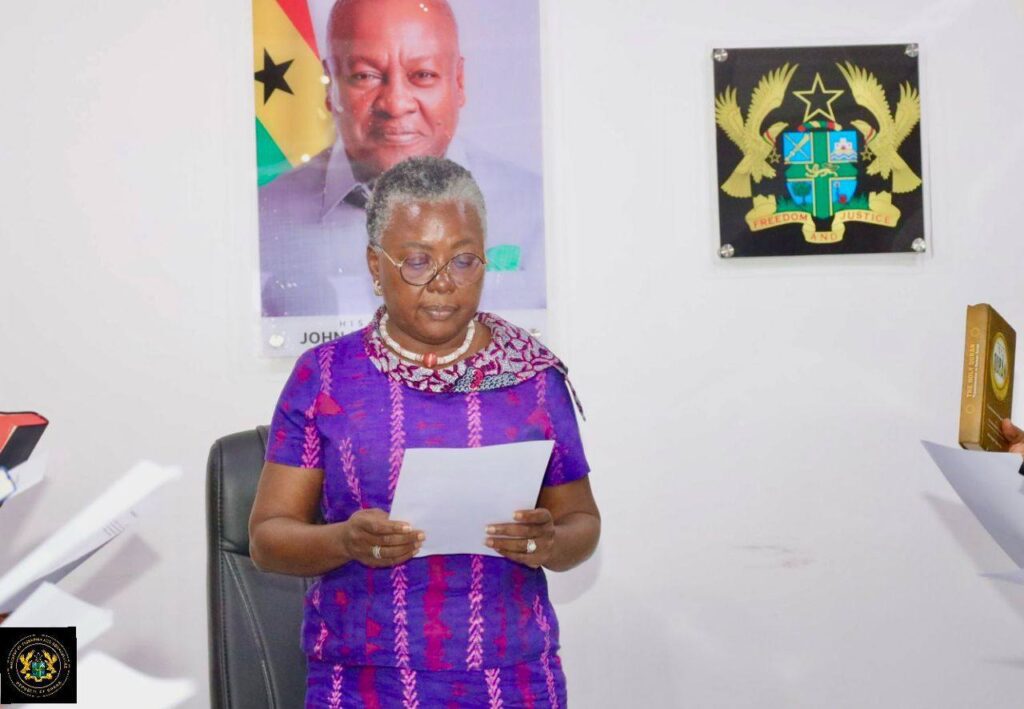
During the inauguration, Minister Emelia Arthur was clear about the weight of the responsibility being placed on the new members, emphasizing that the health of the fisheries sector is inextricably linked to the nation’s broader security and economic stability. She mandated the Board to be the primary champions of a sector that is sustainable, well-governed, and resilient.
She added that the choice of Prof. Wisdom Akpalu as Chairman is a strategic masterstroke. An economist with a profound specialization in natural resource management, Prof. Akpalu’s leadership will see the Commission lean heavily into data-driven and science-based decision-making.
This is essential for a sector where fish stocks have faced years of decline due to the “tragedy of the commons,” and insufficient regulatory oversight.
Blue Economy War Cabinet
The composition of the new Board reads like a who’s who of Ghana’s maritime and security architecture, bringing together the Ghana Navy, the Ghana Police Service, and the Ghana Maritime Authority to create what some analysts are calling a war cabinet for the seas.
This diversity is a direct response to the multifaceted nature of 21st-century maritime challenges, where sustainable fisheries management cannot happen in a vacuum.
It requires the tactical might of the Navy, represented by Commodore Ben Baba Abdul, to deter illegal trawlers; the legal precision of the Police, represented by Eric Ken Winful, to prosecute offenders, and the environmental expertise of the EPA represented by Esi Nana Nerquaye-Tetteh to protect fragile ecosystems.

Beyond the high-level security and legal frameworks, and the inter-agency approach ensuring that for the first time, every stakeholder with a hand in the water is also sitting at the decision-making table, the Minister reminded the Board that the ultimate beneficiaries of their work must be the Ghanaian people.
She described the fisheries sector as a primary source of protein and a major employer for coastal communities to emphasize that any policy direction taken by the Board must therefore balance conservation with the socio-economic reality of thousands of artisanal fishers and processors.
The Board was tasked with “fostering an environment where the sector contributes meaningfully to national economic growth without compromising the ability of future generations to fish the same waters.” This involves not only regulating the catch but also improving the infrastructure of the industry – from landing beaches to value-added processing plants.
Under the new governance framework, the Board is expected to oversee a transition toward “decent jobs,” in the sector, moving away from the precarious and often dangerous labor practices that have historically characterized parts of the industry.
As the Board begins its mandate, the immediate priority will be the full implementation of the provisions within Act 1146, including strengthening the oversight of industrial fleets, improving the transparency of licensing regimes, and advancing the co-management strategies that empower local fishing communities.
The presence of Frank Kwesi Alhoon, and Ruby Asmah, respective representatives from the Ghana Tuna Association and the Fisheries and Aquaculture Research Institute ensures that both the commercial interests and the academic foundations of the sector are well-represented.
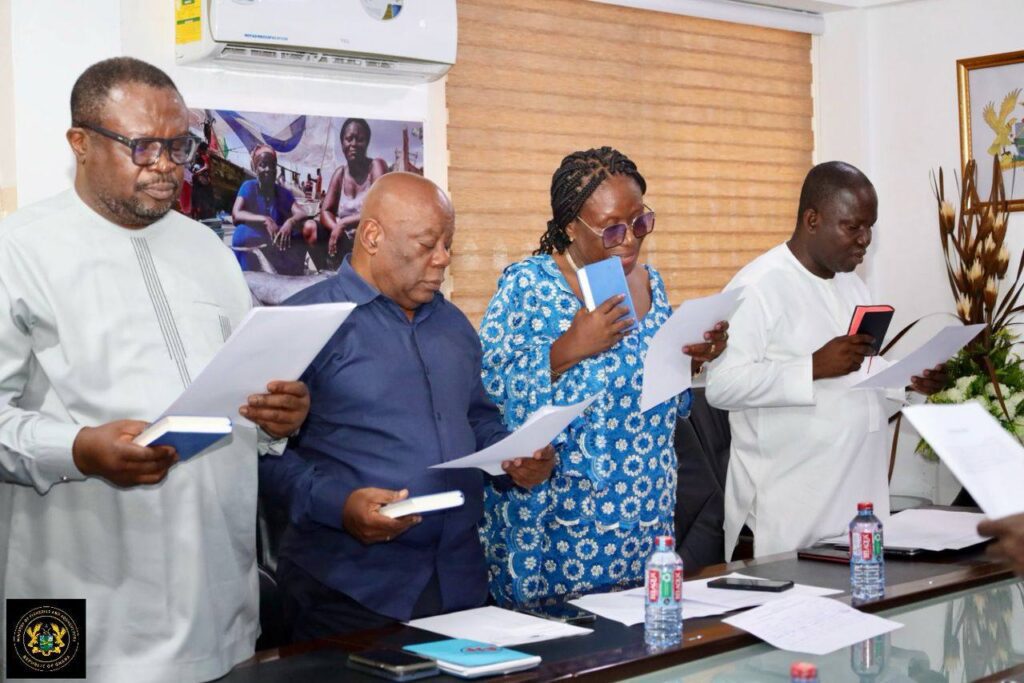
The inclusion of Dr. Afisah Zakariah from the Ministry of Fisheries, and Prof. Benjamin Betey Campion from the Fisheries Commission, provides the necessary continuity between the Ministry’s policy goals and the Commission’s operational execution.
Other members of the Board include Mubarick Masawudu, from the Ghana Maritime Authority, Esi Nana Nerquaye-Tetteh, from the Environmental Protection Authority, Stephen Yeboah Ampiaw, from the Ghana Ports and Harbours Authority, Esi Biney, from Water Resources and Emmanuel Allegye-Cudjoe, representing the Veterinary Services Directorate.
The inauguration of this 12-member Board is a clear signal that Ghana is no longer content with a fragmented approach to its maritime wealth. As 2026 progresses, the performance of this Board will be the primary metric by which the success of the new Fisheries Act is judged.
READ ALSO: Damang Mine Lease Process Was Fair and Transparent – Heath GoldFields Manager