
In a decisive consultative engagement held in Accra this April, the Ghana Free Zones Authority (GFZA), under the leadership of Chief Executive Officer Dr. Mary Awusi, has met with the Association of Ghana Apparel Manufacturers (AGAM) to address systemic bottlenecks threatening the sector’s regional competitiveness.
With the Ghanaian apparel and textile industry currently at a critical industrial crossroads, the GFZA sought to reconcile its fiscal regulatory frameworks with the operational realities of local manufacturers. The dialogue was geared toward a renewed effort to transform the garment sector into a multi-billion-dollar export engine.
“Discussions focused on addressing import and export challenges affecting industry players, particularly issues related to Free Zones licensing fees and procedures, while exploring practical interventions to improve operational efficiency”
Ghana Free Zones Authority
Central to the discussions, which included high-level representation from the Ministry of Trade, Agribusiness and Industry (MoTAI), were the escalating costs of compliance and the administrative friction inherent in the Free Zones Scheme.
For AGAM, led by its President Ms. Nura Salifu (CEO of Sixteen47 Ltd), the primary concern remains the delicate balance between maintaining a licensed status and the rising burden of fees that erode the thin margins of garment manufacturing.
As Ghana positions itself to leverage the African Continental Free Trade Area (AfCFTA), the efficiency of the GFZA’s licensing regime has become a bellwether for the nation’s broader industrial success. The garment industry is notoriously capital-intensive with a high reliance on volume and logistical precision.
During the engagement, AGAM members raised pointed concerns regarding the Free Zones licensing fees and the complexity of renewal procedures. Currently, manufacturing entities under the scheme face initial fees of approximately $3,900 and annual renewals of $3,000, figures that industry players argue must be weighed against the sector’s high employment generation but low immediate liquidity.
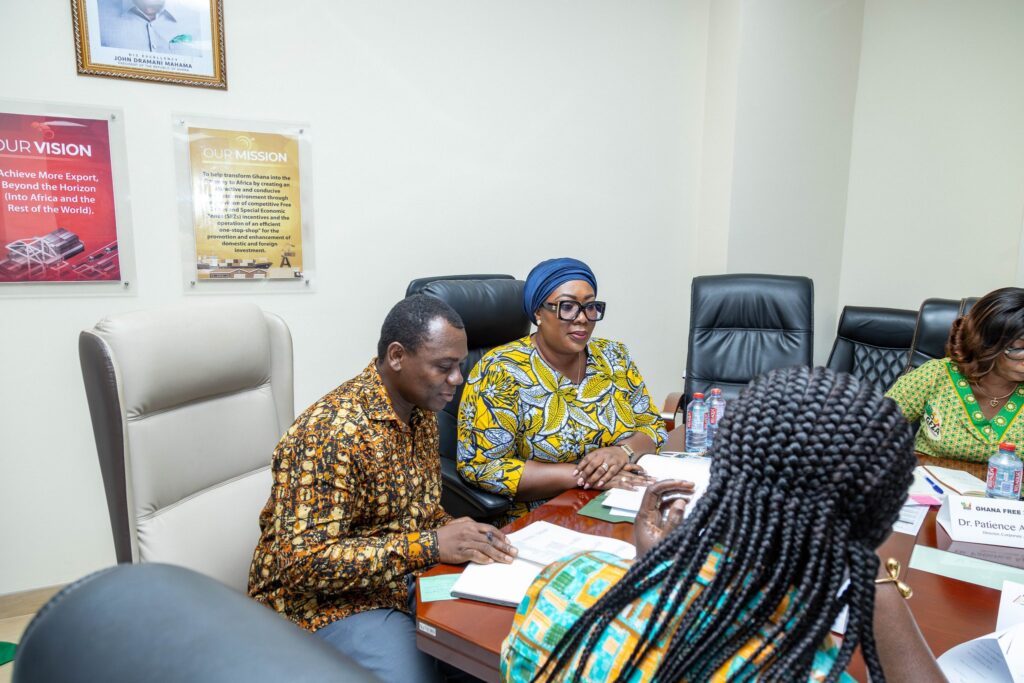
Dr. Mary Awusi and her team, supported by Mr. Kwasi Ofori-Antwi (Acting Director, Strategic Manufacturing Directorate, MoTAI), provided detailed clarifications on these fiscal requirements while acknowledging the need for “practical interventions.”
The Authority’s willingness to re-examine these fee structures suggests a move toward a more tiered or incentive-based licensing model that rewards manufacturers for scaling their export volumes or increasing their local headcount.
Bridging the Gap
Beyond the immediate financial hurdles, the GFZA noted that the “technical logistics,” of importing raw materials and exporting finished apparel remain a significant barrier.
Though Ghana’s garment sector is currently valued at approximately $400 million, the government has set an ambitious target to grow this to over $2 billion by 2033. Achieving this leap requires a seamless business operation environment where the GFZA acts as a facilitator rather than a gatekeeper.
The meeting highlighted the role of the Textiles and Garments Unit at MoTAI, represented by Ms. Abena Gyamfi, in synchronizing policy with the GFZA’s regulatory mandate. The objective is to eliminate the bureaucratic redundancies that often delay the clearance of fabrics and accessories – critical inputs that are frequently time-sensitive for international export contracts.
By streamlining these procedures, the GFZA aims to enhance the “speed-to-market” capability of local firms, allowing them to compete more effectively against global giants in the European and North American markets.
“The meeting underscored the importance of continued collaboration between GFZA, MoTAI, and AGAM, with all parties expressing confidence that sustained engagement will improve efficiency and support seamless business operations”
Ghana Free Zones Authority

The GFZA noted that Ghana is not the only West African nation vying for the title of the region’s apparel hub. With the AfCFTA now in full effect, the sub-regional competitiveness of local manufacturers depends on the state’s ability to create an “enabling environment,” that offsets the high costs of electricity and logistics.
The engagement between the GFZA and AGAM executives focused heavily on how the Free Zones Scheme can be leveraged as a defensive and offensive tool in regional trade.
Dr. Mary Awusi reiterated that the GFZA remains committed to working closely with stakeholders to ensure that the incentives offered under the scheme – such as duty exemptions and tax holidays – are not undermined by operational inefficiencies.
For AGAM members, who already supply major international brands, the focus is on ensuring that the “Made in Ghana,” label carries a competitive advantage in terms of both quality and cost.
Private-Sector Dialogue
A significant takeaway from the Accra engagement was the institutionalization of the dialogue between the regulator and the private sector. The presence of GFZA Directors and Heads of Department, who took turns responding to specific queries from AGAM members, indicates a shift toward a more transparent and responsive administrative culture.
This “bottom-up” approach to policy adjustment is essential for a sector dominated by female-led SMEs that require predictable regulatory pathways to scale. Ms. Nura Salifu emphasized that for apparel manufacturers to contribute significantly to GDP and job creation, the government must move beyond general support to specific, binding frameworks that prioritize local production.
The GFZA’s commitment to “sustained engagement,” suggests that this meeting was not an isolated event, but the beginning of a recurring policy review mechanism designed to keep Ghana’s apparel sector resilient in the face of global supply chain volatility.
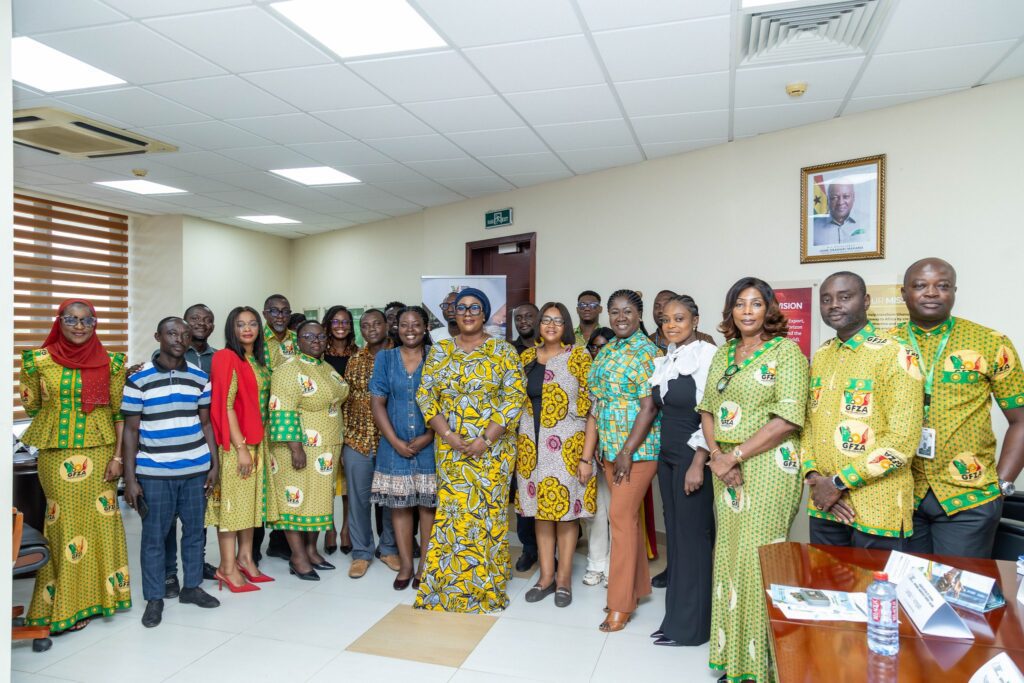
As the GFZA and AGAM conclude this phase of engagement, the industrial narrative for 2026 is becoming clear: the path to a $2 billion garment industry lies in the fine-tuning of the logistics of trade.
Dr. Mary Awusi’s administration is clearing the deck for the massive industrial expansion envisioned for the next decade, by addressing licensing fees and export friction today.
READ ALSO: Ghana Hits Record $4.2bn Trade Surplus in Q4