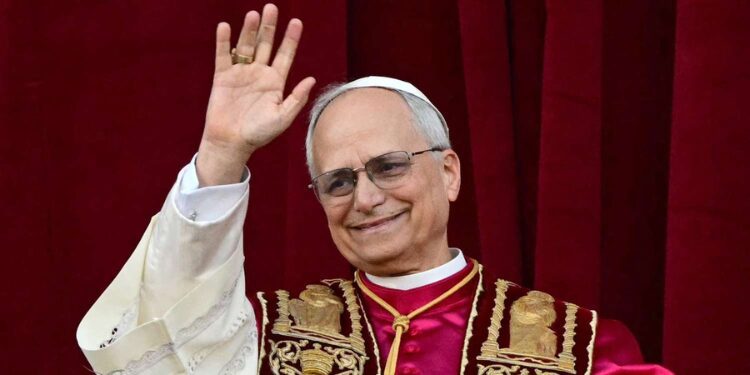
Pope Leo’s visit to Africa has rekindled hope among most believers and civilians that renewed international attention could help revive long-stalled peace efforts in the country’s conflict-affected English-speaking regions.
For Rev. Killian Ndonui Nshamikara, a Catholic priest based in western Cameroon, the optimism is deeply personal. Earlier this year, he was abducted by armed separatists who ambushed him while he was travelling through a village, demanding a huge ransom.
Despite these repeated ordeals, Nshamikara has managed to negotiate his release each time, navigating a volatile environment where violence has become an entrenched part of daily life. According to the Priest, “Cameroon as a nation needs healing.”
Pope Leo is expected to visit Cameroon as part of his tour and it is anticipated that, the Holy Father will prioritise peacebuilding and reconciliation when traveling through Yaoundé, Douala, and Bamenda as well as bring rare global focus to a conflict that has often been overshadowed by other crises across the continent, including insurgencies in the Sahel.
The conflict originated in Cameroon’s colonial past. After World War One, the area was partitioned between Britain and France, having previously been controlled by Germany. While French Cameroon obtained independence in 1960, the British-administered provinces were eventually incorporated into the new state through a United Nations-backed procedure, with no choice for complete independence.
This decision has left residual resentment among English-speaking groups, who have long grumbled about political and cultural marginalization.
The present dispute began in 2016 as a result of demonstrations by English-speaking teachers and lawyers who felt excluded. An armed organization known as the Ambazonia Defence Forces started fighting government soldiers as calls to create a separate state named Ambazonia gathered traction. Numerous organizations emerged to target both soldiers and civilians.
After over ten years, the situation has deteriorated into a prolonged crisis. nearly 6,500 people have died and nearly 500,000 have been displaced, according to the International Crisis Group. Essential services like healthcare and education have been severely affected, and whole towns have been displaced.
The Catholic Church however wields considerable power in the region, so the visit is symbolic. In anticipation, a separatist coalition has declared a temporary truce to allow the safe passage of people and tourists, though such declarations have traditionally proven weak in a conflict defined by division and mistrust.
Nevertheless, for the majority of the faithful, Pope’s visit is an excellent opportunity to bring attention to a conflict that has mostly faded from worldwide headlines while also paving the way for long-term peace.
Pope Leo Delivers Message of Peace and Humility

Meanwhile, Pope Leo XIV continues his tour across Africa with a message firmly centred on peace, humility, and human dignity, using each stop to underscore the urgency of reconciliation in a world increasingly defined by conflict and division.
On the second day of his visit, the Pope travelled to Annaba in northeastern Algeria, a city of profound historical and spiritual significance as the site of ancient Hippo, where St. Augustine once served as bishop. The visit formed part of a broader effort to highlight the role of faith, coexistence, and shared humanity in responding to both visible crises and quieter social challenges.
Following a tour of the archaeological site, Pope Leo made a brief but symbolic stop at the Ma Maison Care Home for the Elderly, operated by the Little Sisters of the Poor. There, he met residents and caregivers whose daily lives reflect enduring values of compassion, service, and dignity.
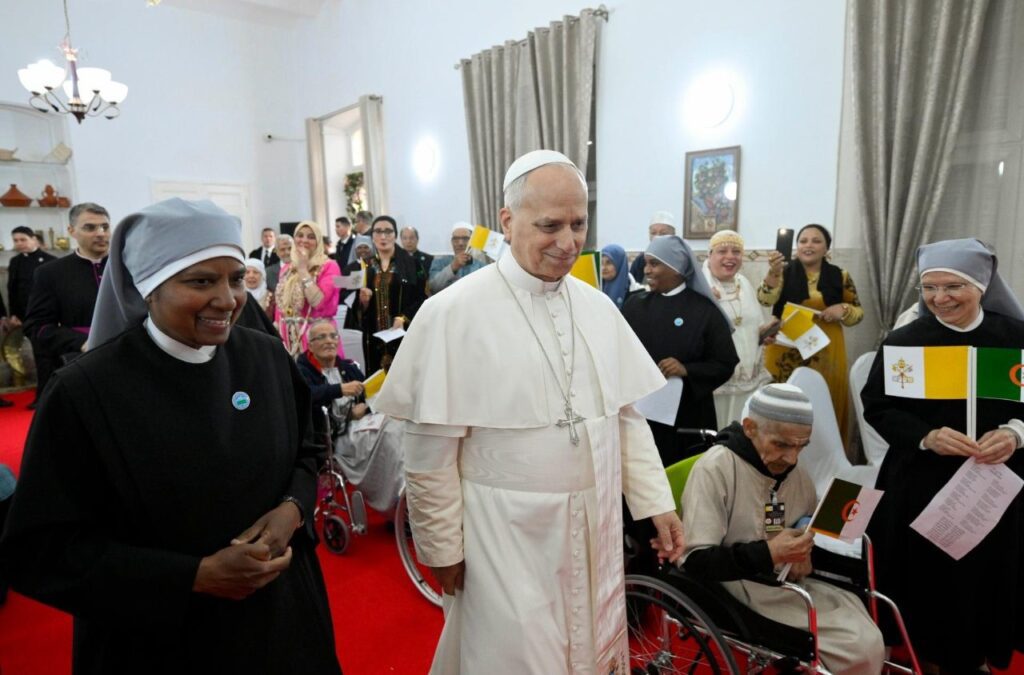
In his brief address, he told residents that “God dwells here,” noting that “wherever there is love and service, God is there.”
The Holy Father went on to say that, “God’s heart is torn apart by wars, violence, injustice, and lies. Our Father’s heart is not with the wicked, the arrogant, or the proud.” Rather, said Pope Leo, God dwells with those who build up His Kingdom in service.
“God’s heart is with the little ones and the humble, and with them He builds up His Kingdom of love and peace day by day, just as you are striving to do here in your daily service, friendship, and life together.”
Pope Leo
Moreover, the Holy Father met Archbishop Paul Desfarges, former Bishop of Constantine-Hippone, who now resides at the facility. There, the Archbishop commended the sisters and staff for their dedication, describing their daily work as quietly transformative in its simplicity.
He concluded by presenting a mosaic of the Risen Christ, created by Albanian artist Josif Droboniku. Rooted in the Byzantine tradition, the artwork serves as a symbolic call to spread faith through acts of charity and service.
READ ALSO : Pope Leo Embarks Landmark Africa Tour Across Four Nations