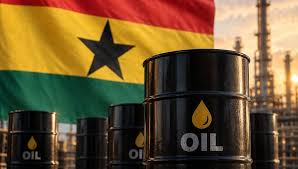
Government has officially sanctioned a strategic fiscal intervention aimed at reducing the cost of fuel at the pumps, a move designed to address the recent surge in global petroleum prices.
This policy, which targets the upcoming pricing window, will see the state actively absorbing a portion of the costs typically passed on to consumers, specifically providing a GH₵2.00 relief per litre on diesel and a GH₵0.36 reduction per litre on petrol.
By implementing these measures, the administration seeks to stabilize the domestic energy market and protect the citizenry from the immediate impact of international price volatility.
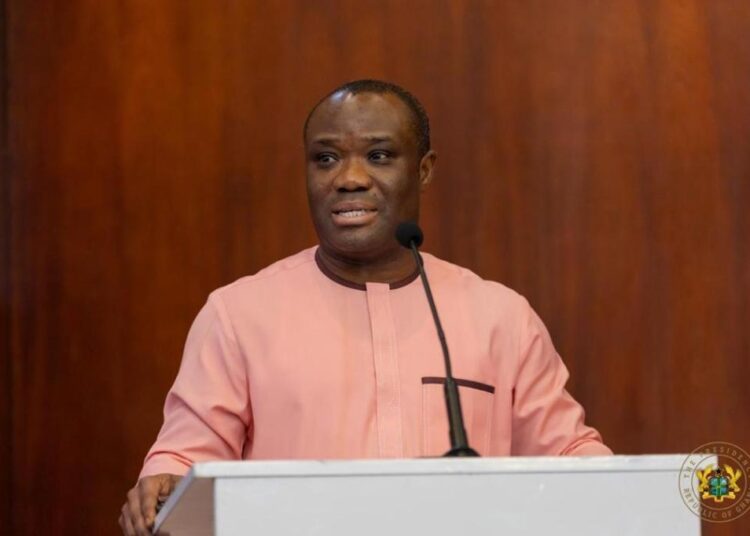
“This intervention is intended to cushion customers and ease the cost burden on households, transport operators, and businesses. The measure, approved by Cabinet, is in response to rising prices of petroleum products on the international market. Government remains committed to maintaining price stability, protecting livelihoods, and supporting Ghana’s economic recovery.”
Hon. Felix Kwakye Ofosu, Government Communications Minister

This intervention is a direct response to the escalating costs of crude oil on the global stage, which have recently translated into significant ex-pump price hikes within the Ghanaian market.
Approved by Cabinet and scheduled to take effect on April 16, 2026, the temporary measure is expected to remain in force for an initial period of one month.
Government Communications Minister Felix Kwakye Ofosu noted that during this window, “Government will continue to closely monitor developments in the global oil market and assess the need for further policy adjustments” to ensure long-term stability.
Mitigating the Ripple Effect on Households and Transport

The decision to absorb GH₵2.00 on diesel is particularly significant for the transport and logistics sectors, which are the backbone of the Ghanaian economy.
Since diesel powers the majority of commercial vehicles (Tro-Tros) and heavy-duty trucks transporting food from rural farms to urban centers, this cut is expected to freeze or even reduce rising transport fares.
Domestic fuel taxation often has a more profound effect on consumption and inflation than global price movements alone. By slashing these margins, the government is effectively “cushioning the blow” for low-income households who spend a disproportionate amount of their earnings on commuting and basic goods.
Strengthening Economic Resilience Against External Shocks

As an energy and green transition observer, it is clear that while Ghana navigates the path toward a sustainable energy future, the immediate reliance on fossil fuels remains a critical economic vulnerability.
The current volatility, driven largely by geopolitical tensions in the Middle East and disruptions in the Strait of Hormuz, has forced the state’s hand to provide this fiscal shield.
The Ministry of Government Communications emphasized that the state remains “committed to maintaining price stability” in the face of these external shocks.
This temporary subsidy acts as a bridge, preventing a spike in the general cost of living while the broader economic recovery plan remains in motion.
Strategic Monitoring and the One-Month Outlook

The National Petroleum Authority (NPA) had previously indicated that prices would have trended significantly higher without this intervention; however, the new “price floor” will now reflect the government’s absorbed margins.
This tactical retreat from higher pump prices is not just a populist move but a calculated attempt to maintain macroeconomic gains, such as the recent stability of the Ghana Cedi.
As the one-month period progresses, stakeholders in the energy sector will be looking for signs of a “green transition” pivot or further tax restructuring.
For now, the focus remains on ensuring that the GH₵2.00 and GH₵0.36 reductions translate into immediate relief for the Ghanaian worker.
READ ALSO: Maguire Handed a One-match Ban Plus Fine