Over 9000 assembly members across the country are now receiving monthly allowances as part of the government initiative aimed at strengthening local governance and improving grassroots participation in decision making.
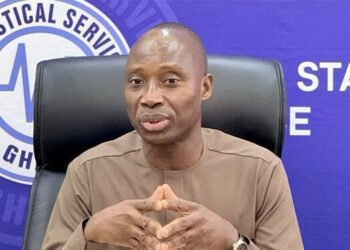
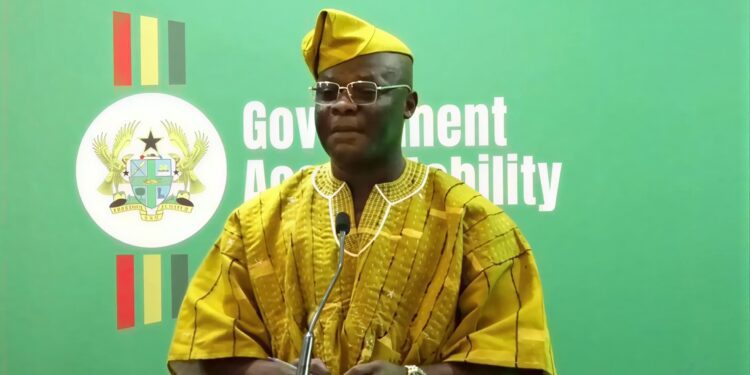
Speaking at the Government Accountability Series held at the Jubilee House, Honourable Ibrahim stated that the government has introduced modest monthly allowances for assembly members as part of efforts to enhance local governance and improve accountability at the community level.
According to the Minister, the decision to institute monthly allowances was informed by decades of concerns over the lack of financial motivation for assembly members, which had, in many cases, affected their ability to fully discharge their responsibilities within their respective electoral areas. The Government through the President’s call, therefore, introduced a fixed monthly allowance of GH¢1,300 per assembly member as part of efforts to enhance their effectiveness and improve local representation.
Official records indicate that all 9,090 assembly members nationwide benefited from the payment arrangement between April and December 2025. Although the gross allowance was set at GH¢1,300, deductions such as taxes meant that the actual net amount received by beneficiaries were slightly above GH¢1,000 per month.
“The 9,090 assembly members were paid GH¢1,300 each, and this amount included applicable tax deductions. And when you take the tax component out of it, all assembly members were paid more than 1,000 Ghana cedis for all the months in 2025, from April to December.”
Honourable Ahmed Ibrahim, Minister of Local Government, Chieftaincy And Regional Affairs
The Minister explained that the implementation of the payment system marked a significant policy change in the way the state recognises the contribution of local-level political representatives. He noted that assembly members serve as the closest link between government and citizens and, as such, require adequate support to perform their oversight, mobilisation, and developmental coordination roles effectively.
He further disclosed that government has already begun processes to extend the allowance scheme into 2026, with plans in place to ensure the timely disbursement of first-quarter payments. This, he said, demonstrates the administration’s commitment to sustaining the programme beyond its initial rollout phase in 2025.
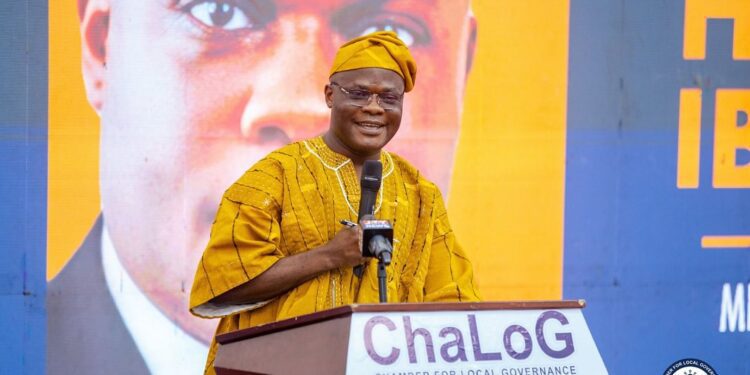
Sector Realignment And Judicial Training for Traditional Rulers
The Minister further announced that several key sectoral reforms and administrative programmes were successfully implemented during the review period, following a comprehensive realignment of the Ministry’s functional mandate. These reforms, he noted, were executed with the support of technical officers and senior administrative personnel across various departments.
A significant component of the reforms involved the review of allowances for judicial committees operating under the Houses of Traditional Councils. This exercise was undertaken to strengthen customary dispute resolution systems and improve the efficiency of traditional justice mechanisms.
The review aligns with constitutional provisions under Article 270 of the 1992 Constitution, which recognises the role of the National and Regional Houses of Chiefs in adjudicating matters relating to chieftaincy and customary law. As part of efforts to strengthen and modernise traditional governance structures, the Ministry has reviewed the quarterly allowances paid to judicial committees under the various Houses of Traditional Councils.
Honourable Ibrahim explained that under Article 270 of the 1992 Constitution, the National House of Chiefs and Regional Houses of Chiefs play a key role in the adjudication of customary chieftaincy disputes and related conflicts. He noted that these judicial committees are central to the resolution of inheritance and traditional leadership disputes within communities.
He further stated that, given the nature of traditional leadership succession, where many chiefs ascend to thrones through hereditary lines, there is a growing need to provide them and their supporting judicial committees with structured legal training. This, he said, is necessary to equip them with basic legal and procedural knowledge to ensure that cases are handled fairly, consistently, and in line with both customary practices and national legal standards.
According to him, the review of allowances is directly linked to this capacity-building effort, as the committees responsible for adjudicating such disputes must be adequately supported to carry out their constitutional mandate effectively. He added that the initiative is intended to strengthen the interface between customary authority and formal legal systems, ensuring greater coherence in the administration of justice at the traditional level.
In collaboration with the Electoral Commission, the Ministry also supported the successful conduct of Council of State elections, ensuring that constitutional requirements for advisory representation at the national level were fully met. This partnership was described as a critical component of maintaining institutional balance and democratic governance.
Additionally, the Ministry coordinated the appointment and confirmation of all 261 Metropolitan, Municipal, and District Chief Executives (MMDCEs) nationwide. Following their confirmation, newly appointed officials underwent structured orientation programmes aimed at preparing them for their administrative and developmental responsibilities at the local level.
Further strengthening institutional oversight, a legislative review committee was established to examine the Local Governance Act, 2016 (Act 936). The review led to updated guidelines governing the utilisation of the District Assemblies Common Fund, in line with Section 126 of the Act.
He credited the overall progress to the coordinated efforts of senior administrative leadership, including the Dean of Chief Directors and other technical officers who played key roles in policy implementation and monitoring.
READ ALSO: Government Releases GHS 5billion to District Assemblies in 2025