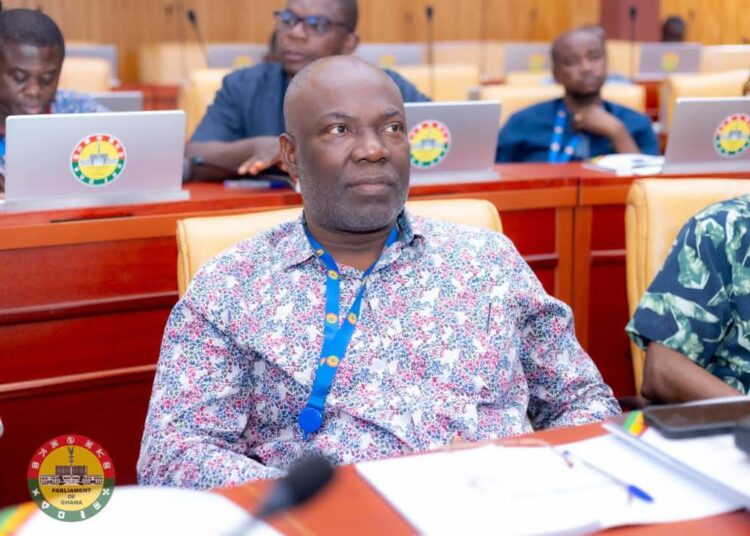
Hon. George Kwame Aboagye, the Ranking Member on the Parliamentary Select Committee on Energy, has declared that the infrastructure at the Tema Oil Refinery (TOR) is outdated, polluting, and fundamentally inadequate to meet contemporary global environmental standards.
He asserts that the refinery operates using an obsolete system that fails to align with modern industrial benchmarks, necessitating urgent technological upgrades to remain viable in a climate-conscious global market.
This assessment underscores the growing disconnect between Ghana’s legacy refinery infrastructure and its commitments to international climate frameworks, such as the Paris Agreement.
By relying on vintage processing equipment, TOR faces the dual threat of operational inefficiency and impending economic penalties, as European markets and international trade partners increasingly impose carbon taxes on products manufactured through high-emission, polluting methods.
“There should be a retrofitting of the equipment that they have. Okay? To be on the standard, the current stage. The one that I’m saying I saw in Amsterdam. Even if not up to that level. But at least to the level that we all will be satisfied with what they are doing. Because you cannot continue the old way, refinery and polluting that.”
Hon. George Kwame Aboagye
The Imperative for Retrofitting and Modernization
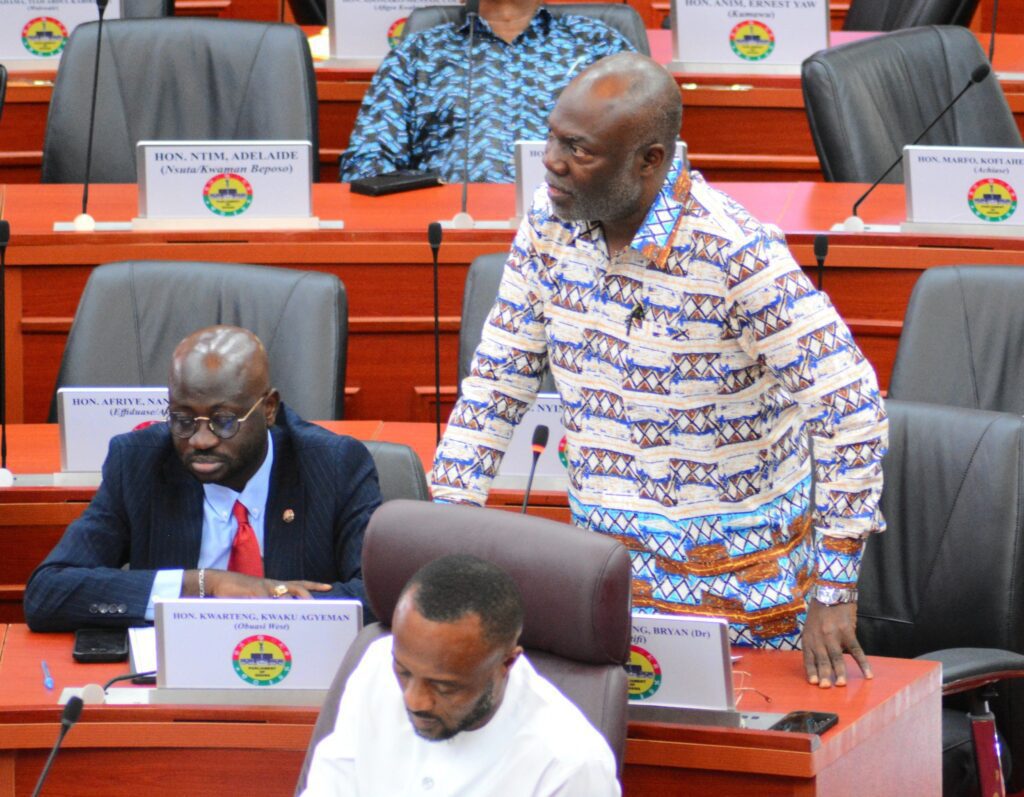
The call for a comprehensive overhaul of TOR’s machinery is not merely an operational suggestion but a strategic necessity for Ghana’s energy security.
Modern refinery standards emphasize “decarbonization and energy efficiency,” shifting away from the high-pollution models that characterized the industry decades ago.
Retrofitting the refinery with modern systems would enable the facility to transition toward cleaner production, including the integration of Carbon Capture, Utilization, and Storage (CCUS) technologies.
As Hon. Aboagye noted after observing modern refinery operations in Amsterdam, the current state of TOR is a “no-winner” situation.
Without significant capital investment to install modern, cleaner equipment, the refinery risks becoming a stranded asset. Retrofitting offers a pathway to reduce the environmental footprint, aligning the nation’s downstream sector with the National Energy Transition Framework, which targets net-zero emissions by 2070.
Policy Continuity Beyond Political Cycles

A significant hurdle identified by the Ranking Member is the perception of refinery management as a partisan issue.
Hon. Aboagye emphasized that the state of TOR should not be viewed through the lens of one government’s tenure but as a long-term national policy mandate.
The failure to modernize over the past several decades is a collective oversight that requires a non-partisan, state-level commitment to industrial reform.
He argues that treating refinery infrastructure as a continuous national project rather than a political football is the only way to ensure sustained investment.
By establishing robust policy frameworks that transcend electoral cycles, the government can secure the necessary funding and technical partnerships required to bring TOR to a level that satisfies both environmental regulators and the Ghanaian public, who expect the facility to be a pillar of the national economy.
Embracing Green Transition Technologies

Transitioning to a modern refinery model opens doors to innovative energy solutions beyond traditional fuel production.
As observed in advanced economies like the United Kingdom, refineries are increasingly pivoting toward hydrogen production a key component of the renewable energy future.
Modernizing TOR’s equipment would allow for the capture and conversion of carbon emissions into hydrogen or other sustainable products, transforming a source of pollution into a contributor to the energy transition.
If Ghana intends to remain competitive in the future “green trade market,” the shift is inevitable.
The government must treat the modernization of TOR as an essential step toward mitigating climate change risks while simultaneously securing the country’s energy future.
For Hon. Aboagye, the goal is clear: Ghana must move past the “old way” and invest in the technology required to operate at the standard the world expects in the 21st century.
READ ALSO: Manchester City Close In on Arsenal After Crucial win