UK’s Foreign, Commonwealth & Development Office has issued a strong condemnation following fresh ballistic missile launches by the Democratic People’s Republic of Korea (DPRK), warning that the tests mark a continued escalation of tensions and a direct challenge to international law.
The launches, which took place on 19 April, have drawn renewed concern from global actors monitoring stability in East Asia, particularly as repeated weapons testing by Pyongyang continues to strain diplomatic efforts and heighten security anxieties across the region.
According to the UK government, DPRK’s actions represent a clear violation of binding obligations under the United Nations Security Council, which has long prohibited the DPRK from conducting ballistic missile activity.
“DPRK’s ballistic missile launches on 19 April are another breach of UN Security Council resolutions (UNSCRs), destabilising regional peace and security. The UK continues to urge DPRK to stop provocations, to engage in meaningful diplomacy and return to dialogue.”
Foreign, Commonwealth & Development Office
This condemnation comes amid mounting evidence that Pyongyang is accelerating both the scale and sophistication of its weapons programme. The latest launches form part of a broader pattern of sustained military activity, reflecting a strategic push by North Korea to refine its missile capabilities and reinforce its deterrence posture.
For international observers, the timing and frequency of these tests suggest a calculated effort not only to demonstrate technological progress but also to assert geopolitical leverage in an increasingly volatile global security environment.
Kim Jong Un Oversees Expanded Missile Tests as Capabilities Intensify
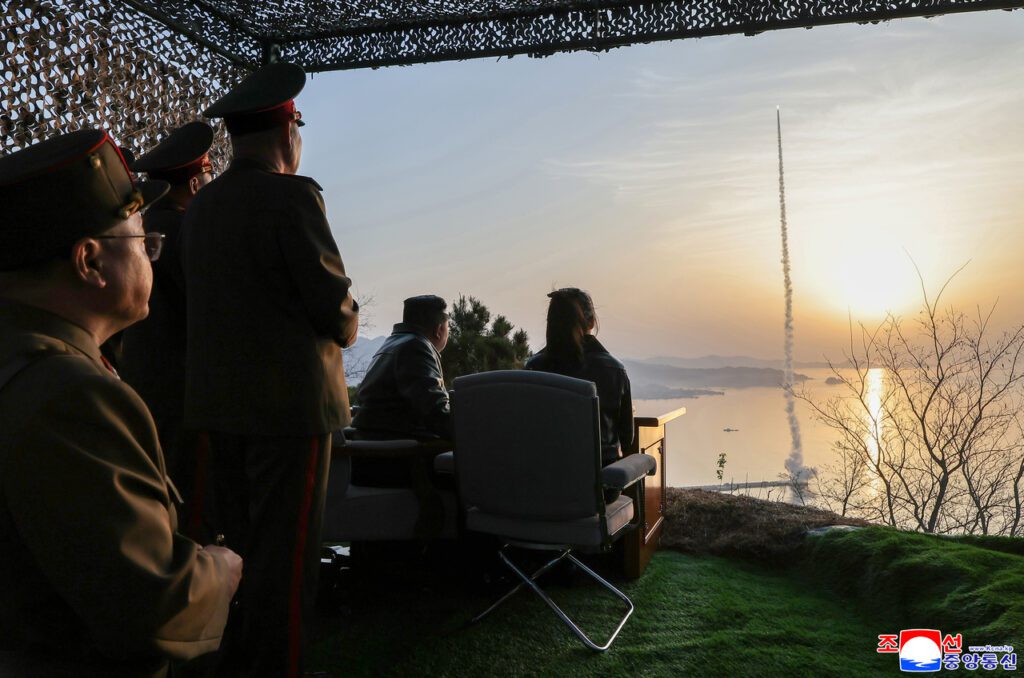
Earlier, North Korean leader, Kim Jong Un personally oversaw Sunday’s ballistic missile test launches, according to state media, in what officials described as a critical phase in evaluating new warhead technologies.
The tests focused on assessing the performance of payloads designed to carry cluster munitions and fragmentation mines capabilities that analysts say could significantly enhance the destructive potential of short-range missile systems and reshape tactical engagements on the Korean Peninsula.
The launches mark the fourth such test this month and the seventh so far this year, underlining the DPRK’s determination to advance its missile and nuclear arsenal despite longstanding restrictions imposed by the United Nations Security Council.
According to state reports, the exercise involved five launches of upgraded Hwasong-11 Ra surface-to-surface tactical ballistic missiles. These missiles were fired toward a designated island target zone approximately 136 kilometres away, striking an area of roughly 12.5 to 13 hectares with what officials described as high-density impact. The demonstration was presented as evidence of the system’s capability for concentrated suppression strikes, highlighting improvements in precision targeting and battlefield coordination.
South Korean authorities reported that the missiles were launched from near the eastern coastal city of Sinpo travelling toward the sea. Officials in Seoul condemned the tests as provocative, urging Pyongyang to halt further actions that could inflame tensions.
This shows enduring concerns about stability on the peninsula, where North and South Korea remain technically at war following the 1950–53 conflict, which concluded with an armistice rather than a formal peace agreement.
Moreover, South Korean Unification Ministry spokesperson noted an “unusually large presence of frontline military commanders,” suggesting that the exercise may have been intended not only as a technical evaluation but also as a demonstration of operational readiness. Analysts link this to Kim’s broader objective of expanding the deployment of tactical missile systems, potentially closer to the demilitarised zone, which could place Seoul and key military installations within closer range.
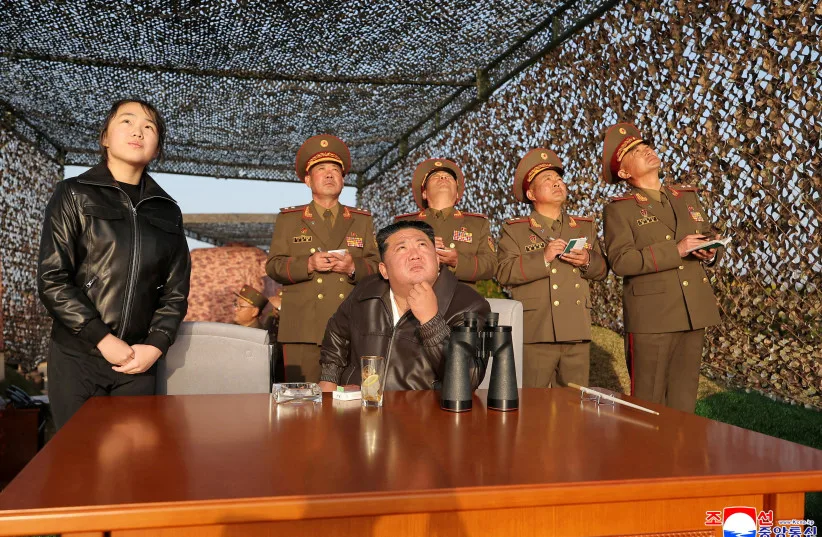
Meanwhile, Kim has expressed clear satisfaction with the results, praising the work of defence scientists and emphasising that years of research had yielded tangible progress. He urged continued innovation to strengthen the military’s combat readiness, reinforcing a narrative that positions technological advancement as essential to national defence.
The latest tests follow earlier demonstrations this month, including the reported launch of a ballistic missile equipped with a cluster-bomb warhead and the testing of an electromagnetic weapon. These developments suggest a concerted effort by Pyongyang to showcase its ability to conduct modern, multi-dimensional warfare. Analysts warn that such capabilities could allow North Korea to strike targets more precisely, across wider areas, and with significantly increased lethality, complicating defence planning for regional adversaries.
Ongoing global tensions, including conflicts linked to nuclear and missile programmes elsewhere, may be reinforcing North Korea’s determination to expand its own arsenal. In late March, Kim reiterated that the country’s status as a nuclear-armed state is irreversible, framing the continued development of a “self-defensive nuclear deterrent” as a non-negotiable element of national security.
According to experts and former South Korean officials, Pyongyang’s own aspirations in this field may have been strengthened by the seven-week-old U.S.-Israeli confrontation against Iran, which attempts to stop Tehran’s nuclear and missile program.
READ ALSO : US Gas Prices To Stay Elevated Amid Iran War Fallout